Washington State Food Truck Health Permit: Requirements
What Does a Washington State Food Truck Health Permit Actually Cost?
You're looking at anywhere from $250 to over $1,200 for your initial Washington state food truck health permit, depending on which county you operate in. King County charges more than Skagit County. That's not a vague answer, that's how the system works here.
The Washington State Department of Health doesn't issue one unified permit for mobile food units. Instead, your local health jurisdiction handles it. There are 35 local health departments across the state, and each one has its own fee schedule, inspection frequency, and application process.
What nobody mentions is that the permit fee is the smallest cost in this entire process. The real money goes into making your truck compliant before you ever submit that application.
The Inspection That Determines Everything
Before you get your Washington state food truck health permit, a sanitarian will inspect your vehicle. This isn't a formality. They're checking for specific infrastructure that most DIY conversions get wrong.
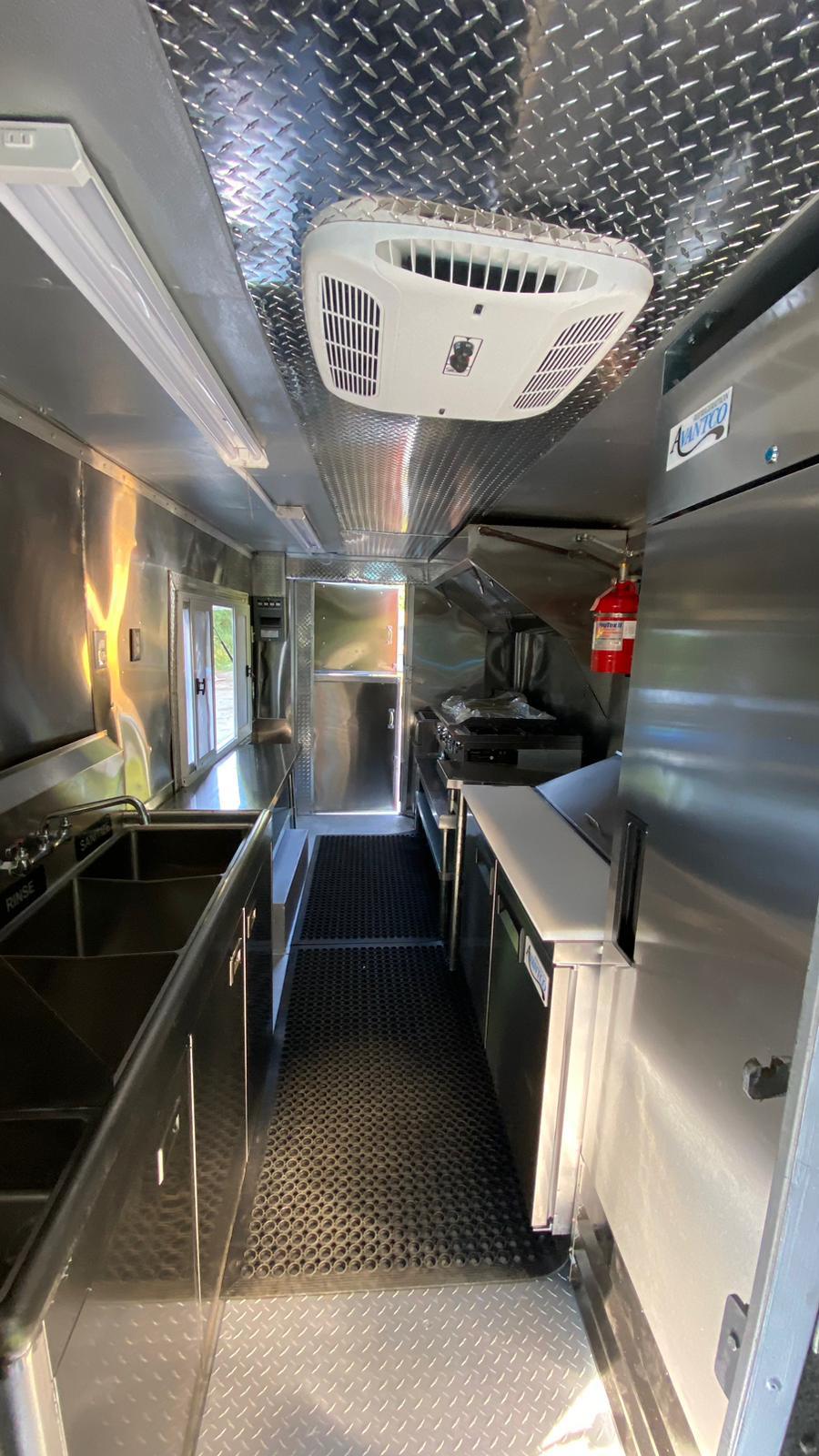
The big one: your handwashing sink. It needs to be separate from your food prep sink, have hot water at least 100°F, and be stocked with soap and paper towels. Sounds simple. You'd be surprised how many trucks fail on this alone.
Your three-compartment sink needs hot water too, and your cold storage needs to hold food at 41°F or below. A $200 digital thermometer from a restaurant supply store is non-negotiable. The cheap one from the hardware store won't cut it when the inspector asks to see calibration logs.
What most operators don't realize until they're mid-inspection: the health department wants to see your commissary agreement before they approve anything. Washington state requires food trucks to operate out of a licensed commissary where you handle water, waste, and daily cleaning. That agreement needs to be signed before your inspection date.
Why Your Commissary Choice Matters More Than You Think
Here's where the process gets tricky. Your Washington state food truck health permit application requires a commissary agreement, but not every commissary is approved for mobile food units.
Seattle, Tacoma, and Spokane all have commercial kitchens that rent space to food truck operators. Expect to pay $300 to $800 per month for commissary access in the Seattle metro area. In smaller cities like Wenatchee or Bellingham, you might find options under $400.
The catch: your commissary needs to be within a reasonable distance of your operating area. Health jurisdictions want to know you can realistically return to base each day. If you're planning to operate in Olympia but your commissary is in Puyallup, that's a 45-minute drive that raises questions.
Your commissary also needs to handle your wastewater disposal. If you're not using a certified dump station, that's an automatic failure. Some commissaries include wastewater services in their monthly fee. Others charge per dump. Ask before you sign.
The Application Process Nobody Walks You Through
Your Washington state food truck health permit application requires a detailed menu, a food safety plan, and proof that at least one person on staff has a Food Worker Card. That card costs about $10 and requires passing an online test through the state's training program.
The menu review matters more than you'd think. Health departments want to know every item you're serving and how you'll prepare it. If you're planning a limited menu of pre-packaged items, your requirements are simpler. If you're doing full cooking on board, expect more scrutiny on your ventilation system and cooking equipment.
Plan for the entire process to take 4 to 8 weeks from application submission to receiving your permit. That timeline assumes you have everything ready. Most first-time operators underestimate this and end up paying storage fees on a truck they can't legally operate.
What If You're Operating in Multiple Counties?
Here's a question that trips up a lot of operators: do you need a separate permit for each county?
Washington state has reciprocity agreements between many jurisdictions. If you have a valid permit from one county, you can often operate in neighboring counties for short periods. But this isn't automatic. Some counties require you to notify them before operating within their borders. Others require a temporary event permit if you're doing a multi-day event.
Pierce County and Snohomish County have relatively straightforward reciprocity with King County. But if you're planning to cross the Cascades, expect different rules entirely. The key is checking with each jurisdiction before you commit to an event schedule.
The Equipment Requirements That Catch People Off Guard
Your Washington state food truck health permit inspection will look at specific equipment that many used trucks don't have. If you're buying a used truck from another state, budget for upgrades.
A commercial exhaust hood with fire suppression runs $5,000 to $12,000 installed. That's often the single biggest equipment expense. Used trucks from other states frequently fail Washington inspections because their hood systems don't meet our specific fire code requirements.
Your water tanks need to be labeled and your plumbing needs to meet state code. The gray water tank needs to be at least 15% larger than your fresh water tank. That's a specific Washington requirement that catches out-of-state operators off guard.
The total cost to make a used truck compliant in Washington state often runs $15,000 to $30,000, not including the vehicle itself. That number surprises people who've read generic food truck startup guides that quote $50,000 for everything.
Why Your Food Safety Plan Is Your Best Investment
The operators who get their Washington state food truck health permit fastest are the ones who treat the food safety plan as a working document, not paperwork.
Your plan needs to detail how you'll prevent cross-contamination, how you'll handle allergens, and your procedures for cleaning and sanitizing. If you can't explain your process clearly on paper, the inspector will assume you can't execute it in practice.
This is also where proper equipment placement matters. Your [food truck equipment placement best practices](/food-truck-equipment-placement-best-practices) directly affect whether you can maintain the separation between raw and ready-to-eat foods that inspectors expect. A poorly designed layout makes compliance harder every single day you operate.
The Staffing Reality Check
Every person who handles food in your truck needs a Food Worker Card. That includes you. The test takes about two hours online and covers basic food safety principles.
But here's what the health department doesn't tell you: they can show up for unannounced inspections at any time. If your staff can't answer basic questions about food temperatures or cleaning procedures, that goes on your inspection report. Two failed inspections in a row can trigger increased scrutiny or even permit suspension.
Washington state conducts about 80,000 food safety inspections annually across all facility types. Mobile food units get inspected at least twice per year, often more if you operate in high-traffic urban areas. Your [food truck staffing requirements](/food-truck-staffing-requirements) should include ongoing training, not just initial certification.
The Real Timeline and Cost Picture
Let me give you a realistic scenario. You're buying a used truck, doing basic compliance upgrades, and applying for your permit in King County.
Your timeline: 2 weeks for the used truck purchase and initial assessment, 3 to 6 weeks for equipment upgrades, 1 week to complete your food safety plan and application, then 2 to 4 weeks for the health department to review and schedule your inspection.
Total: 8 to 13 weeks from truck purchase to legal operation.
Your costs: $15,000 to $30,000 for compliance upgrades, $500 to $1,200 for the permit itself, $400 to $800 per month for commissary access, and $10 per person for Food Worker Cards.
That's the real number nobody gives you upfront. And it's why so many food trucks in Washington state take longer to launch than their owners expected. If you're working through these numbers and wondering how they apply to your specific concept, you can get a custom quote from a team that builds compliant trucks for Washington operators.
The operators who succeed in this state treat the health permit process as a design constraint, not an obstacle. They build their menu, their equipment package, and their staffing plan around what the inspection requires. That's the difference between a 6-week launch and a 6-month delay.
And if you're comparing a truck versus a trailer for Washington weather, the [food truck vs trailer for weather](/food-truck-vs-trailer-weather) decision affects your inspection too. Trailers often have simpler plumbing requirements, but they need a tow vehicle that meets commercial standards.
The Washington state food truck health permit isn't the hardest part of this business. But it's the part that filters out operators who aren't serious about compliance. The ones who treat it as a checklist to game end up with suspended permits and empty schedules. The ones who build their operation around it end up with a business that survives contact with an inspector.
Te puede interesar: How to Calculate Food Truck Profit Margin: Simple Guide
Te puede interesar: Food Truck Wrap Maintenance
Te puede interesar: Trailer to Food Truck Conversion: Real Steps & Costs