Food Truck Marketing Ideas Local: What Actually Works
Most Food Truck Marketing Advice Is Written by People Who've Never Queued for Their Own Truck
Here's the number that should reframe everything: the average food truck customer travels 1.8 miles to reach you. Not 5. Not 10. Under two miles. So when you search for food truck marketing ideas local, you're not looking for a national brand strategy — you're looking for a way to dominate a radius most marketing agencies don't even think about.
I've watched operators in Houston spend $400 a month on Instagram ads targeting a 25-mile radius and wonder why nobody shows up. Meanwhile, a taco truck in Midtown posts in three neighborhood Facebook groups and sells out by 1pm. The difference isn't budget. It's geography.
Let me give you a concrete example. A barbecue truck off Washington Avenue in Houston started posting its daily location pin at 9:47am every single day — same time, same format, same three groups. Within six weeks, lunch revenue went from $380 to $1,100 a day. No ads. No influencer. Just relentless local consistency.
Why "Going Viral" Is the Wrong Goal for a Truck That Can't Move Fast Enough
Viral content sends people from everywhere. Your truck serves people from one place. These two facts are in direct conflict, and most operators don't notice until they've wasted a summer chasing reach.
A viral TikTok that hits 400,000 views in another state does nothing for Tuesday lunch. What does work is being the truck that 2,000 people within walking distance think of first. That's a smaller, more boring, more profitable goal.
The three local channels that actually convert
Nextdoor and neighborhood Facebook groups. Not your personal page — the specific groups for the neighborhoods where you park. Post your location, your special, and your hours. That's it. No hashtags, no "come check us out!" energy. Just information people can act on.
Google Business Profile with your daily location updated. This is the one most operators ignore. When someone searches "food truck near me" at 12:15pm, Google shows trucks with recent activity. If your profile hasn't been touched in three weeks, you don't exist. Update your location daily. It takes 90 seconds.
Text message lists. Yes, in 2026. A 200-person SMS list converts at roughly 18% on a slow day. Email converts at 2-3%. If you're not collecting numbers at the window, you're leaving the cheapest marketing channel on the table.
What Local Marketing Actually Costs — and What It Returns
Let's put real numbers on this. A basic local setup runs about $180 a month:
Google Business Profile: free. Facebook groups: free. SMS platform like SimpleTexting: $39/month for 500 contacts. Printed location cards to hand out at the window: $60 for 1,000. A magnetic sign for the side of the truck that lists your weekly schedule: $80 one-time. Total recurring: under $50.
Compare that to the $400-600 most operators spend on geo-targeted social ads that reach people who will never cross your path. The math isn't close.
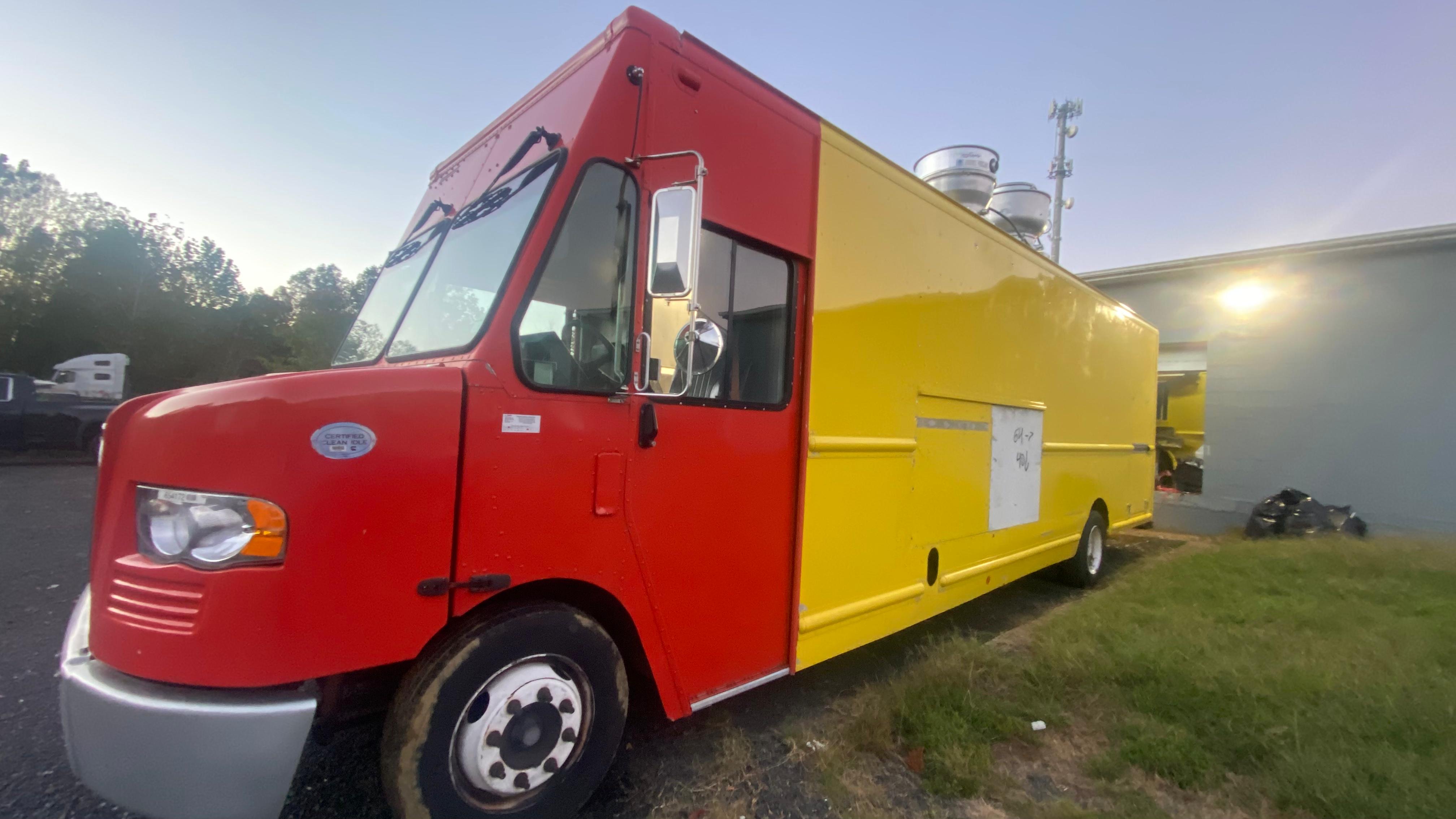
But here's where it gets interesting. The operators who win locally aren't the ones with the best marketing. They're the ones whose truck looks like it belongs in the neighborhood. If your wrap is peeling and your generator is loud enough to hear from the sidewalk, no amount of Facebook posting fixes that. This is where branding for a mobile business stops being aesthetic and becomes operational.
Parking Is a Marketing Decision, Not a Logistics One
The single biggest local marketing lever isn't digital at all. It's where you park.
A truck on a side street with no foot traffic will fail no matter how good the Instagram is. A truck in front of a construction site at 11am, a brewery at 6pm, and a residential corner on Saturday morning will succeed even with zero online presence. The location is the campaign.
If you're choosing between a truck and a trailer for this kind of schedule-hopping, maneuverability matters more than most buyers realize — the parking and maneuverability comparison is worth reading before you commit, because a truck that can't squeeze into a 22-foot spot loses the best pitches.
And if you're still deciding what to build in the first place, the real numbers on a box truck conversion will tell you fast whether your local strategy can support the build cost.
The One Metric That Tells You If Local Marketing Is Working
Forget follower count. Forget reach. Track one thing: how many customers mention a specific channel when they order.
Ask at the window: "How'd you hear about us?" Log the answers for two weeks. You'll find that 60-70% say "I walk by here" or "a friend told me." That's your real marketing engine. Everything else is supporting cast.
If those numbers are low, the problem isn't your content strategy. It's that you're parking in the wrong place, at the wrong time, with a truck that doesn't signal "this is worth stopping for." That's a physical problem, not a digital one.
Operators who want to fix the physical side first — the build, the layout, the equipment that makes service fast enough to keep a line moving — usually start with mobile kitchen consultations before they spend another dollar on ads. It's the less glamorous move, and it's the one that actually moves revenue.
The trucks that win locally in 2026 aren't the ones with the cleverest campaigns. They're the ones that showed up in the same three spots, at the same three times, for long enough that people stopped checking their phone to find them. Consistency beats creativity when your customer base lives within walking distance. Every time.