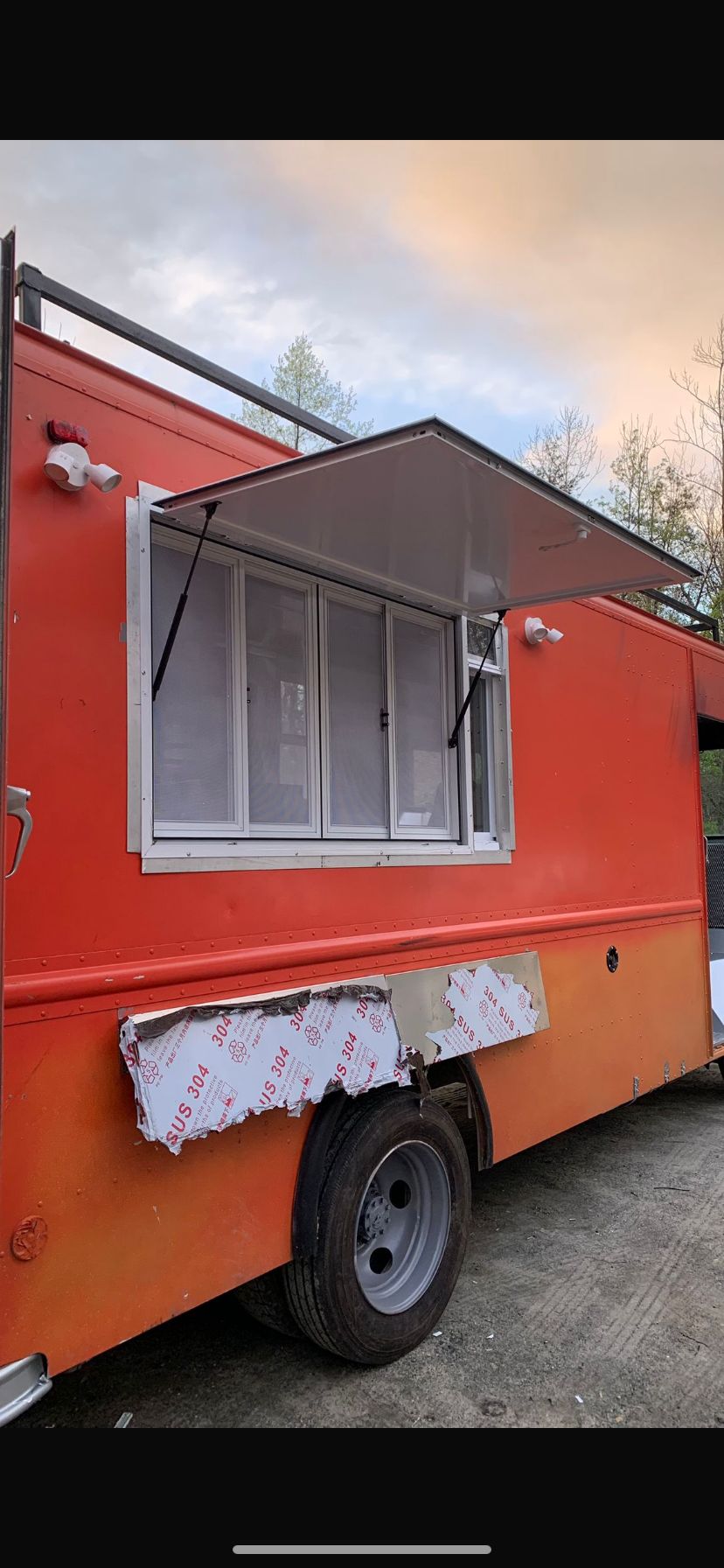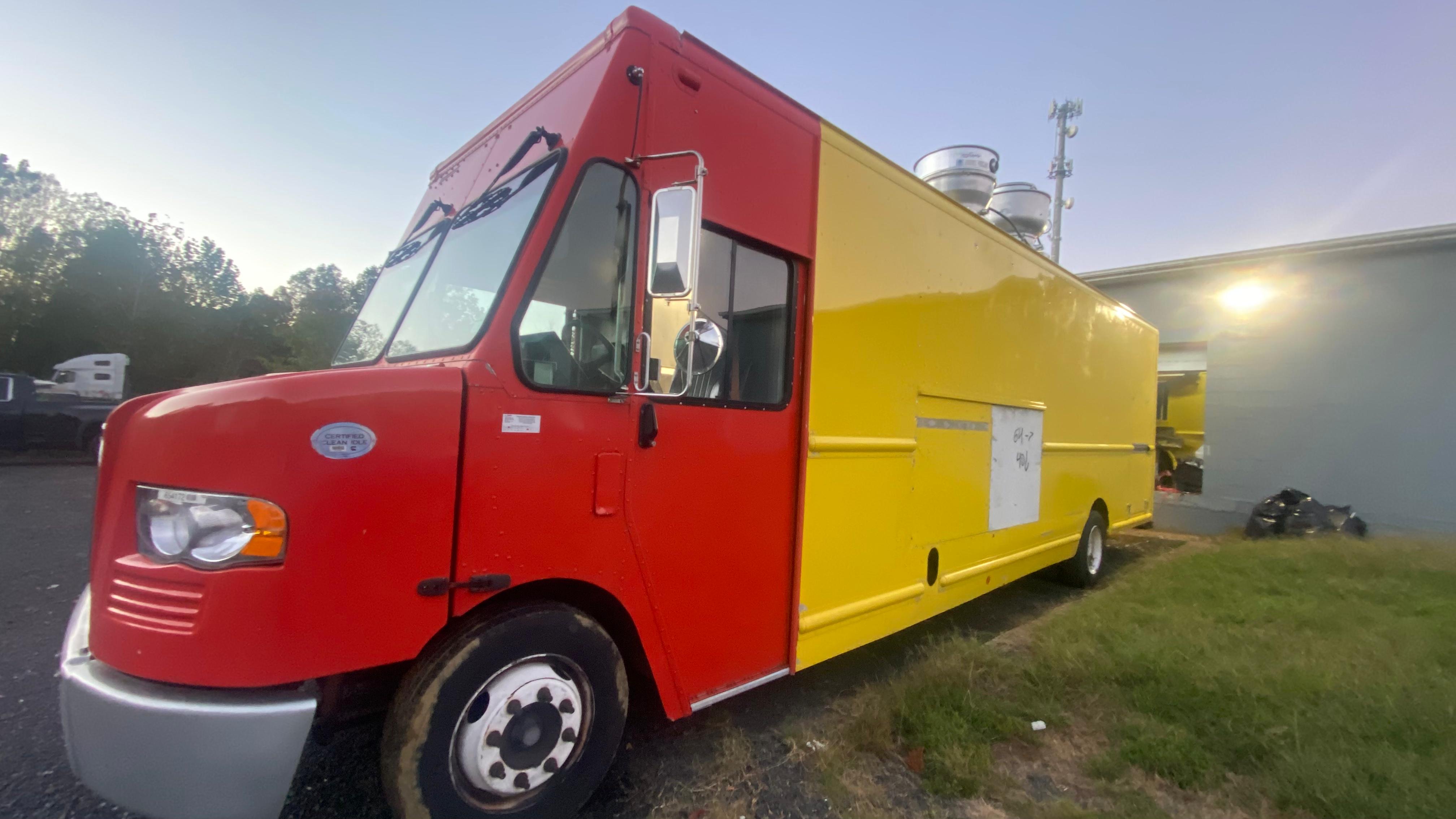
Concession Trailer Price With Equipment
# Most Concession Trailer Price Lists Are Fiction
If you search for "concession trailer price with equipment," you'll find a hundred websites quoting $25,000. Maybe $40,000. Some will even whisper $15,000 if you buy "basic."
None of those numbers survive contact with reality.
The real concession trailer price with equipment in 2026 sits between $48,000 and $180,000. That's not a typo and it's not a range designed to make you call a salesperson. It's the honest spread between a used 8-foot trailer with a flat-top grill and a fully custom 28-foot commissary on wheels with a hood suppression system that passes inspection on the first try.
Here's what nobody tells you: the trailer itself is rarely the problem. It's the equipment, the build-out, and the gap between what you think you need and what health inspectors in your city actually require.
Where Your Budget Gets Destroyed
Let me give you a concrete example. A 16-foot concession trailer shell—bare steel, no equipment, no wiring—runs $18,000 to $28,000 depending on the manufacturer. That's your starting line.
Then you add:
- Commercial refrigeration: $4,000–$9,000
- Hood and fire suppression system: $6,000–$12,000 (non-negotiable, and the cheapest ones fail inspection)
- Three-compartment sink setup with proper plumbing: $2,500–$5,000
- Cooking equipment (grill, fryer, or both): $5,000–$15,000
- Electrical system with generator or shore power hookup: $3,000–$8,000
- Water tanks, pumps, and wastewater system: $2,000–$6,000
Total that up and you're at $40,500 on the low end before you've painted anything, before your custom wrap, before your point-of-sale system, before your initial inventory.
The truth is that a turnkey trailer from a reputable dealer lands between $65,000 and $110,000 when you actually want to open for business. Those $25,000 trailers exist. They also come with used equipment that's already failed in another operator's kitchen, no warranty, and a configuration that your local health department will red-flag the moment you apply for a permit.
The Inspection Difference Nobody Mentions
Here's where it gets interesting. That $25,000 trailer might be perfectly legal in one county and completely useless twenty miles away.
Texas, for example, has some of the most established mobile food unit regulations in the country. Houston requires a Mobile Food Unit permit, a food manager certification, and a commissary agreement before you can operate. Your trailer needs a hand-washing sink that's separate from your food prep sink, a backflow prevention device, and a test kit for your sanitizer solution.
California takes it further. The California Retail Food Code has specific requirements for the surface material of your food contact areas, your hot water capacity, and your waste disposal plan. A trailer built for Arizona's climate and regulations might not pass in San Diego.
This brings us to the question that actually matters: what does the concession trailer price with equipment look like when you factor in your specific location?
The equipment list changes based on your menu and your jurisdiction. If you're serving burgers and fries, you need a ventless fryer or a hood system rated for grease-laden vapors. That's $8,000 to $15,000 alone. If you're serving coffee and pastries, you can skip the hood entirely and save $10,000.
Most first-time buyers discover this after they've already signed a contract. They bought a "fully equipped" trailer that's configured for hot dogs, but they want to serve tacos with fresh cilantro and lime. Suddenly they need a prep refrigerator with a cold well, a separate hand sink, and a three-compartment sink that meets NSF standards. The upgrade costs more than the trailer they originally priced.
What "Fully Equipped" Actually Means
Ask five manufacturers what "fully equipped" means and you'll get five different answers. Some include a point-of-sale system. Others don't. Some include LED lighting and a sound system. Others include the bare minimum to pass a health inspection.
What you actually need is a trailer that passes inspection on day one, not a trailer that looks impressive in photos.
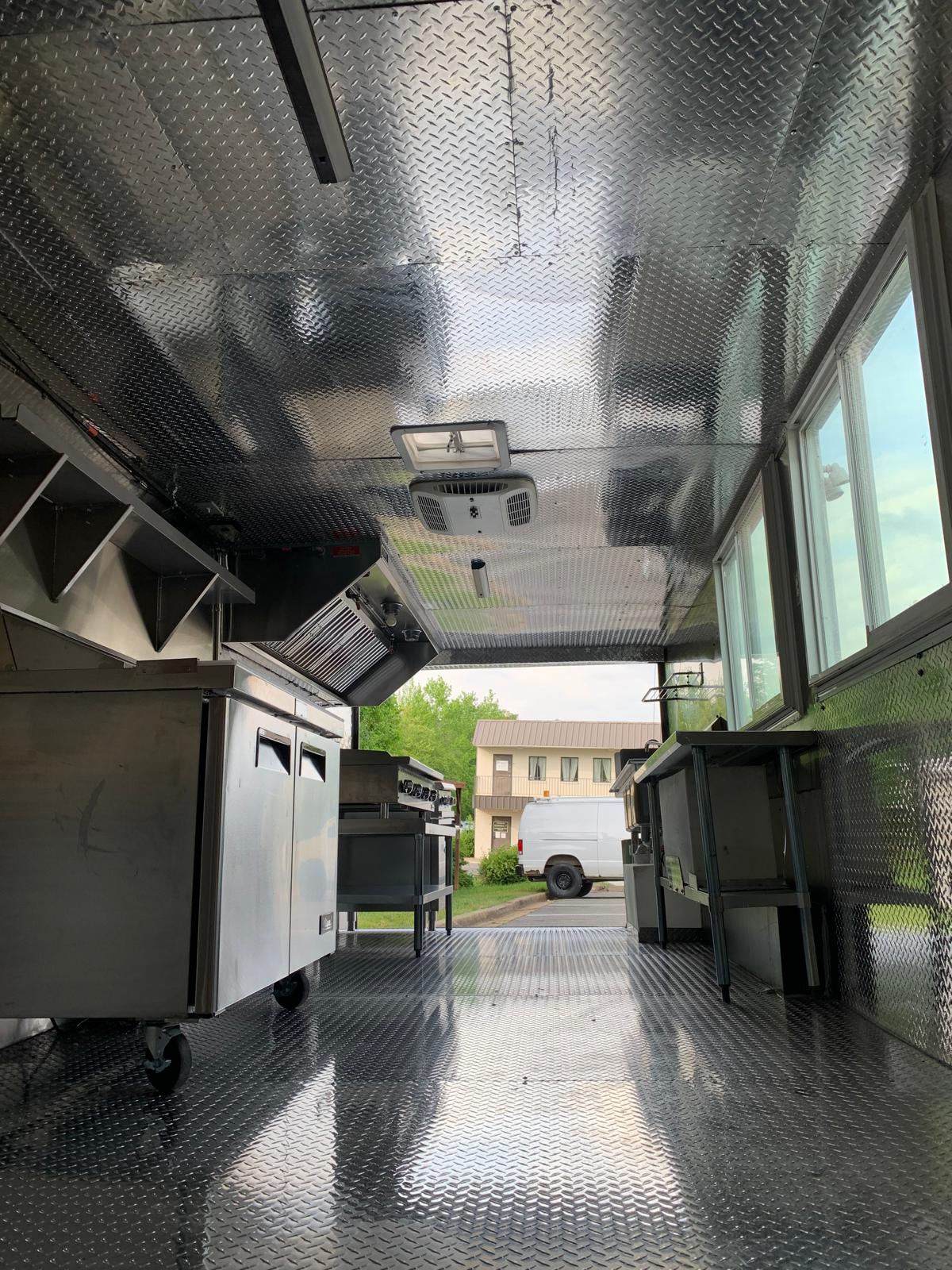
A realistic equipment package for a menu that requires cooking includes:
- Commercial-grade cooking equipment from a brand like Imperial, Vulcan, or Garland
- A hood suppression system with an annual inspection certificate
- NSF-certified refrigeration that maintains 41°F or below
- A three-compartment sink with hot water at least 120°F
- A separate hand-washing sink with a gooseneck faucet
- A water heater that can sustain continuous hot water during service
- Proper ventilation that actually moves air when the hood is running
The difference between a $70,000 trailer that opens for business and a $45,000 trailer that needs another $20,000 in modifications is the difference between reading the regulations before you buy and reading them after.
If you want to understand the real costs of a conversion, check our breakdown of trailer to food truck conversion: real steps & costs. It goes deeper into the build-out process and where the money actually goes.
Financing, Depreciation, and the Numbers That Keep You Up at Night
Here's a percentage that should make you pause: 73% of food trucks in major cities close before their second year. It's not the food. It's the economics.
A $90,000 trailer financed over seven years at 11% interest costs you about $1,530 per month. That's $18,360 per year before you buy a single tortilla. Add insurance at $3,000–$6,000 annually, commissary fees at $300–$500 per month, and maintenance reserves at 5% of revenue, and your fixed costs are over $30,000 per year before you sell your first plate.
Your trailer needs to generate roughly $600 per week just to cover its own existence. That's before labor, before food costs, before marketing, before the propane refills.
This is why the concession trailer price with equipment is actually the wrong question. The right question is: what's your monthly break-even number, and can your location and concept realistically hit it?
A trailer that costs $70,000 but lets you operate in a high-traffic downtown spot with no commissary rental might be cheaper than a $45,000 trailer that forces you to drive 30 minutes to a commissary every morning and night. The cheaper trailer costs you more in time, fuel, and lost revenue.
The Smart Way to Buy in 2026
Before you sign anything, talk to operators who run the exact type of food business you're planning. Ask them what they'd change about their trailer. Ask them what their health inspector flagged on the first visit.
Then talk to a dealer who actually builds trailers, not a broker who resells them. A good manufacturer will ask about your menu, your target locations, and your volume before they quote you a price. If they quote you without asking questions, they're selling you a box, not a business.
If you're comparing options, you should also look at the weather implications of trailers versus trucks. Our guide on food truck vs trailer for weather covers how your choice affects operations when temperatures drop or rain doesn't stop.
And when you're ready to talk numbers for your specific concept, get a custom quote from a builder who'll ask you the right questions before they tell you a price.
The Real Price Is the One You Can Sustain
The concession trailer price with equipment is a number that only makes sense in context. A $50,000 trailer that fits your menu, passes inspection, and lets you operate efficiently is worth more than a $90,000 trailer that's overbuilt for what you need. A $120,000 trailer that lets you serve a high-margin menu in a prime location might be the cheapest option you have.
Don't shop for a price. Shop for a business model that works.
The operators who survive past year two aren't the ones who found the cheapest trailer. They're the ones who understood their costs, their market, and their regulations before they spent a dollar. They bought the trailer that matched their plan, not the plan that matched a trailer they fell in love with online.
That's the math that matters. Everything else is just sheet metal and stainless steel.
If you're still in the planning phase, also check our guide on how to calculate food truck profit margin so you know what your trailer needs to earn before you commit to a purchase. And when you're ready to move forward, mobile kitchen consultations can help you match your concept to the right equipment package.
Te puede interesar: Food Truck Kitchen Equipment Package Price
Te puede interesar: Food Truck Vs Concession Trailer