Food Truck Staffing Requirements
# Food Truck Staffing Requirements: How Many Employees Do You Actually Need?
You've bought the truck, nailed the menu, and picked your spot. Then it hits you: who's going to work it? Most owners guess. And that guess usually costs them thousands in wasted payroll or lost sales.
Here's the uncomfortable truth about food truck staffing requirements: there's no universal number. A taco truck slinging $8 street tacos at a construction site needs a completely different crew than a gourmet burger truck parked at a brewery on Friday nights. But there are patterns, and understanding them separates profitable trucks from the ones that quietly disappear.
The Minimum Viable Crew: Two People, Barely
Let's start with the absolute floor. Can you run a food truck alone? Technically, yes. Practically, you'll hate your life within three weeks.
A solo operator has to take orders, handle cash, cook, plate, restock, and answer customer questions. During a lunch rush, that's physically impossible. The math doesn't work: the average food truck transaction takes 3-4 minutes from order to handoff. If you're alone, that stretches to 6-8 minutes. At $12 per customer, you're leaving $60-80 on the table every single hour of your rush.
The realistic minimum is two people: one on the grill, one on the register and expediting. That's the bare-bones setup for a limited menu of 6-8 items. You'll be slower than you'd like, and your crew will burn out fast, but it works for a short-term event or a low-volume weekday spot.
When Three Becomes the Sweet Spot
Here's where most established trucks land: three employees plus the owner. That's the crew size that lets you actually scale.
With three people, you can split the work properly. One person handles the griddle or fryer. One runs the register and window. One preps, restocks, and keeps the line moving. That's how you push 60-80 orders through a lunch service without chaos.
Think about the numbers. If three staff members help you serve 25 more customers per day at an average ticket of $13, that's $325 in extra daily revenue. Over a 20-day month, that's $6,500. Paying a third employee costs you maybe $2,400 including taxes and tips. The math isn't close.
For most concepts, three people is the efficiency sweet spot. It's enough coverage to handle rushes without standing around during slow periods.
What Your Menu and Service Model Demands
Your specific food truck staffing requirements depend on how you're built. This is where owners make their biggest mistake: copying another truck's crew size without thinking about their own operation.
A taco truck with pre-cooked meats and a simple assembly line? Two people can crush it if you've prepped properly. A grilled cheese truck with a flat-top and a line of 30 people at lunch? You need three, minimum, and you'll want a fourth if you're doing events.
Here's the rule of thumb: count the number of steps between order and handoff. If it takes more than four steps—taking payment, assembling, cooking, wrapping, handing off—you need a dedicated person for each step during rush hours.
Your service model matters too. Pre-order and pickup systems change everything. If you're using an app that handles payment and ordering, you can trim one person from the register. If you're cash-only, you need someone who can make change fast and keep the line honest.
The Real Cost of Being Understaffed
People think hiring more staff eats into profits. But understaffing is the more expensive mistake.
Here's a concrete scenario: it's Saturday at a festival in Austin, and you're running a two-person crew on a truck that needs three. Your line has 40 people. Each order takes five minutes instead of three. You serve 25 people before the festival organizers start complaining about your wait times. You lose 15 sales at $14 each—that's $210 gone, plus the damage to your reputation with the event organizer.
Now multiply that by every weekend you're understaffed. This is why 73% of food trucks in Houston close before their second year. It's rarely the food. It's operations.
And understaffing doesn't just cost sales. It costs you your best employees. Nobody wants to work a truck where they're doing three jobs and getting yelled at by hungry customers. Turnover in the food industry already runs above 70% annually. Understaffing pushes that higher, and every time you lose a trained employee, you're spending another 2-3 weeks breaking in someone new.
Planning for Peak Hours vs. Slow Days
The smartest truck owners I know don't have one crew size. They have a base crew and a surge plan.
Your base crew handles your slowest regular service—maybe a Tuesday lunch in a business district. That might be two people. Your surge plan kicks in for weekend events, festivals, and catering gigs. That's when you add one or two extra hands.
This is where having a bench matters. Keep a list of reliable part-timers who can step in on short notice. Pay them slightly above market rate and treat them well. When your busy season hits, they'll answer the phone.
The scheduling math is straightforward: track your sales by hour for two weeks. Identify your peak windows. Staff for those windows, not for the entire shift. Cross-train everyone so you can flex roles during rushes.
One more thing: don't forget about prep time. Most trucks need 1-2 hours of prep before service and 30-60 minutes of cleaning after. That's work, and it needs people. Factor it into your staffing plan, or your "three-person crew" becomes a two-person crew during the actual rush because one person is still chopping onions.
The Bottom Line on Crew Size
Here's what I'd tell anyone starting out: budget for three people from day one, even if you start with two. Build your pricing and your menu around supporting that payroll. If you're working a truck yourself, that means three paid staff plus you—four bodies total. That's how you grow without burning out.
The food truck staffing requirements for your specific truck will shift as you learn your volume patterns. But starting lean and scaling up as you prove your demand beats starting fat and bleeding money.
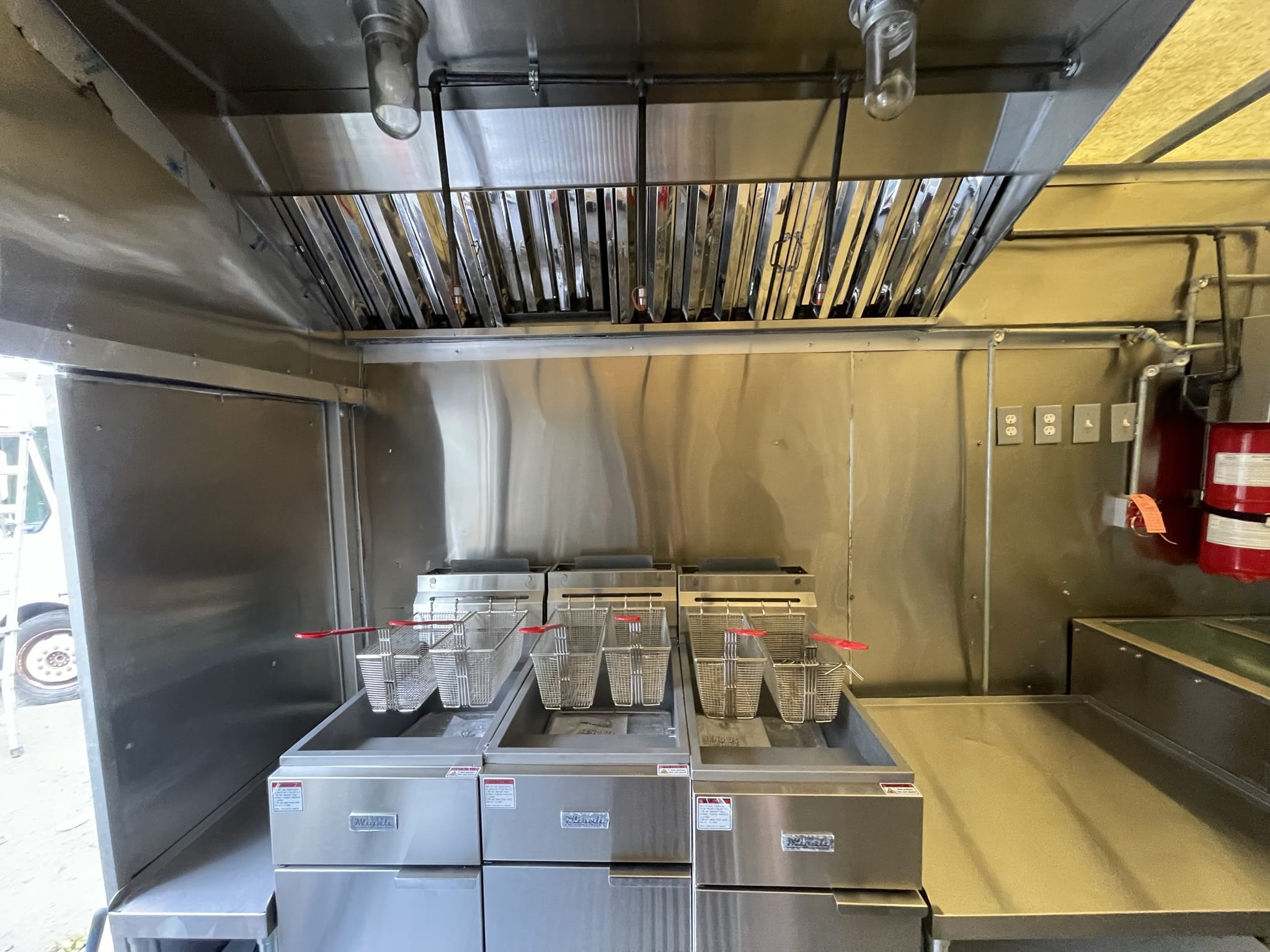
If you're still in the planning phase and want to understand how your truck's layout affects how many people you can fit in the workspace, the trailer to food truck conversion process matters more than you think. A cramped layout forces you into inefficient workflows, which means you need more people to do the same work.
You should also look at your profit margin calculations before you commit to a crew size. Payroll is usually 25-35% of your revenue. If your margins can't support three people, your menu pricing is wrong, not your staffing.
And if you're still comparing truck types, remember that the weather considerations for food trucks vs trailers affect your staffing too—a truck with a bigger service window might need an extra hand during cold months when you're serving faster to keep customers comfortable.
The owners who figure this out aren't the ones with the best food. They're the ones who treat staffing like the operational puzzle it is. Get it right, and your truck runs like a machine. Get it wrong, and you'll be the cautionary tale at the next industry meetup.
Want to talk through your specific setup? The team at MobilKitchenPro offers mobile kitchen consultations that cover everything from layout to staffing—worth a conversation before you lock in your build.
Te puede interesar: Food Truck Wrap Maintenance
Te puede interesar: Food Truck Water Tank Installation: Sizing & Setup
Te puede interesar: Houston Food Truck License Requirements