Compact Food Truck Layout For Small Space
Most food truck layout advice is written by people who've never tried to flip a burger in a 6-by-8-foot box during a lunch rush. They'll tell you to "maximize efficiency" and "optimize your workflow" — which is a fancy way of saying nothing. A compact food truck layout for small space is a physics problem, not a Pinterest board. You have roughly 48 square feet of usable floor on a standard 16-foot step van, and every inch you waste is an inch you'll curse at 12:15pm on a Saturday in Austin when the line hits 30 people.
Let's talk about what actually works.
The 16-Foot Reality Check Nobody Gives You
Here's the number that matters: most successful single-operator trucks in 2026 run between 14 and 18 feet of box length. Go smaller and you're fighting for prep space. Go bigger and you're paying $400 to $900 more per month in parking, insurance, and fuel — and you're locked out of the tight urban spots where the money actually is.
The real problem isn't "how do I fit everything." It's "what do I refuse to carry." That's the whole game.
A compact layout forces you to pick a lane. Tacos. Coffee. Smash burgers. Wings. The trucks that try to do eight things in a small space end up doing all eight badly and turning tickets in 6 minutes instead of 90 seconds. Speed is the entire business model when your footprint is small.
The Two-Line Kitchen Principle (And Why It Beats Everything Else)
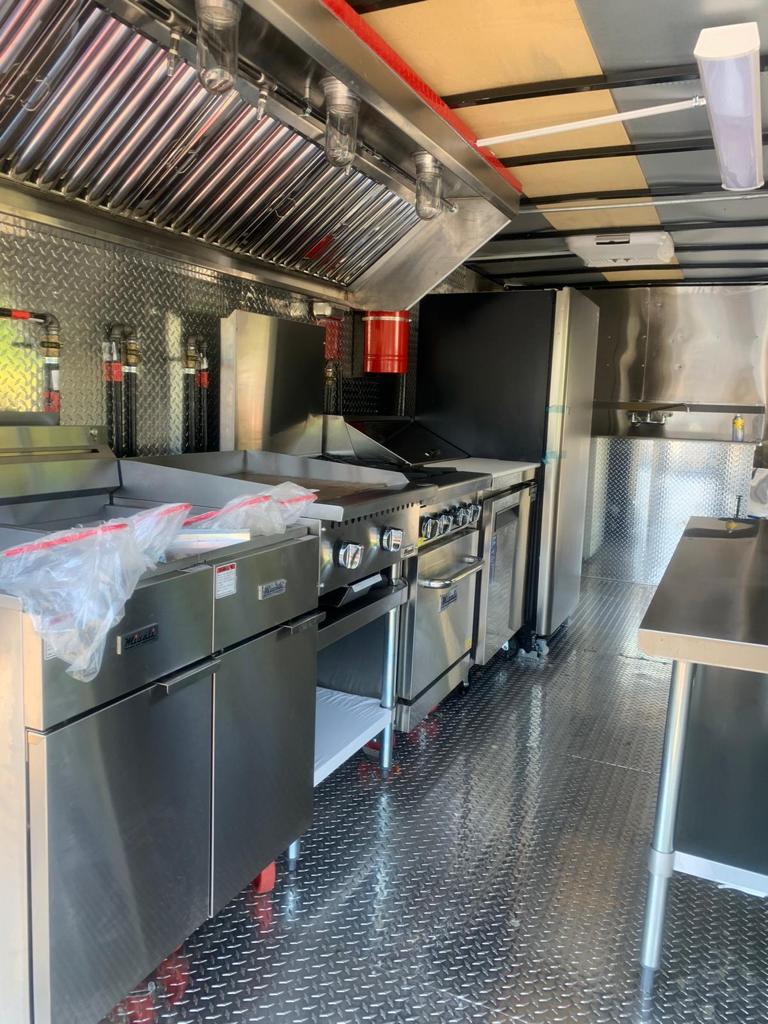
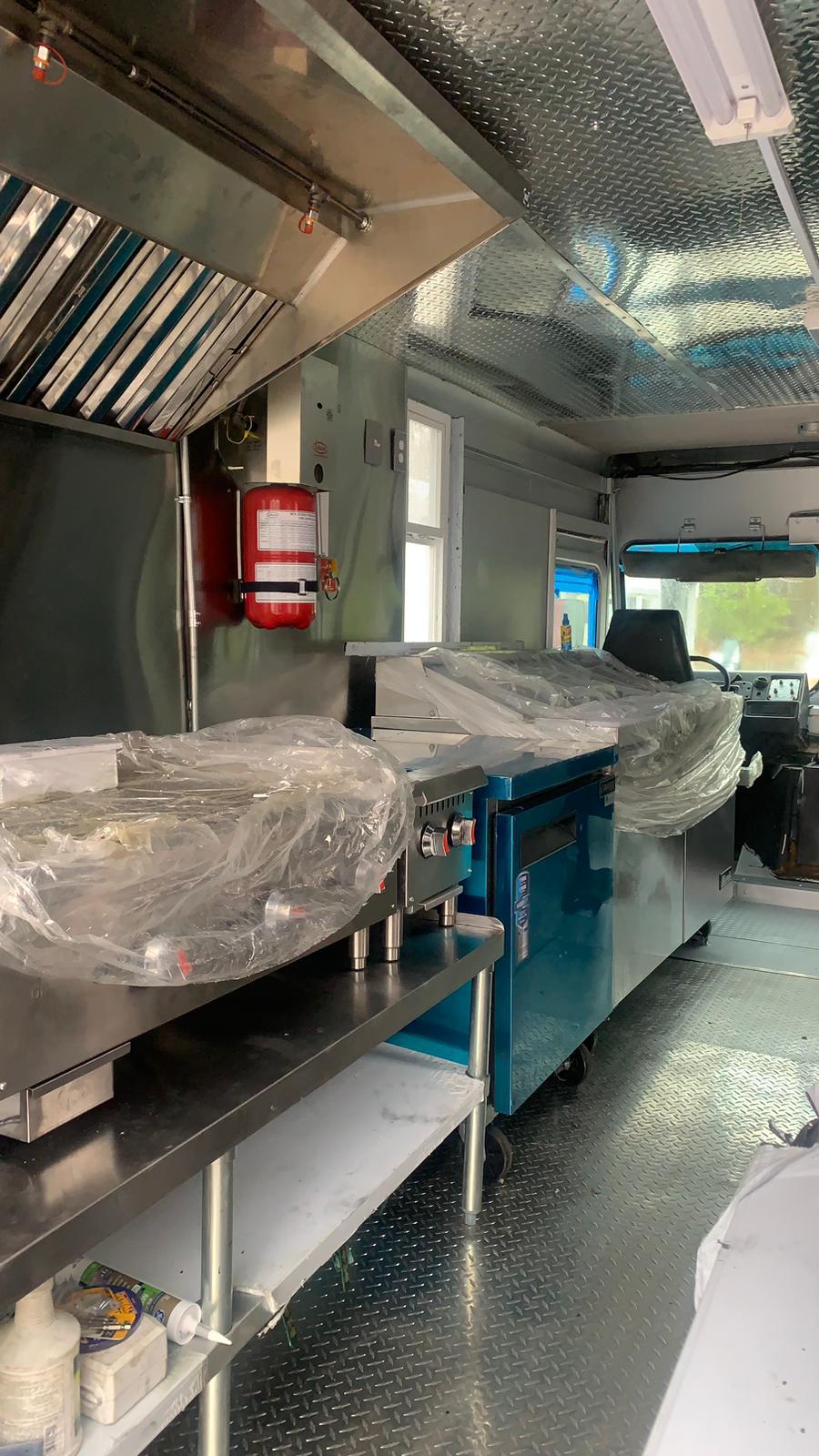
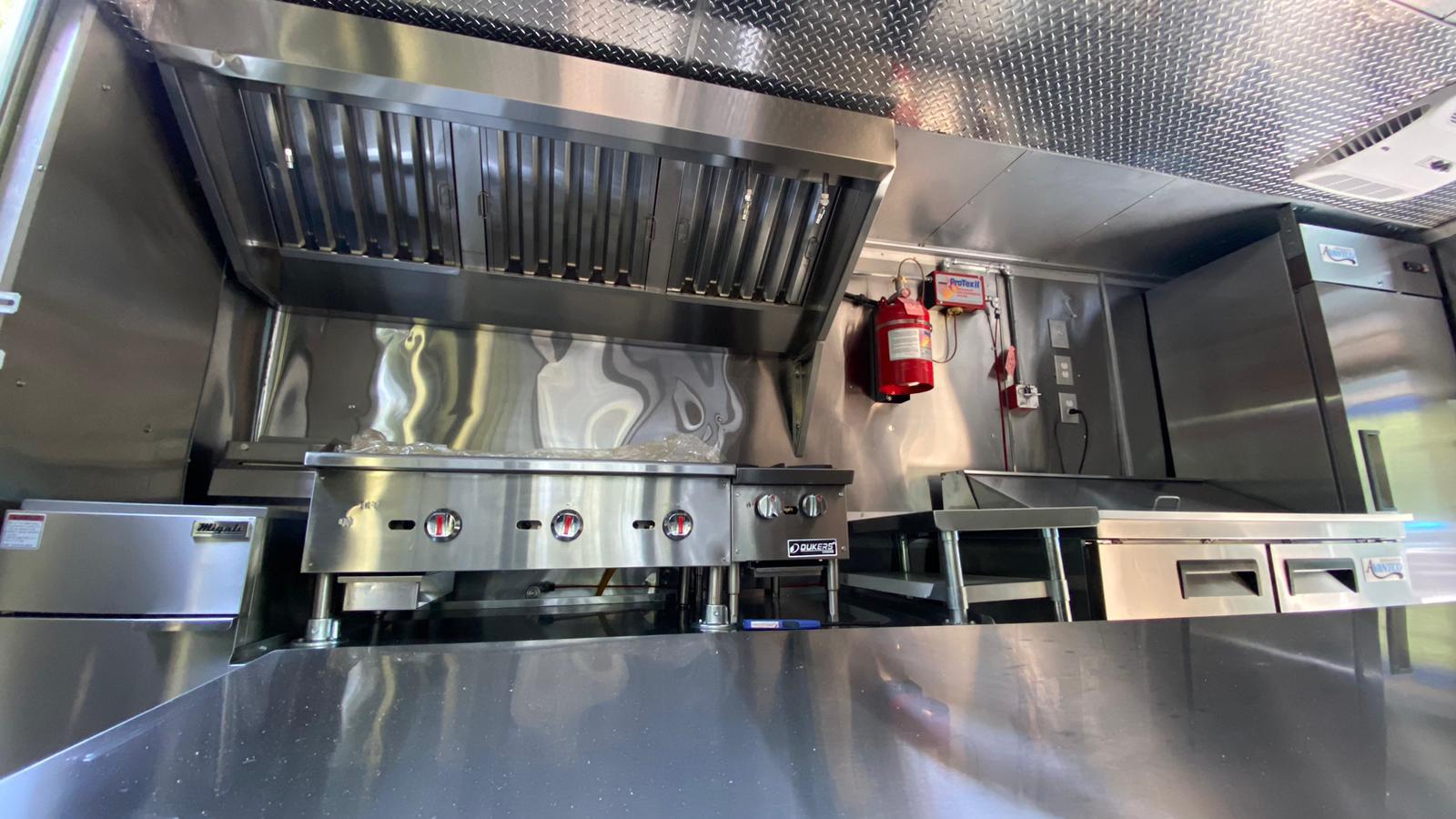
Forget the fancy diagrams. Almost every high-performing compact truck I've seen uses some version of a two-line kitchen: one line for hot production, one line for cold assembly and service.
Picture it running front to back:
- Service window side: POS, cold well, garnish station, drink cooler, hand sink within arm's reach
- Driver side: flat top or fryer, prep fridge, dry storage underneath, exhaust hood running the full length
- Back wall: three-compartment sink and water heater — non-negotiable, and most health departments will fail you without it
The magic is the aisle. You want 30 to 36 inches of clear walking space. Anything less and you're doing the sideways shuffle with a hot pan. Anything more and you've wasted floor you could've used for a second cold well.
This is also why trailer conversions often beat van builds for tight layouts — you get square walls instead of curved ones. If you're weighing that decision, the maneuverability tradeoffs between trucks and trailers are worth 10 minutes of your time before you commit.
Where Small Layouts Quietly Fall Apart
Three places. Every time.
Vertical storage. Most first-time builders only think floor-to-counter. But the space from 5 feet to ceiling height is free real estate. Overhead shelving, hanging pot racks, magnetic knife strips, cup dispensers mounted under the hood — that's where a small truck stops feeling small.
The prep sink trap. Health codes in most states require a dedicated prep sink separate from your hand sink and three-compartment sink. That's three water fixtures in a space the size of a closet. Plan for it on paper before you buy a single panel of stainless.
Refrigeration math. A 48-inch undercounter fridge sounds huge until you load it for a 200-cover lunch. Small trucks live and die by what fits cold. Some operators run a second reach-in mounted high, near the ceiling, just for backup proteins.
What It Actually Costs to Build Compact
Real numbers, 2026, no fluff. A functional compact build-out — used step van or trailer shell plus equipment, plumbing, electrical, and hood — runs $45,000 to $75,000 depending on your city and whether you're buying new or refurbished equipment. In Los Angeles or New York, push that top number to $90,000. In San Antonio or Nashville, you can land closer to $40,000 if you're patient with used gear.
Leasing equipment instead of buying outright is worth a serious look if cash flow is tight — the pros and cons of equipment leasing in 2026 break down the math honestly, including when leasing quietly costs you more.
And here's a stat most people don't know: roughly 60% of food truck failures in the first two years trace back to layout and equipment problems, not bad food. Bad flow kills good cooking.
Design Rules That Actually Hold Up on the Road
After watching dozens of builds, a few rules survive contact with reality:
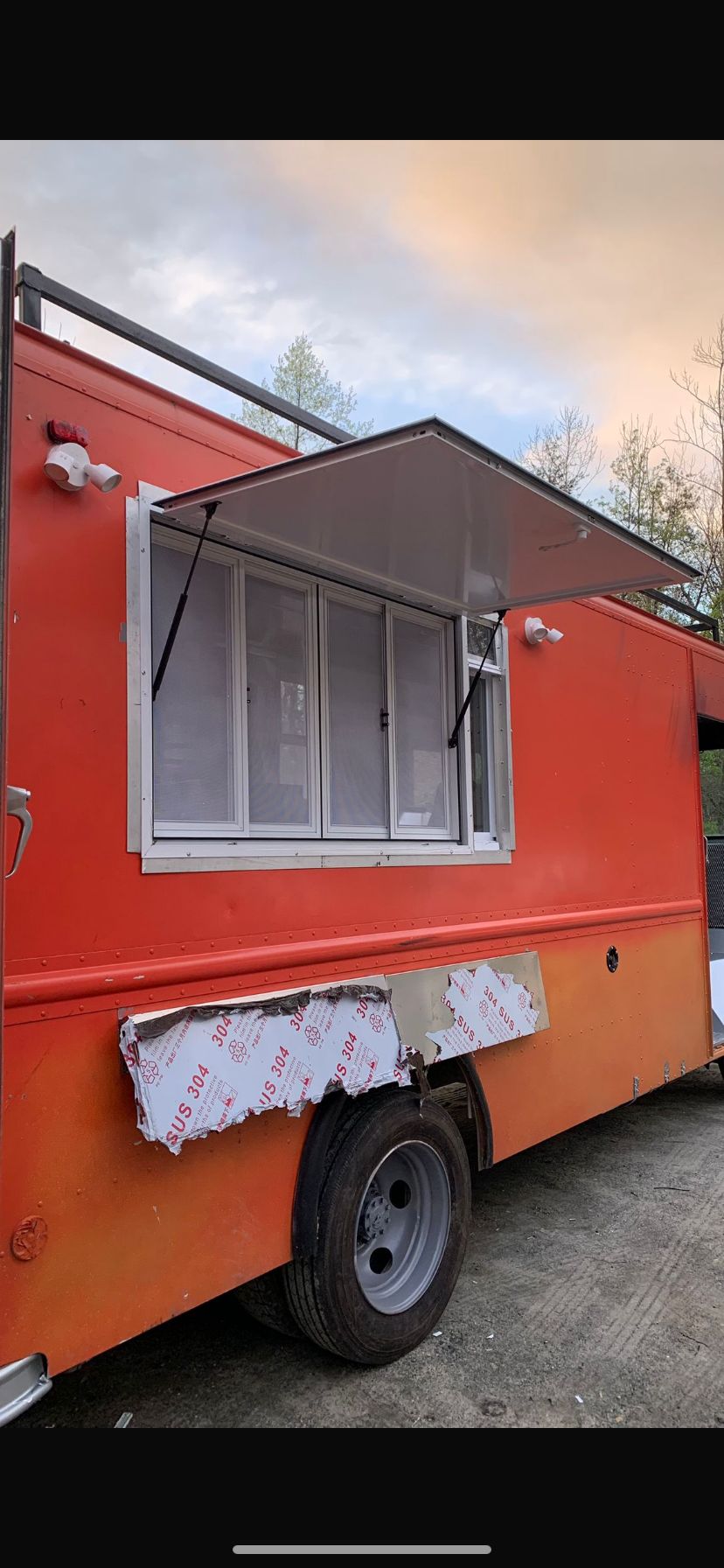
1. One cook, one path. If your operator has to cross the aisle more than twice per order, redesign it. 2. Everything within 18 inches of reach. Arms-length kitchen, every time. 3. No dead corners. Corners are for trash bins, propane, or a fold-out shelf — never for "maybe later." 4. The window is the brand. Your service window placement dictates line flow, and line flow dictates your ticket speed. Get it wrong and you'll feel it every single shift. 5. Plan maintenance access now. You will need to reach the water pump, the breaker box, and the back of the fridge. If you have to dismantle your counter to do it, you built it wrong. A real maintenance schedule starts at the layout stage, not after the first breakdown.
Branding matters too — a small truck with a clean, tight layout and a bold wrap outperforms a big messy one every time. The branding choices that actually work for mobile businesses are more about restraint than decoration.
The Question You Should Be Asking
Everyone asks "how do I fit more into a small truck." The operators who last ask the opposite: "what can I remove and still sell out by 2pm?"
That's the shift. A compact food truck layout for small space isn't about cramming. It's about subtraction. The best small trucks I've walked through feel almost empty — because everything in them earns its place.
If you're planning a build and want eyes on your layout before you cut stainless, mobile kitchen consultations exist exactly for that. And if you just want a real number for your specific concept instead of a range from an article, get a custom quote — the math changes fast once someone maps your menu against your floor plan.
Te puede interesar: Food Truck Marketing Ideas Local: What Actually Works
Te puede interesar: Food Truck Generator Installation Cost
Te puede interesar: Box Truck Food Truck Conversion: Real Costs and Trade-Offs