Food Truck Build Process Step by Step: Beginner Guide
Most Food Truck Advice Is Written by People Who've Never Built One
Ask ten people about the food truck build process step by step and you'll get ten versions of the same vague roadmap: buy a truck, install equipment, get permits, open. None of them tell you the order matters more than the parts. Get the sequence wrong and you'll tear out a $9,000 kitchen because the health department wanted the hand sink six inches to the left.
Here's the number that should stop you cold: according to industry tracking, roughly 60% of food trucks fail within their first three years. It's rarely the food. It's the build — a truck that costs too much, gets inspected too late, or can't pass fire code without another five figures.
So let's do this properly. Not the brochure version. The version that keeps you from lighting money on fire.
Step 1: Lock the Concept Before You Touch a Truck
You don't design a kitchen until you know what's coming out of it. A smash burger truck and a cold-press juice truck need completely different equipment, power, and ventilation. This is the step beginners skip, and it's the one that determines your entire budget.
Write down your menu. Not the dream menu — the twelve items you'll actually sell. Then ask: how many of those need a fryer? A flat top? A hood? A three-compartment sink? Every one of those answers adds dollars and square footage.
This is also where you build your real budget. A used step van conversion in 2026 runs $35,000–$60,000 turnkey. A new custom build from a fabricator? Easily $120,000–$175,000. If you're sketching numbers for the first time, the real numbers for build budget planning are worth reading before you commit to either path.
Step 2: Buy the Right Shell — and Know What You're Buying
Three options, and they are not equal:
Used step van, trailer, or box truck
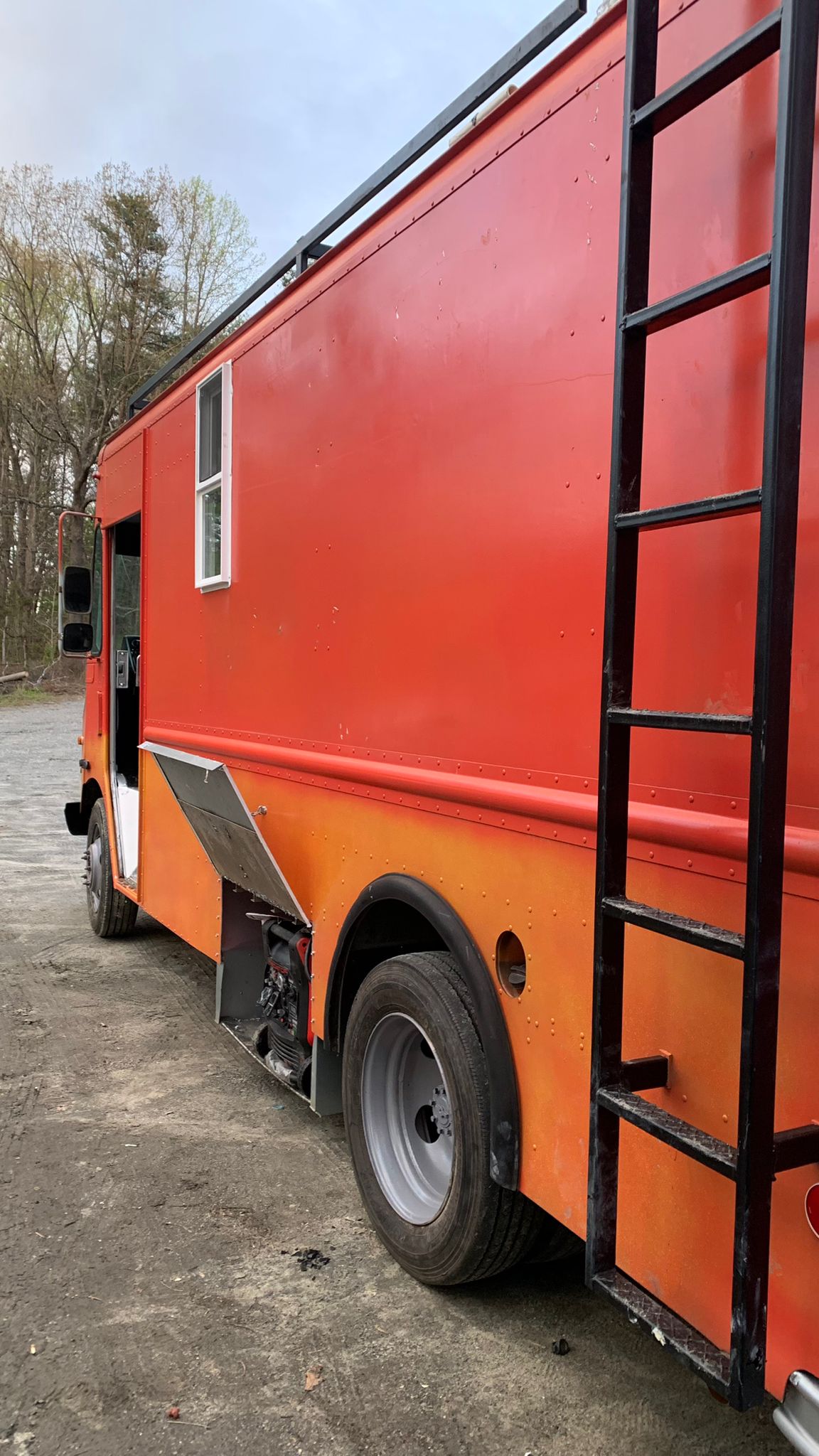
Cheapest entry. A solid used step van might run $15,000–$30,000 before conversion. The catch: you inherit someone else's rust, wiring, and frame damage. Have a mechanic inspect it. Every time.
New chassis
Clean slate, full warranty, $40,000–$70,000 before you've installed a single burner. If you're weighing a truck against a trailer, the food truck vs concession trailer comparison lays out why trailers often win on cost and why trucks win on mobility.
Turnkey build
You pay a premium for someone else's completed work. In 2026, a turnkey unit is the fastest path to opening day — what to expect from a turnkey food truck in 2026 covers the inspection and warranty questions you must ask.
Step 3: Design the Kitchen Around the Health Code, Not Your Pinterest Board
This is where the food truck build process step by step gets real. Your local health department has a rulebook, and it doesn't care about your aesthetic. Standard requirements in most U.S. jurisdictions include:
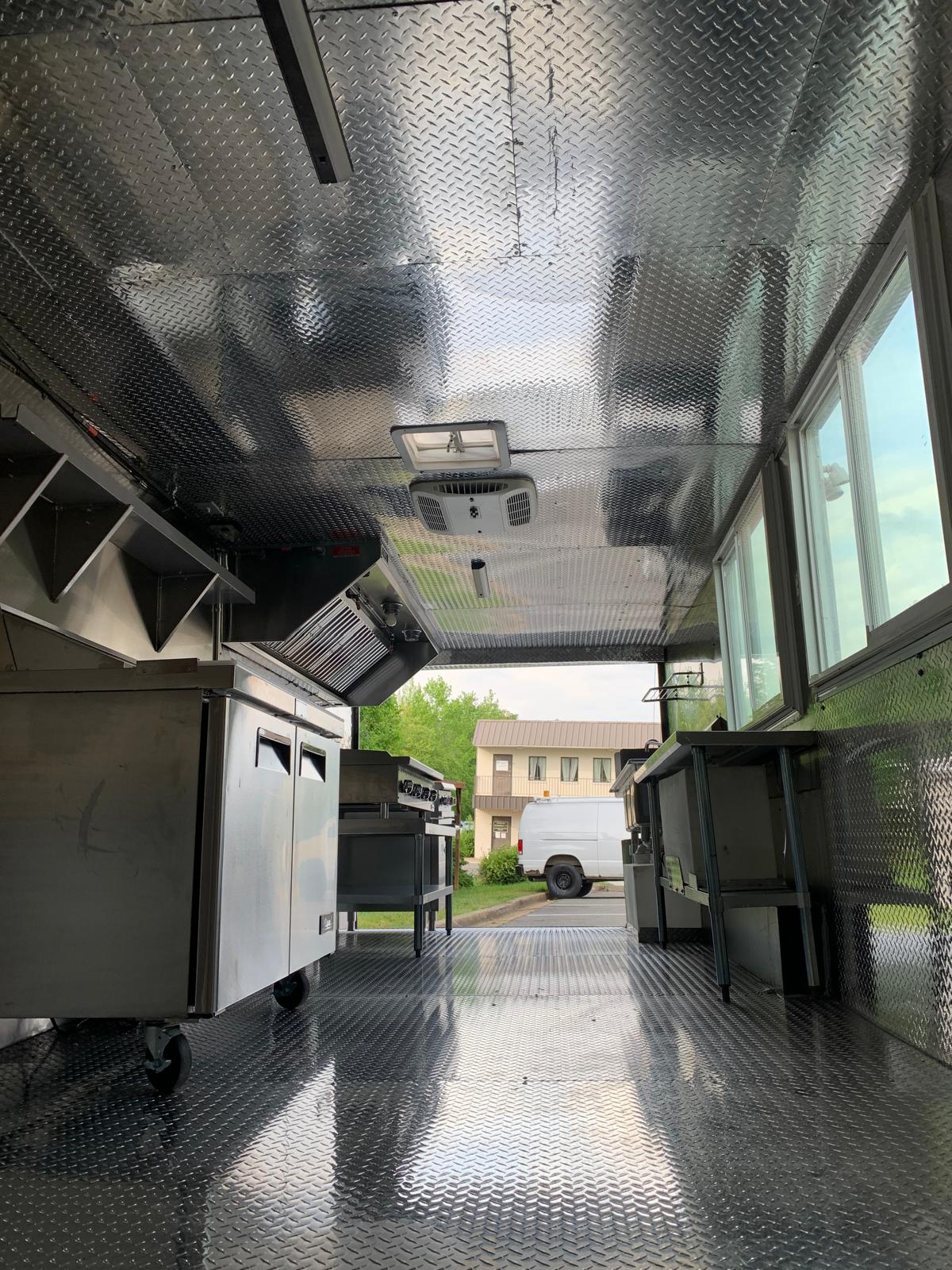
A three-compartment sink. A separate hand-washing sink. Adequate ventilation and a fire suppression system over cooking equipment. Smooth, cleanable surfaces. A potable water tank and a gray water tank sized to your operation.
Design to those rules first, then fit your equipment into what's left. A typical 16–18 foot truck gives you roughly 100–120 square feet of working kitchen. That's smaller than most people picture. Everything is a trade-off.
If you want to avoid the most common inspection failures, run through the equipment installation checklist before the health inspector ever sees your truck.
Step 4: Permits and Inspections — the Step That Kills Timelines
Here's what nobody tells you: permitting can take longer than the build itself. In a city like Houston, you're juggling a mobile food unit permit, a fire marshal inspection, a commissary agreement, and a health inspection — often across different departments that don't talk to each other.
Budget eight to sixteen weeks for permits alone in a busy metro. Start the paperwork the day you buy the shell, not the day you finish the kitchen. Builders who wait routinely sit on a finished truck for two months because they filed late.
This is also where mobile kitchen consultations save real money. Someone who's navigated your city's code before can tell you what the inspector will flag before you weld anything in place.
Step 5: Equipment, Power, and the Systems That Actually Run the Truck
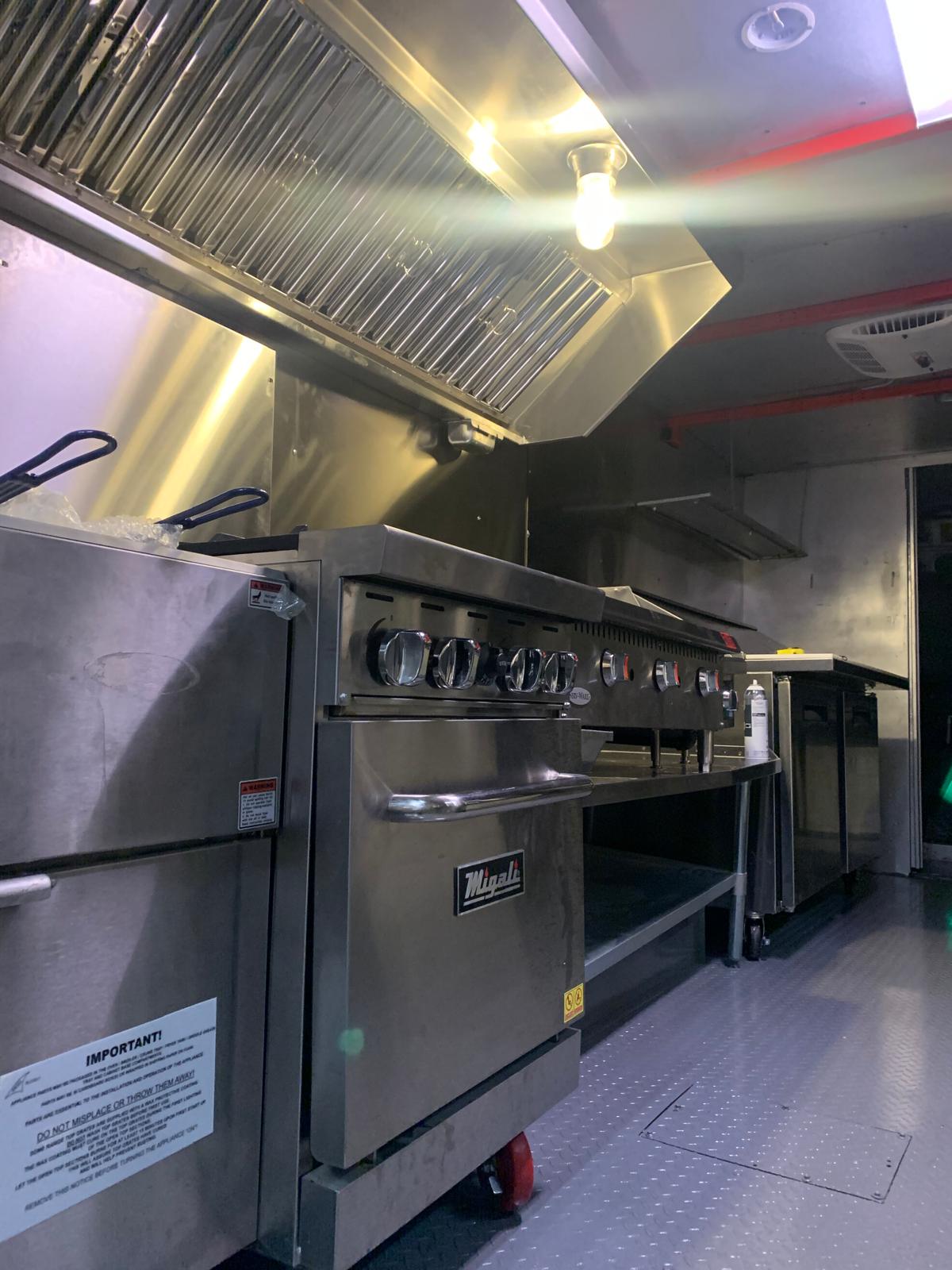
Now you install. Commercial refrigeration, cooking line, ventilation hood, fire suppression, electrical panel, generator or shore power hookup, water and gray water systems. Every one of these has to pass inspection and work together.
The most expensive mistake here is undersizing power. A truck running a fryer, a flat top, a fridge, and an AC unit on a generator that can't handle the load will fail on a 95-degree Saturday in July. Size the electrical system for peak demand, not average use.
Expect $25,000–$45,000 for a full commercial equipment package in 2026, depending on how serious your menu is. If you want a build quote scoped to your exact concept, you can get a custom quote and skip the guesswork.
Step 6: Final Inspection and Your First Service Day
Pass the health inspection, pass the fire inspection, register your commissary, get your business license and food handler certifications. Then — and only then — you're open.
Your first service day will expose everything the build didn't. The line that bottlenecks. The fridge that's too far from the prep station. The generator that's louder than you thought. That's normal. Plan for a soft launch before you commit to a big event.
And if the business side is still fuzzy — pricing, location strategy, commissary logistics — a proper business consultation before launch is cheaper than learning it in month four when the cash is gone.
The Order Is the Whole Game
Every failed food truck build I've seen failed on sequence, not effort. They bought the truck before they knew the menu. They installed the kitchen before they read the health code. They filed permits after the build was done. The parts were fine. The order was wrong.
You don't need a bigger budget. You need to do the boring steps first — the concept, the code, the paperwork — and let the shiny stuff come last. Do that, and the food truck build process step by step stops being a gamble and starts being a plan.