Food Truck Wrap Cost Texas: 2026 Prices and Options
Most Food Truck Wrap Advice Is Written by People Who've Never Paid for One
Here's the number nobody leads with: a full vinyl wrap on a standard 16-foot food truck in Texas runs $2,500 to $6,500 in 2026. That's the real range. Anyone quoting you $1,200 is either selling you calendared vinyl that'll fade in 18 months under Texas sun, or they've never wrapped a truck with a hood vent and a generator box cut into the side panel.
You searched "food truck wrap cost Texas" because you want a number. Fair. But the number depends on four things most pricing pages won't tell you — and two of them have nothing to do with vinyl.
Why Texas Wraps Cost More Than Wraps in Ohio
UV. That's the short answer. A wrap in Houston or San Antonio faces 200+ days of intense sun a year. Cast vinyl rated for that abuse — 3M IJ180 or Avery MPI 1105 — costs roughly 40% more per square foot than the calendared stuff a budget shop will quote you.
Then there's labor. Texas wrap shops in Austin and Dallas charge $75–$110 per hour in 2026. A full wrap with rivets, window cutouts, and a roof curve takes 16–24 hours. Do the math.
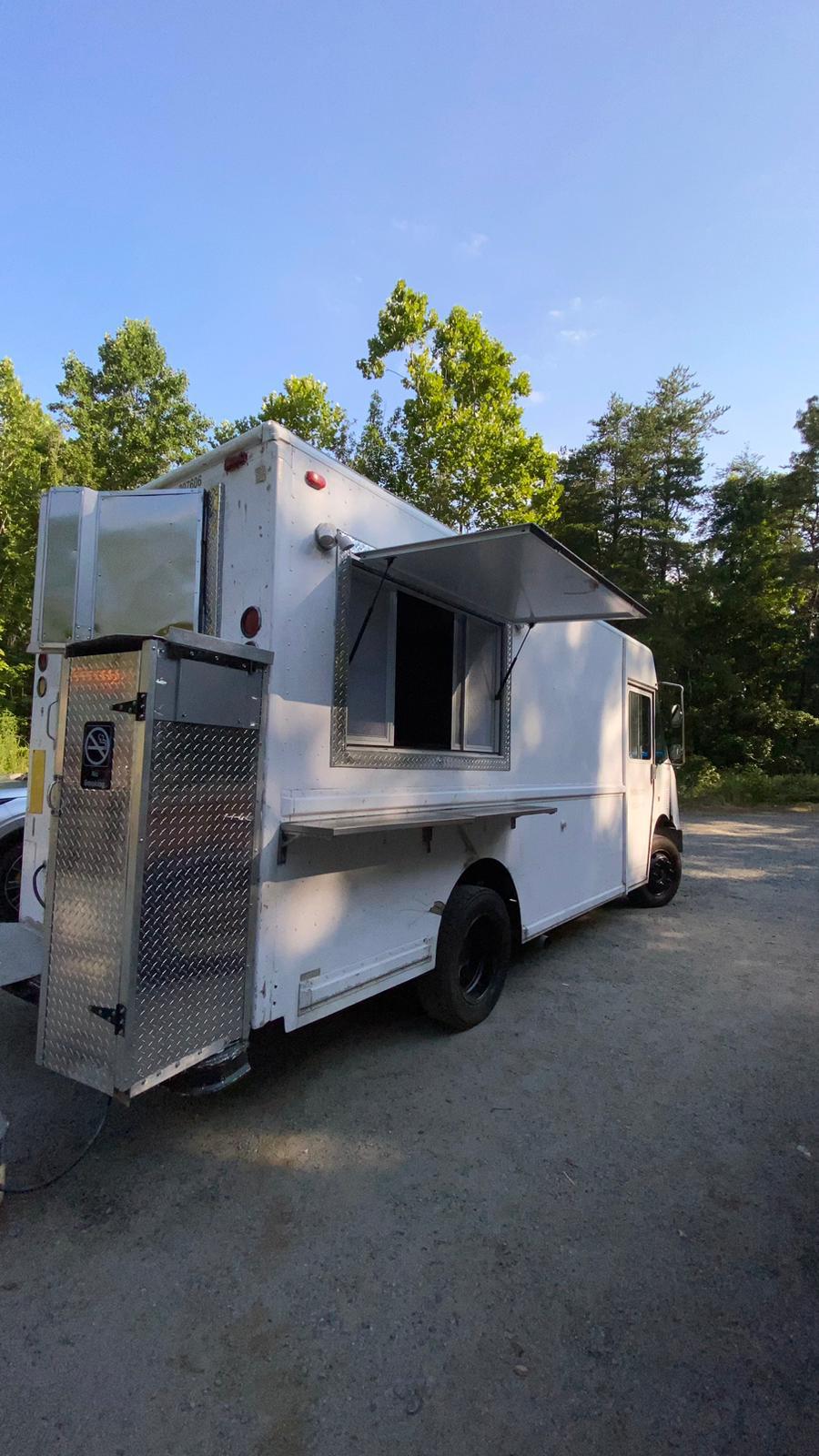
And here's the part that surprises people: if your truck has a serving window with a flip-up awning, a generator box, or a hood vent, the installer has to wrap around those. Every cutout adds an hour. Every rivet line adds frustration. A 16-foot step van with a clean flat side panel is a $2,800 job. The same length with a full kitchen build-out and three cutouts is $5,500.
Full Wrap, Partial Wrap, or Just Your Logo?
Full Wrap: $2,500–$6,500
Covers every paintable surface. Best for trucks that park in high-traffic spots and need to be recognized from 200 feet. If your truck is your only marketing, this is what you buy.
Partial Wrap: $1,400–$3,200
Vinyl on the sides and back, paint or factory color on the hood and roof. Saves 30–40%. The catch: if your truck's base color is ugly, the partial wrap looks cheap. If it's white or black, it looks intentional.
Decals and Lettering Only: $400–$1,200
Name, logo, phone number, maybe a QR code. This is what you do when the truck is a stepping stone and you're not sure you'll keep it. Nothing wrong with that.
What nobody mentions: a wrap doesn't just cost money — it saves money. A wrapped truck resells for $2,000–$4,000 more than an unwrapped one because the next owner doesn't have to rebrand. That's not marketing spin. That's what buyers in the Texas used-truck market actually pay.
The Costs Hiding Behind the Wrap Quote
Your wrap installer quotes you $4,000. Then the real bill arrives:
- Surface prep: $200–$600. If your truck has peeling paint or rust, the vinyl won't stick. It has to be fixed first.
- Removing an old wrap: $400–$900. Old adhesive is brutal to strip. Budget for it if you bought used.
- Design: $0–$1,500. Some shops include it. Some charge $150/hour. Some hand you a template and wish you luck.
- Permits and city signage rules: varies. Some Texas cities regulate how much of a vehicle can be covered in commercial messaging. Check before you commit.
If you're still in the build phase, the wrap is one line item among many. The full picture — chassis, kitchen, hood, permits — lives in our breakdown of food truck build cost in Texas for 2026, and if you're starting from a step van, the step van conversion numbers are worth reading before you commit to a chassis size.
What Actually Moves the Price (and What Doesn't)
Things that raise your quote:
Truck size. A 14-footer and a 22-footer are not the same job. Every extra foot is roughly $180–$250 in material and labor.
Complexity of the design. A two-color logo is cheap. A full photographic print with gradients and a mascot costs more to print and more to install because alignment has to be perfect.
Wrap quality. Cast vinyl with a laminate top layer lasts 5–7 years in Texas. Calendared vinyl without laminate lasts 2–3. The price difference is about $1,200. The replacement cost in year three is $3,000. You do the math.
Things that don't move the price nearly as much as people think:
Number of colors. Modern printers handle 12 colors for the same cost as 2. Don't let a shop upcharge you for "complex color work."
Whether you supply the design. Unless it's print-ready vector files, the shop will redo it anyway. Pay for the design once, from someone who knows vehicle wraps.
The One Thing to Get Right Before You Spend a Dollar
Your wrap is not decoration. It's a 16-foot billboard that drives around a city where 40 other trucks are competing for the same lunch crowd. If your design doesn't say what you sell in under three seconds — from across a parking lot, at 30 mph — you've wasted $4,000.
Read that again. The most expensive wrap is the one that looks great in a photo and communicates nothing on the street.
Before you call a wrap shop, sketch your truck on paper. Put your cuisine, your name, and one reason to walk over on the side panel. If it doesn't fit, your design is too busy. If it fits but looks boring, you need a better designer, not more vinyl.
And if you're still deciding between building out a new truck versus wrapping the one you have, the honest answer depends on whether the kitchen itself is holding you back. A beautiful wrap on a truck with a bad layout is lipstick on a pig — the compact layout guide is where that conversation actually starts. When you're ready to talk through the whole build — chassis, kitchen, hood, and yes, the wrap — mobile kitchen consultations are free, and nobody will try to sell you vinyl you don't need.