Food Truck Hood Installation Requirements & Costs 2026
Food Truck Hood Installation Requirements Nobody Explains Clearly
Here's the number that surprises almost every first-time builder: a compliant commercial hood system in a food truck runs $2,500 to $8,000 installed. Not $800. Not "whatever the fabricator quotes you." And the food truck hood installation requirements behind that price aren't optional suggestions — they're fire code, and an inspector can shut you down before you sell a single taco.
I've watched trucks in Austin and Richmond get red-tagged on opening weekend because the hood didn't match the cooking equipment underneath it. The owner assumed a hood was a hood. It isn't. The requirements scale with what you're actually cooking, and that's where most people get it wrong from day one.
Let's break down what's actually required, what it costs in 2026, and the mistakes that cost operators thousands in re-work.
What Triggers the Requirement in the First Place
You don't need a Type I hood if you're only reheating, brewing coffee, or running a cold-prep menu. The moment you introduce grease-laden cooking — frying, griddling, charbroiling, wok cooking — you're in Type I territory, and the rules tighten fast.
Type I hoods handle grease and smoke. Type II handles steam and heat only. If you're building a compact truck and trying to save space, this distinction matters more than almost anything else. Our breakdown of a compact food truck layout for small space walks through how to fit a compliant hood without sacrificing your entire cook line.
The trigger is your menu. Not your truck size. Not your budget. Your menu decides everything downstream.
The Rules Inspectors Actually Check
NFPA 96 governs commercial cooking ventilation, and most states adopt it with local amendments. Here's what gets checked, in plain language:
The non-negotiables
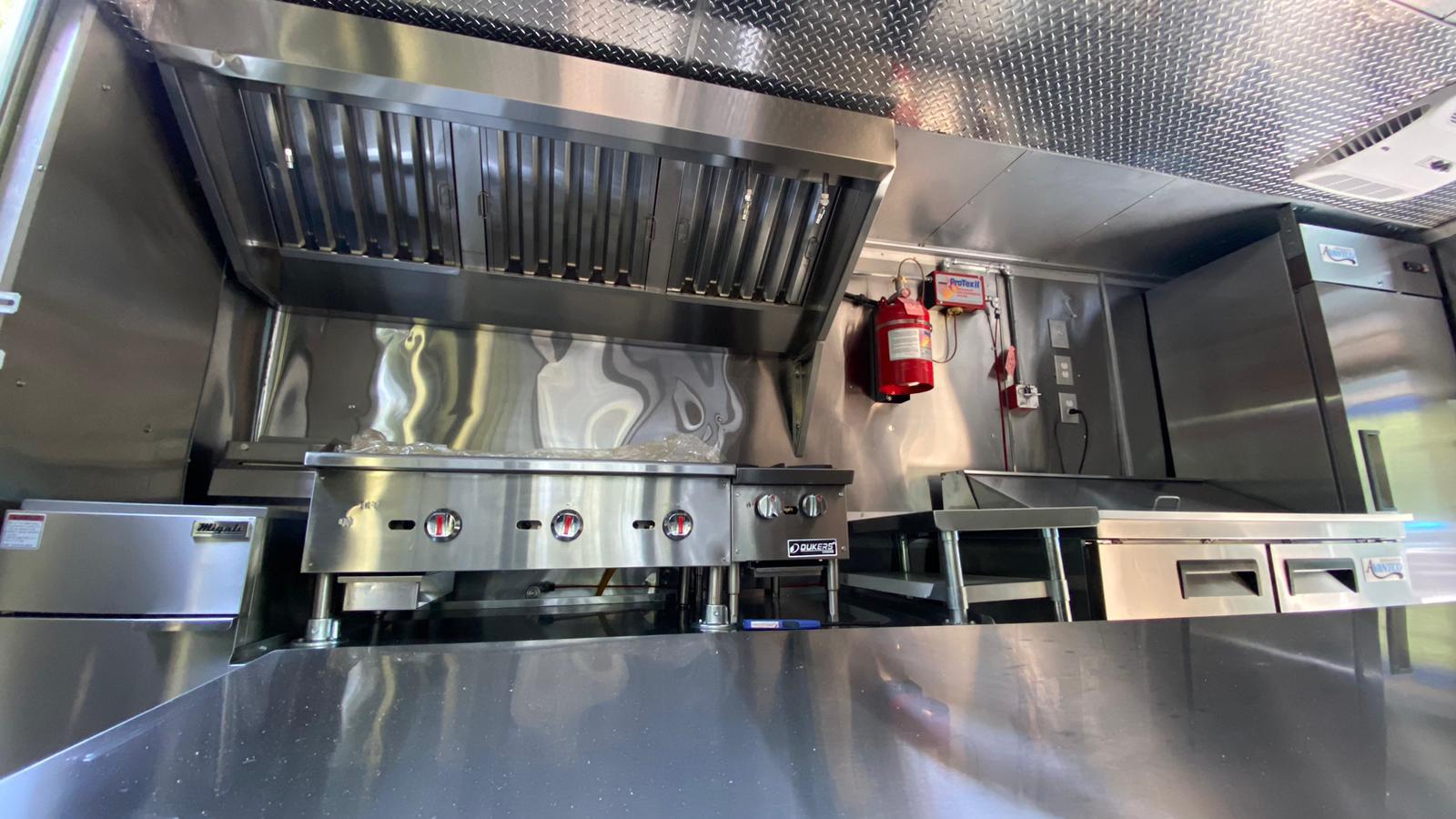
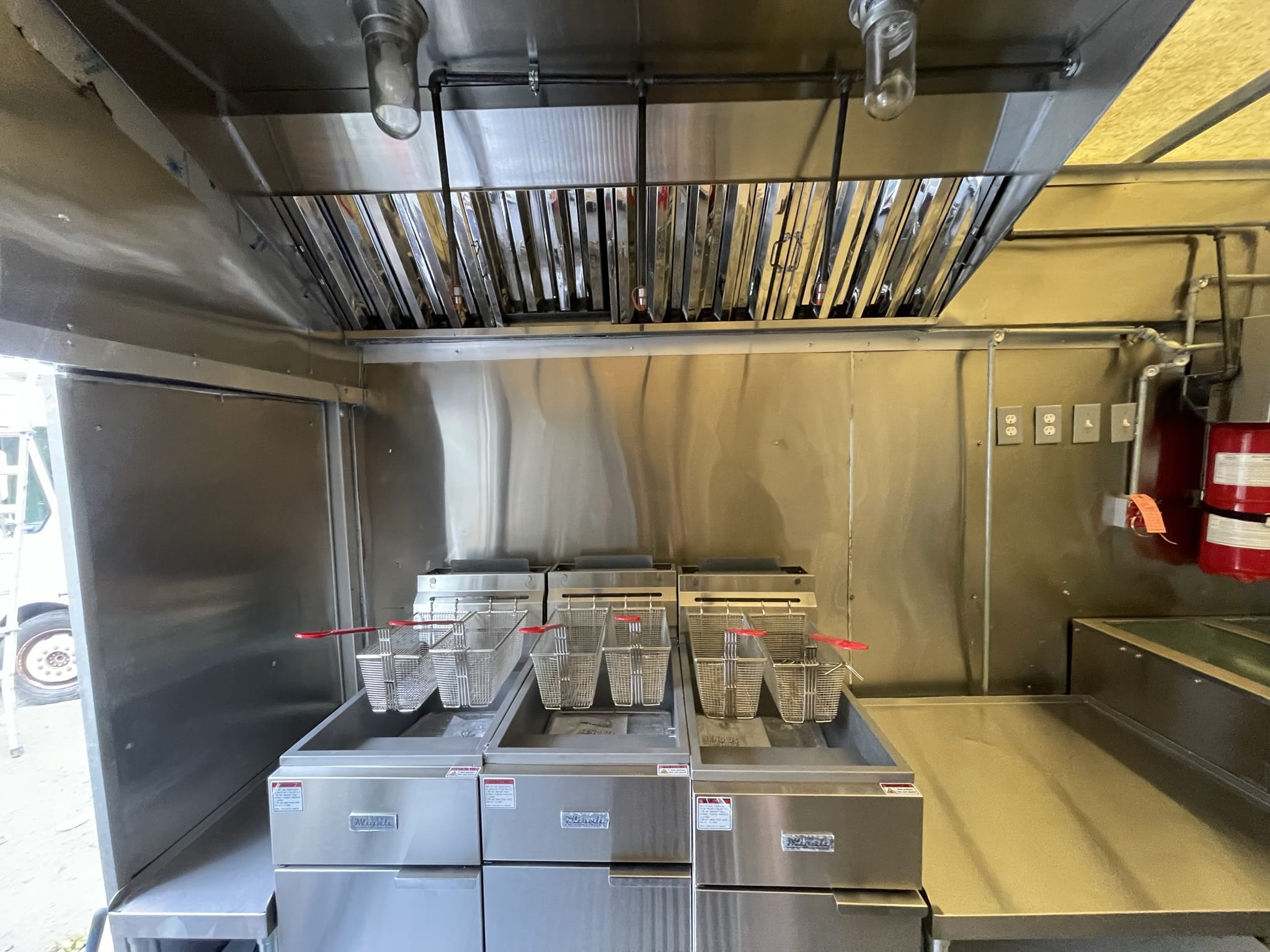
- Hood overhang: The hood must extend at least 6 inches beyond the cooking surface on all open sides. Get this wrong and you fail.
- Clearance to combustibles: Minimum 18 inches from the hood to any combustible material, unless you have a listed clearance-reduction system.
- Grease filters: Listed, stainless steel, and angled to drain. No mesh. No improvised screens.
- Exhaust duct: Continuous, grease-tight, and routed to discharge away from intake openings. This is where truck builds get complicated.
- Fire suppression: A listed system tied to your cooking appliances, with manual pull station and automatic actuation.
- Makeup air: You need a way to replace the air you're exhausting, or your hood won't pull properly and the inspector will notice.
That last point catches more builders than any other. A hood that can't breathe is a hood that fails.
And here's the thing nobody tells you: the fire suppression system has to be inspected and tagged every six months. Miss that, and your insurance can walk away from a claim. That recurring cost belongs in your budget from the start — the same way it belongs in any serious food truck maintenance schedule.
What Hood Installation Actually Costs in 2026
Real numbers, not guesses:
- Basic Type I hood, small truck: $2,500–$3,500
- Mid-size hood with fire suppression: $4,500–$6,000
- Full system with makeup air and custom ducting: $6,500–$8,000+
- Fire suppression inspection (every 6 months): $150–$300 per visit
Those figures swing hard depending on your city. In Texas, a full build-out for a mid-size truck lands between $45,000 and $85,000 in 2026 — and the hood is one of the line items that separates a cheap quote from a real one. If you want the full picture, our food truck build cost Texas 2026 breakdown covers every category.
What nobody mentions: the hood is rarely the expensive part. The ducting and makeup air are. A straight, short run costs hundreds. A convoluted run through a tight truck body costs thousands. Layout decisions you make in week one determine your hood bill in week eight.
The Mistake That Costs You Thousands
Buying the hood before finalizing the menu.
I've seen this play out repeatedly. An operator picks up a used hood for $1,200, feels smart, then adds a flat-top griddle that's 8 inches wider than the hood can legally cover. Now the hood is scrap, and they're buying new anyway.
Sequence it correctly: menu first, equipment second, hood third. The hood is designed around the cooking surface, never the reverse.
And if you're building in a state with heavy permitting layers, factor the timeline in early. Our Virginia food truck permit fees breakdown shows how much the paperwork side can delay a launch — the hood inspection is one piece of a much longer chain.
Where Most Builders Get Stuck
Makeup air. Every time.
A truck is a sealed box. You exhaust 1,200 CFM out of it, and something has to replace that air or the hood starves. Most builders either ignore it or install a passive vent that doesn't meet the numbers. Then the inspector runs the hood, watches the smoke not clear, and fails it on the spot.
The fix is a properly sized makeup air unit or a designed intake path — and it needs to be in the plan before the truck body is built, not after.
If you're working through this for the first time, this is exactly where mobile kitchen consultations save you from a $3,000 mistake. The math on getting it right the first time is brutal in your favor.
The food truck hood installation requirements aren't designed to trip you up. They're designed around a real risk: grease fires in a confined space moving through a city. Once you understand that, the rules stop feeling arbitrary and start feeling like a checklist you can actually work through.
Menu. Equipment. Hood. Ducting. Makeup air. In that order, every time. Do it in that sequence, and your inspection becomes a formality instead of a crisis. Skip a step, and you'll learn why the order matters — usually the expensive way.
If you'd rather see real numbers for your specific concept before you commit to a build, get a custom quote. It's the difference between guessing and knowing.