Food Truck Branding and Wraps That Actually Sell
Most Food Truck Branding and Wraps Are Wasted Money
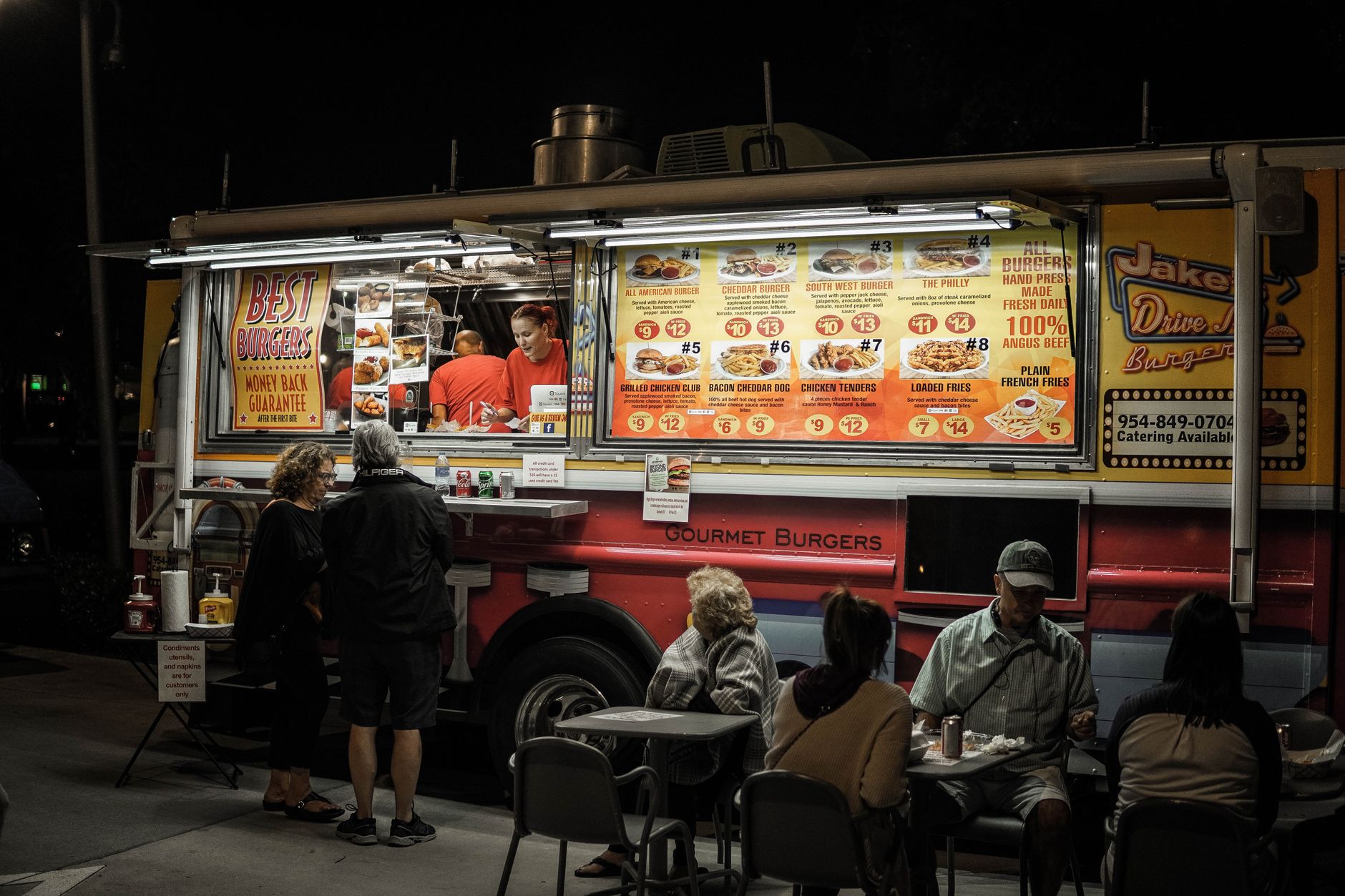
Walk through any food truck pod in Houston, Austin, or Portland and count how many trucks you can read from 50 feet away. You'll struggle to hit half. That's the dirty secret of food truck branding and wraps: most owners spend $2,500 to $5,000 on a full vinyl wrap and end up with a rolling billboard nobody can decode at 30 miles per hour.
The problem almost never the printing. It's the brief. Designers who've never sold a taco at 11pm don't know that your logo needs to survive a phone photo taken from a crosswalk, or that a dark truck disappears at dusk when your dinner rush starts.
Let me give you the number that matters most: a full wrap on a 16-foot step van runs $3,500 to $6,000 in 2026, depending on coverage and material. A partial wrap (windows, sides, back) lands closer to $1,800–$3,000. That's real money for a business that might clear $80,000 in a good year. So the question isn't whether to wrap — it's whether your wrap earns its keep.
The 3-Second Rule Nobody Tells You About
A food truck has roughly three seconds to communicate three things: what you sell, that you're open, and why you're worth stopping for. That's it. If a pedestrian has to squint or read a paragraph, you've already lost them to the taco truck two spots down.
Here's what actually works, based on trucks that consistently pull lines:
- One food cue, huge. A photo or illustration of your signature dish at 24 inches tall beats a clever logo every time. People buy food with their eyes before they read a word.
- High contrast, always. White text on black, yellow on navy — pick two colors that fight each other and win. Pastels and earth tones look gorgeous on Instagram and vanish on a gray street.
- Your name at bumper height. People read sideways and from behind. Put the name where a driver stuck at a red light will see it.
- Menu hint, not menu. "Birria • Tacos • Agua Fresca" in huge type. Save the full menu for the board.
What nobody mentions is that most wrap designers come from the restaurant or corporate world, where logos live on business cards. A food truck is closer to a billboard on wheels than a brand identity project. Ask your designer to show you a mockup photographed from 40 feet away, at night, on a phone. If it doesn't read, start over.
What a Food Truck Branding and Wraps Budget Actually Buys in 2026
Let's talk real numbers, because vague advice is useless when you're signing a check.
Design and print costs, broken down
A professional design (not a Fiverr logo) runs $400–$1,200. Print and install for a full wrap: $3,500–$6,000. Partial: $1,800–$3,000. Magnetic signs if you're testing concepts: $150–$400. Window perf for your service window and menu board: $300–$600.
Add a cut-vinyl logo on the roof if you park in front of office buildings — $400–$900 — because the people on the 8th floor are looking down at you, not across.
That's a $5,000–$8,000 line item for a fully branded truck. Which sounds brutal until you compare it to a single month of Instagram ads or a booth at a food festival. A wrap lasts five to seven years with care. Run the math and it's the cheapest customer acquisition cost you'll ever have.
One more thing: the wrap and the kitchen have to be planned together. If you're still deciding between chassis styles, our breakdown of concession trailer vs food truck covers how each shape changes your wrap canvas and service window placement. And if you're mid-build, the step-by-step conversion guide shows where branding slots into the timeline so you're not wrapping a truck that isn't finished.
Design Mistakes That Cost You Customers Every Single Day
I've watched hundreds of trucks and the same five mistakes show up over and over. None of them are about taste. They're about function.
Mistake one: the dark truck. A matte black truck looks incredible in photos and invisible at 7pm in November. If your service window is the only lit part of the vehicle, that's the only part people see.
Mistake two: the tiny logo. Your logo is not the message. Your food is the message. The logo is the signature. Scale accordingly.
Mistake three: menu sprawl. Twelve items crammed on the side means nobody reads any of them. Three to five hero items, maximum.
Mistake four: forgetting the back. Half your impressions come from behind — cars following you through traffic. A blank back panel is a wasted billboard.
Mistake five: no phone or social handle. Put your Instagram and a QR code somewhere visible. People photograph trucks they can't find again.
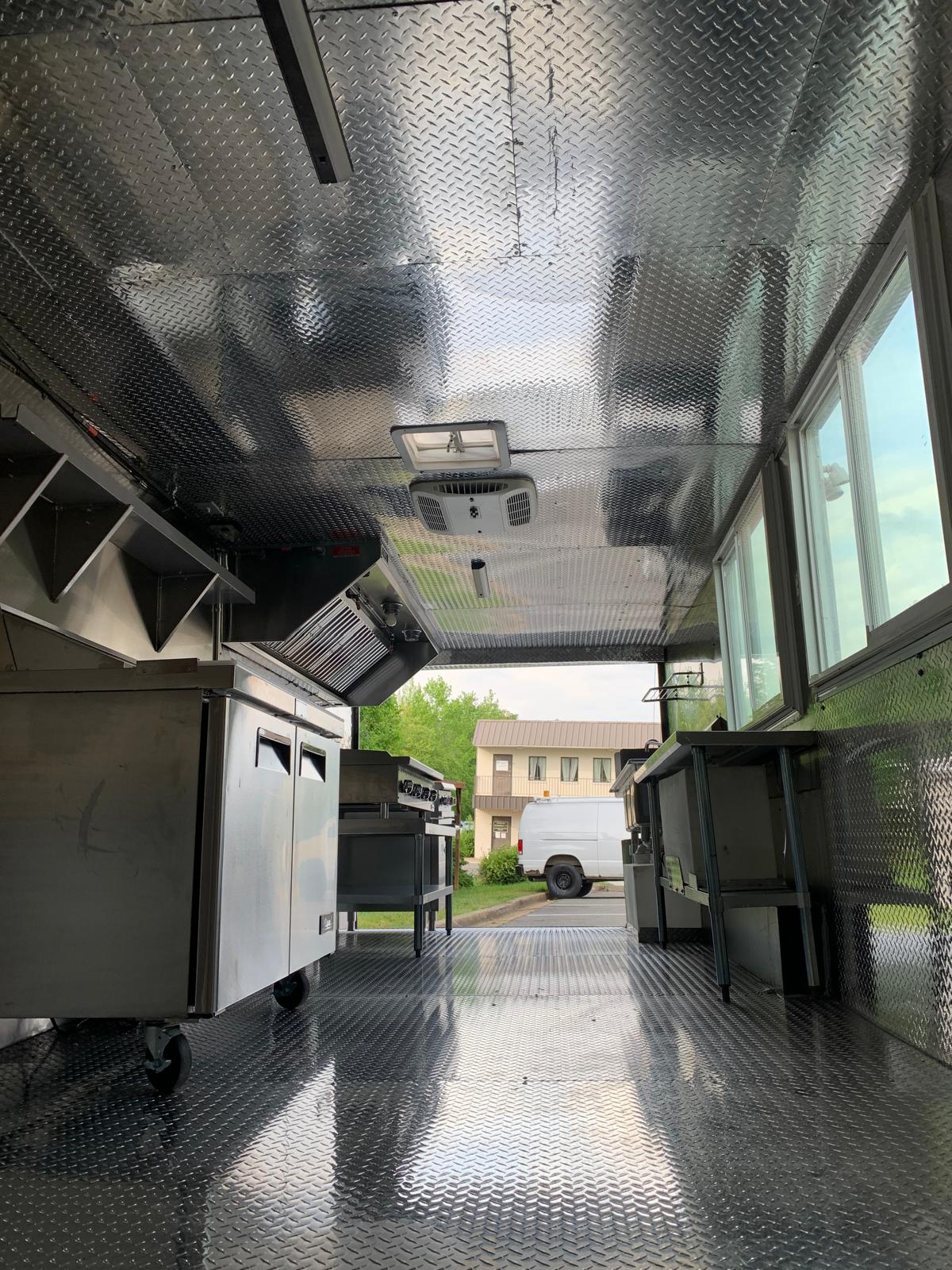
And here's where it gets interesting: the wrap and the kitchen layout are the same conversation. Where your service window sits, how the awning deploys, whether your generator vent blocks a panel — all of it affects the design. Our guide on food truck kitchen layout design covers the interior flow that determines how your exterior branding actually functions on a busy Saturday.
Branding Beyond the Wrap: The Stuff That Compounds
A wrap gets attention. What keeps people coming back is everything layered on top of it.
Consistent social handles printed on the truck. A menu board that matches your wrap colors. Staff in shirts that echo the brand. A loyalty card that looks like it belongs to the same business. None of these cost much, but together they turn a one-time stop into a habit.
Location signage matters more than most owners admit. If you park in the same spot every Tuesday, a small A-frame sign that says "Here every Tuesday, 11–2" trains the neighborhood. That's branding too — just not the kind you print on vinyl.
Before you commit to a wrap, get your permits locked. A beautifully branded truck that can't legally operate is an expensive lawn ornament. Our breakdown of food truck permit requirements in Houston, Virginia, and Washington covers what each market actually demands in 2026 — and the rules differ enough that a wrap designed for one city may need a rethink for another.
The Wrap Is the Last Step, Not the First
Here's what I'd tell a friend over coffee: don't design your wrap until your kitchen is real. The service window position, the awning, the vent stack, the generator — these determine what surface area you actually have to work with. Wrap a truck before the build-out is finalized and you'll pay twice.
Get the kitchen right first. Our complete 2026 equipment list is a good place to sanity-check what's going inside before you worry about what's going outside. And when you're ready to talk through the whole build — kitchen, layout, and the branding canvas that comes with it — mobile kitchen consultations are where the real decisions get made, not in a design software mockup.
The best-branded food trucks don't have the prettiest logos. They have the clearest ones. If a hungry stranger can tell what you sell, that you're open, and that it looks good — from a hundred feet away, in bad light, on a Tuesday — you've already beaten half the trucks on the street. Everything else is decoration.