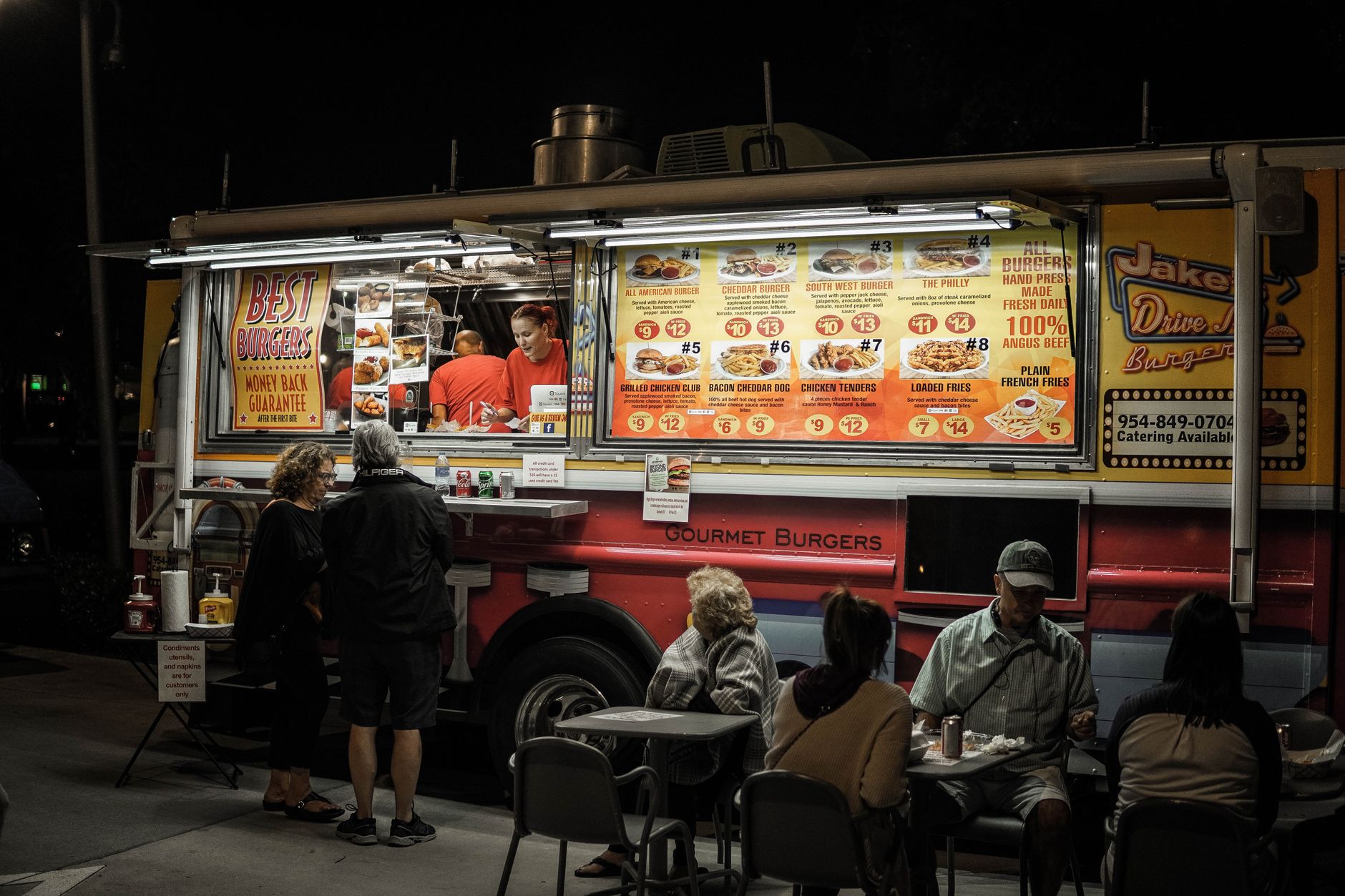
Concession Trailer vs Food Truck: Which One to Choose?
Concession Trailer vs Food Truck: The Question That Decides Your First $50,000
How much does it actually cost to get a mobile kitchen on the road — and why do so many people buy the wrong one? Here's the number that should frame the whole concession trailer vs food truck conversation: a properly equipped food truck in 2026 runs $80,000 to $175,000 turnkey, while a comparable concession trailer lands between $35,000 and $90,000. That gap isn't a discount. It's a different business model wearing the same paint job.
Most buyers walk in thinking this is a style choice. It isn't. It's an operating-model decision, and if you get it backwards, you'll spend two years fighting your own equipment.
Let me be direct about what nobody tells you upfront.
What the Price Tag Hides
The sticker price is the least interesting number. What matters is what each option lets you do — and what it quietly forbids.
A food truck is self-propelled. You drive it to a brewery at 6pm, a construction site at 11am, and a festival on Saturday. That mobility is the entire value proposition, and it's why trucks dominate urban lunch scenes in places like Austin, Portland, and Nashville. But mobility has a cost: commercial vehicle insurance, DOT compliance, a licensed driver, parking permits, and a vehicle that depreciates the moment you drive it off the lot.
A concession trailer doesn't move itself. You tow it, park it, and often leave it. That sounds like a downgrade until you realize what it unlocks: lower insurance (often 30–40% less than a truck), no engine maintenance, more usable interior square footage per dollar, and the ability to set up a semi-permanent anchor location without paying commercial rent.
Here's the part people miss. The trailer's "limitation" is frequently the smarter play. If your concept is a single high-traffic spot — a fairground, a busy corner, a venue you've partnered with — a trailer beats a truck on nearly every financial metric.
When a Food Truck Wins (And It's Not as Often as You Think)
Buy the truck if your revenue depends on being in three places in one day. Catering operations, event circuits, and roving lunch routes are truck territory. If you're chasing corporate catering contracts across a metro area, the truck pays for itself.
But be honest about your week. A lot of new owners imagine themselves hustling between five locations daily. In reality, most successful trucks work two or three reliable spots. If that's your plan, you're paying a six-figure premium for mobility you won't use.
The hidden costs of "self-propelled"
Commercial auto insurance on a food truck in 2026 averages $3,500–$6,000 annually — and that's before you add the kitchen equipment rider. A trailer's policy often runs $1,200–$2,500. Over five years, that difference alone can exceed $20,000. Add engine maintenance, tires, and the fact that a truck's drivetrain ages even when it's parked, and the math gets uncomfortable.
This is exactly where a lot of buyers get talked into the wrong machine. If you want the full side-by-side, our breakdown of food truck vs concession trailer pros and cons (2026) goes deeper on the operational tradeoffs.
The Build-Out Reality Nobody Explains
Both options need a commercial kitchen: hood, fire suppression, refrigeration, three-compartment sink, hand-wash station, and ventilation that passes health inspection. The difference is how much of that you're paying for twice.
With a truck, you're buying a vehicle and a kitchen, and the kitchen has to fit inside a space shaped by a chassis. With a trailer, the box is built for the equipment. That's why a $60,000 trailer often feels roomier and better laid out than a $100,000 truck.
If you're leaning toward the truck route, the build sequence matters enormously — our step-by-step food truck conversion guide walks through where budgets actually blow up. Spoiler: it's almost always the electrical and ventilation stages, not the cooking equipment.
And before you commit capital to either, a structured planning session saves real money. Serious buyers often start with mobile kitchen consultations to pressure-test their concept against their budget before signing anything.
What the Concession Trailer vs Food Truck Decision Really Comes Down To
Strip away the specs and ask one question: do you need to move, or do you need to sell?
If your answer is "move," buy the truck. If it's "sell," buy the trailer and put the savings into marketing, inventory, and a great location. The people who fail in this industry rarely fail because they picked the wrong machine. They fail because they financed a truck they didn't need and spent year one servicing debt instead of customers.
A concrete example: a two-person operation running a single farmers-market-and-festival circuit in a mid-size city can hit profitability with a $45,000 trailer. The same team buying a $120,000 truck needs roughly triple the revenue just to break even monthly. Same food. Same lines. Wildly different stress levels.
There's also resale to consider. Trucks depreciate like vehicles; trailers hold value more like equipment. A well-maintained trailer can resell for 60–70% of its build cost after three years. A truck in the same window often recovers closer to 45%.
The Financing and Timeline Trap
Here's a detail that surprises almost everyone: lead times. Custom truck builds in 2026 are running 5–9 months. Trailers, because they skip the chassis and drivetrain integration, often deliver in 3–5 months. If you're trying to hit a spring festival season, that difference can make or break your first year.
Financing follows the same logic. Lenders treat trucks as vehicles (shorter terms, higher rates) and trailers as equipment (longer terms, sometimes better rates). Neither is automatically cheaper — but the structure changes your monthly cash flow, and cash flow is what keeps a young food business alive.
If you're weighing a turnkey build either way, it's worth understanding what "turnkey" actually includes before you sign — our turnkey food truck benefits and checklist for 2026 covers the fine print most contracts bury.
So Which One Should You Actually Buy?
Most first-time operators should buy the trailer. Not because it's cheaper — though it is — but because it forces you to build a real location strategy instead of relying on the fantasy of constant motion. The truck is the right call for a specific minority: caterers, event-circuit operators, and anyone whose revenue genuinely depends on daily relocation.
Don't let a salesperson decide this for you. Get the numbers for your actual concept, your actual city, and your actual first-year plan — you can get a custom quote that reflects what you're really building, not a brochure price. And if you want to stress-test the business side before you spend a dollar on steel, a business plan consultation is cheaper than a mistake you'll finance for five years.
The best mobile kitchen isn't the one that looks most impressive in a parking lot. It's the one that still makes sense on month eighteen, when the novelty is gone and the only thing that matters is whether the numbers work.