Food Truck Kitchen Equipment: The Complete 2026 List
Most Food Truck Kitchen Equipment Lists Are Written by People Who've Never Built One
I've watched a guy in Austin spend $14,000 on a hood system he didn't need because a list online told him "every commercial kitchen requires a Type I hood." He was making cold-pressed juice. No fryer, no grill, no grease. He paid for a fire suppression system to protect food that never touched a flame.
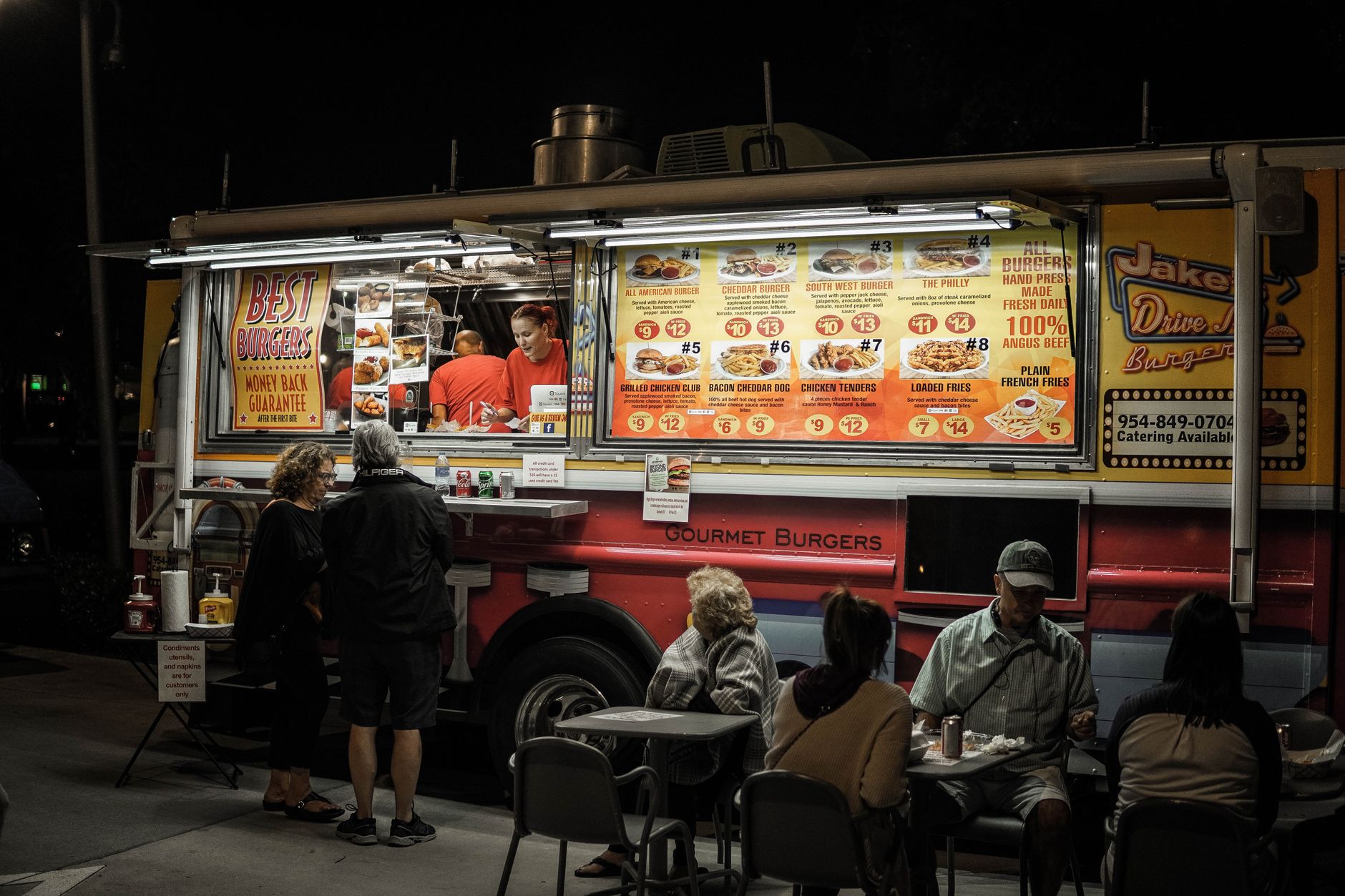
That's the problem with almost every food truck kitchen equipment list you'll find. They're written like restaurant build-outs, then squeezed into a 14-foot box. They ignore the only constraint that actually matters: in a food truck, every inch of counter costs you money and every pound of steel costs you fuel.
So here's the list I'd give a friend. Not the catalog version. The version that tells you what to buy, what it costs in 2026, and — more importantly — what to skip.
Start With the Cooking Line, Because Everything Else Sits Around It
The cooking equipment is the spine of your build. Everything — ventilation, electrical, gas, counter space — gets planned around what you're actually cooking on. Get this wrong and you'll rebuild the truck in year two.
Here's what the main cooking units run in 2026:
Flat-top griddle (36-inch, gas): $1,800–$3,200. The workhorse for burgers, breakfast, tacos, smash anything. If you're opening one truck and you don't know your menu yet, this is the safest first buy.
Deep fryer (double basket, propane): $1,200–$2,400. Fries and wings are the highest-margin items on most trucks. But a fryer changes your entire ventilation requirement — see below.
Range with oven: $2,500–$5,000. Only worth it if your menu genuinely needs an oven. Most trucks don't.
Convection oven (if you bake): $1,500–$3,500. Pizza, bakery, and some dessert trucks live here.
Prep tables and refrigeration: $2,000–$4,500 combined for a sandwich prep station plus a reach-in fridge. Don't cheap out on refrigeration — a failed compressor in July in Phoenix ends your week.
Add it up and you're at roughly $8,000–$15,000 in core cooking and cold storage before you touch ventilation, plumbing, or electrical. That's the number nobody puts at the top of these lists.
What Nobody Tells You About Ventilation (and Why It Doubles Your Budget)
This is where the real money hides, and where most food truck kitchen equipment lists go quiet.
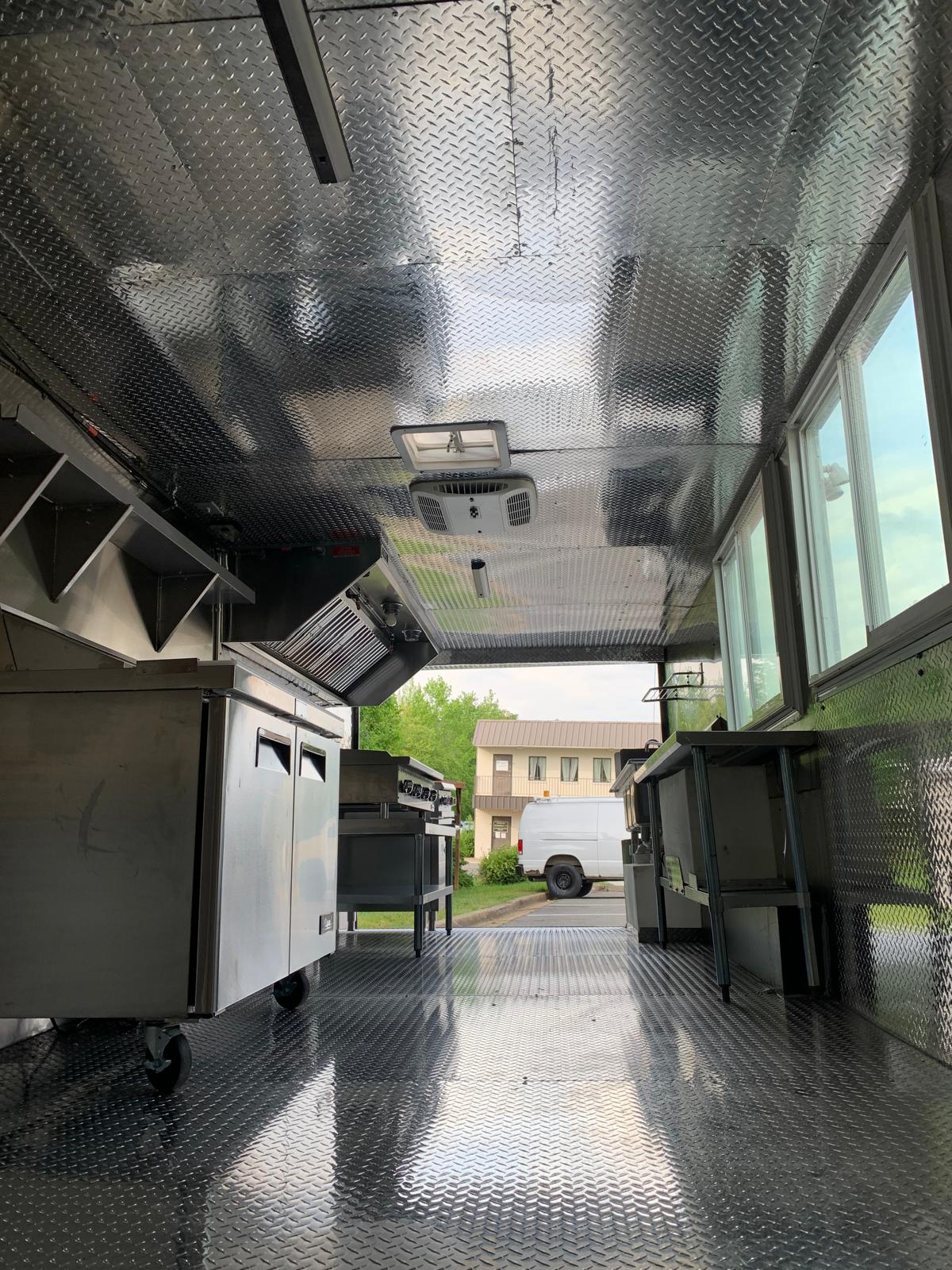
If you fry, grill, or cook with any grease, you need a Type I hood with a fire suppression system. In 2026 that's $4,000–$9,000 installed, depending on hood length and whether you're running a wet chemical system. If you only steam, boil, or assemble cold food, you can run a Type II hood for $1,500–$3,000 and skip the suppression system entirely.
That gap — $2,500 to $6,000 — is the single biggest avoidable expense in a food truck build. And it's decided entirely by your menu, not by the equipment list.
Which brings us to the question that actually matters: are you designing the truck around the menu, or the menu around the truck? If you're still deciding between a full build and a trailer, the tradeoffs are worth understanding before you commit — this breakdown of concession trailer vs food truck covers the ventilation and space implications directly.
The Food Truck Kitchen Equipment List, Item by Item
Cooking and hot holding
Griddle, fryer, range or oven (only what the menu needs), steam table or hot holding cabinet ($600–$1,500), and a microwave you'll swear you won't use and then use every day.
Cold storage and prep
Reach-in refrigerator ($1,200–$2,500), sandwich prep station ($1,500–$3,000), chest freezer if you're doing frozen product ($800–$1,800), and a three-compartment sink — required by health code in nearly every jurisdiction, $600–$1,400 installed.
Water and waste
Fresh water tank (40–100 gallons), gray water tank (matching or larger), on-demand water heater ($300–$800), and a hand-wash sink. Budget $1,500–$3,000 for the full plumbing package. This is non-negotiable — inspectors check it before they check anything else.
Electrical and power
This is the second hidden cost. A generator sized for a fryer, fridge, lights, and POS runs $3,000–$8,000. Shore power hookups are cheaper to install but limit where you can park. Most successful operators I know run a generator and treat it as a fixed monthly cost, not a one-time purchase.
The small stuff that adds up
Shelving, knife racks, POS system, fire extinguisher (Class K for grease), first aid kit, and health-permit-required thermometers. Budget $1,500–$3,000. It's never on the big lists and it's always on the final invoice.
Tally the whole thing honestly and you're looking at $25,000–$45,000 in equipment alone for a working truck — before the vehicle, the wrap, or the permits. If you want the full picture of where those numbers land in a real conversion, the step-by-step conversion guide walks through every stage, including the equipment sequencing most people get backwards.
Where Builders Actually Blow Their Budget
Three patterns show up over and over.
Buying equipment before finalizing the menu. The truck gets built around a griddle, then the owner decides to add a fryer, and now the hood, the gas line, and the electrical panel all need to change. That's a $6,000 mistake made in the wrong order.
Over-speccing refrigeration. A single reach-in and a prep station handle most menus. Two full refrigerators plus a freezer is a restaurant habit that eats counter space you'll wish you had on a Saturday.
Ignoring the turnkey option. A lot of first-time owners don't realize they can buy a truck that's already built and inspected. If you're weighing that path, the turnkey food truck checklist lays out what to verify before you sign — and what a fair price looks like in 2026.
And here's where it gets interesting: the equipment list isn't really an equipment list. It's a menu document. Every line item on it is a decision about what you're selling and where you're parking. Get the menu right and the equipment list writes itself. Get it wrong and no amount of good steel saves you.
What to Buy Used, and What to Never Buy Used
Used griddles and ranges? Fine. A commercial griddle is a slab of steel — if it heats evenly and the valves work, it'll outlive you. You can save 40–60% buying refurbished.
Used refrigeration? Risky. Compressors fail and you won't know until it's 95 degrees and your protein is warm. Buy new or buy with a warranty.
Used generators? Never. A generator that dies mid-service costs you a whole day of revenue and your reputation with the venue that booked you.
Used hoods and fire suppression? Only if a certified tech inspects and re-certifies the suppression system. Otherwise you're buying a liability with a stainless finish.
If you're at the stage where you're pricing all this out and want someone who's built hundreds of these to sanity-check your plan, mobile kitchen consultations are worth the hour. It's cheaper than discovering the hood problem after the truck is welded shut.
The Real Test of Your Equipment List
Before you buy a single item, answer one question: can you cook your entire menu, at peak volume, with the equipment on your list — and can you do it in the space you've got?
If the answer is "probably," you're not ready to buy. If it's "yes, and here's the layout," you are. The builders who get this right don't have better equipment. They have a shorter list, a tighter menu, and a plan they didn't rush.
If you want to see what that plan looks like priced out for your specific concept — your menu, your city, your volume — get a custom quote. Bring your menu. That's the document that decides everything else.