How to Build a Food Truck: 2026 Step-by-Step Guide
Most "how to build a food truck" advice is written by people who've never priced one
Ask ten people how to build a food truck and nine will tell you to "start with a business plan." That's not wrong, but it's the answer of someone who's never stood in a fabrication shop at 7am watching a welder quote $18,000 for a box that isn't even finished yet. The real starting point is uglier and more useful: you need to know what the build costs before you fall in love with a concept you can't afford.
Here's the number that stops most people cold. A turnkey food truck build in 2026 runs $60,000 to $175,000 depending on the kitchen, the truck, and the city. Not the truck alone — the whole thing, ready for inspection. The people who fail are almost never the ones who spent too much. They're the ones who spent in the wrong order.
So instead of a checklist that starts with "write a business plan," this is the sequence that actually works — the one that keeps you from buying a $30,000 truck and discovering six weeks later that your commissary agreement requires equipment you didn't budget for.
Step 1: Lock the menu before you look at a single truck
The menu is the blueprint. Everything downstream — the truck size, the ventilation, the electrical load, the fire suppression — is a consequence of what you plan to cook. Choose the menu first and the build gets cheaper. Choose the truck first and you'll spend the next four months retrofitting a kitchen into a box that was never designed for it.
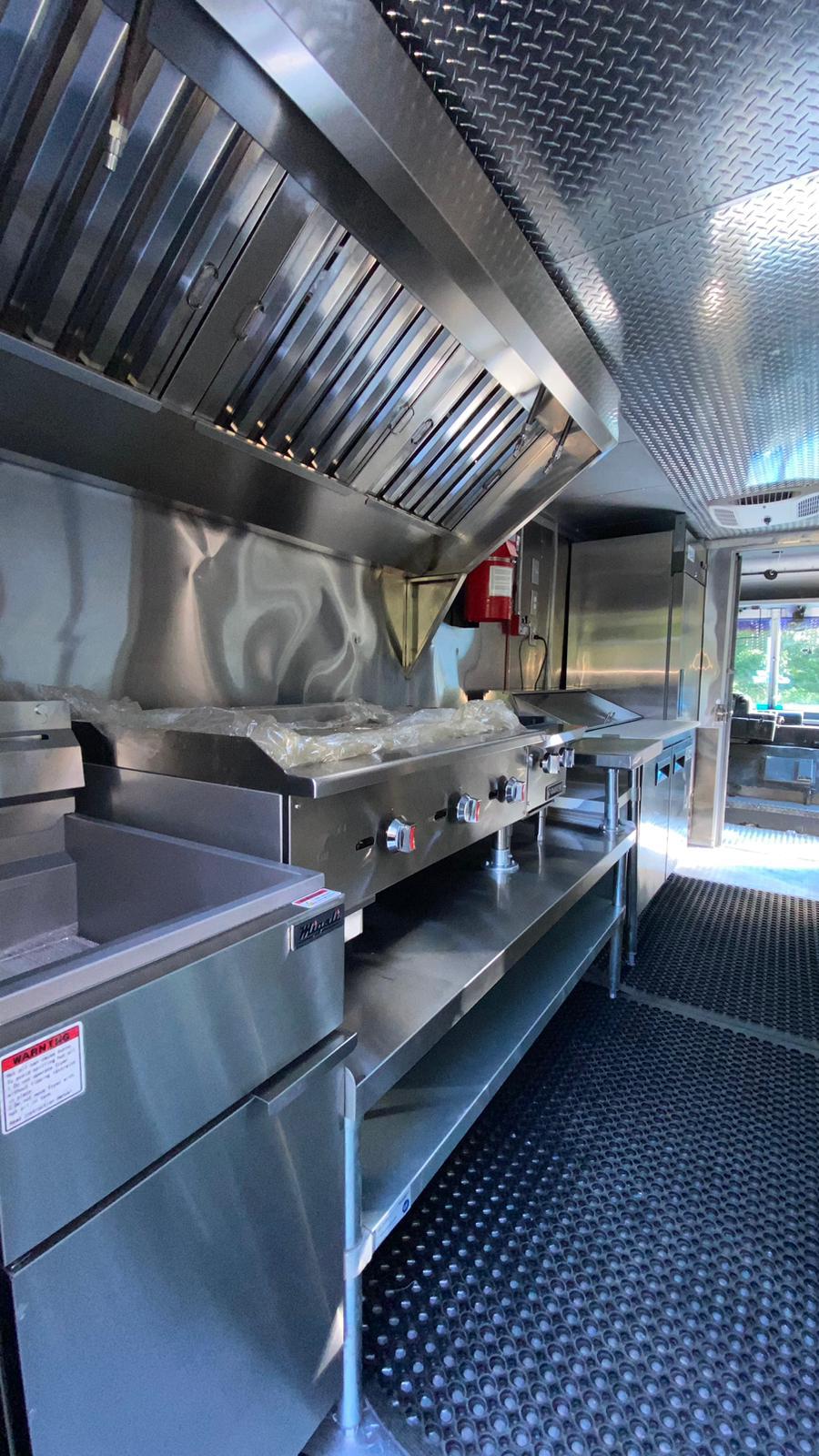
A fryer-heavy concept needs a 30-gallon grease trap and serious ventilation. A coffee and pastry truck can run on a much smaller electrical system and skip the hood entirely. A smash burger operation with two flat tops pulls more power than most people realize — you're looking at a 12kW generator, not the 7kW one the dealer tried to sell you.
What this means in dollars
A simple cold-prep and assembly truck (ceviche, salads, sandwiches) can come in around $55,000 to $70,000 fully built. Add a fryer and you're at $75,000 to $90,000. Add a full cooking line with hood, fire suppression, and a bigger generator, and you're looking at $110,000 to $140,000. Same truck shell. Different kitchen. That's the menu deciding the budget, not the other way around.
Step 2: Confirm your city will actually let you operate
This is where most guides go quiet, and it's where the real money gets lost. Permits and regulations aren't a formality — they're a design constraint. In Houston, you'll deal with Harris County Public Health and a commissary requirement. In Virginia, the rules shift depending on the county, and the state updated its guidance going into 2026. If you're building for a specific market, read the local rules before you sign a build contract — the Virginia food truck regulations for 2026 are a good example of how much the details vary.
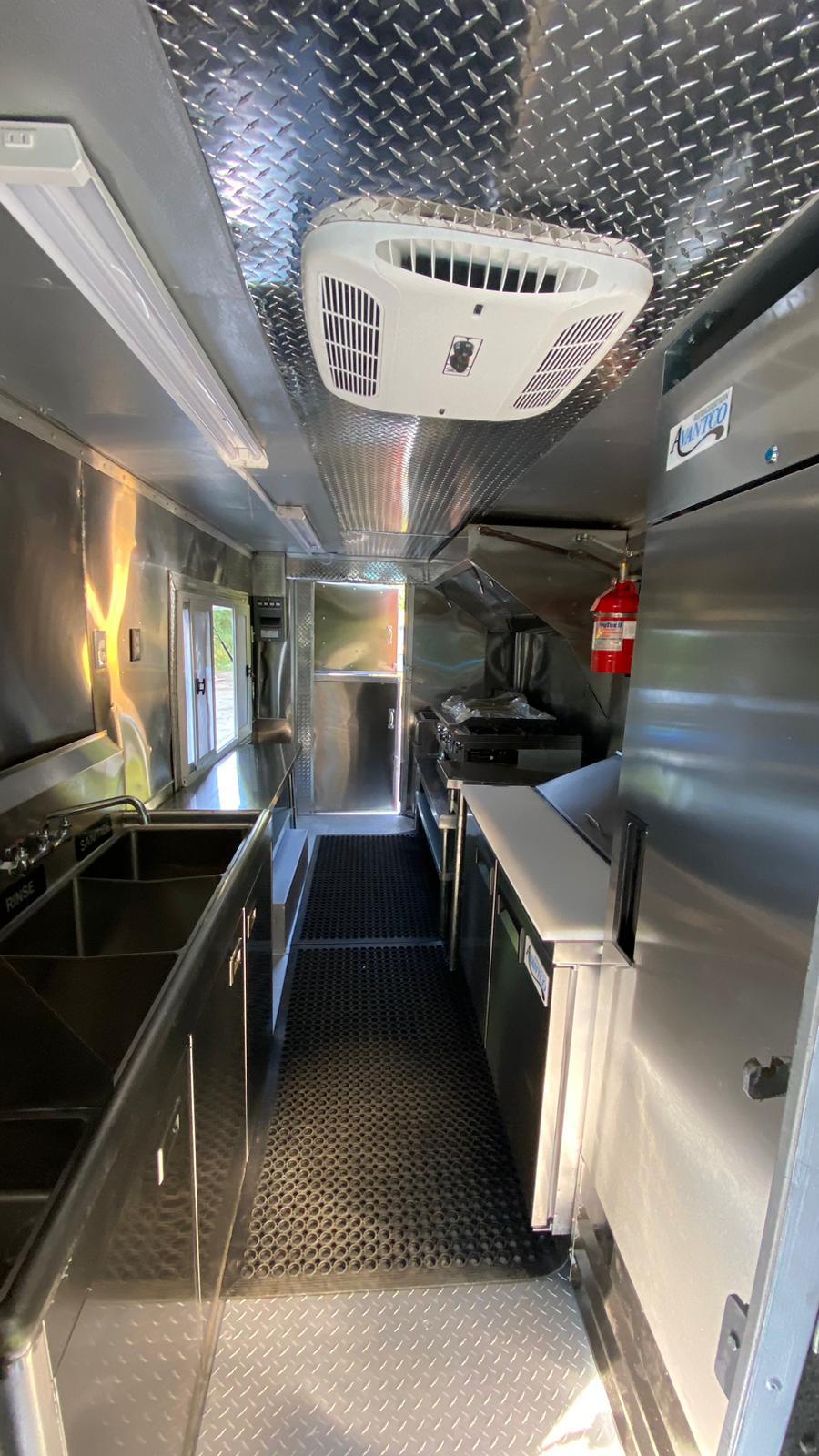
The build has to pass inspection on the first try. That means the hand sink, the three-compartment sink, the hot water heater, the floor coving, and the ventilation all have to meet code before a single customer sees the truck. Building to a generic standard and hoping it passes is how people end up paying twice.
If you're in the Houston market and want to skip the guesswork, a food truck build consultation in Houston usually pays for itself the first time it catches a code issue before fabrication starts.
Step 3: Buy the right truck — and don't overpay for the wrong one
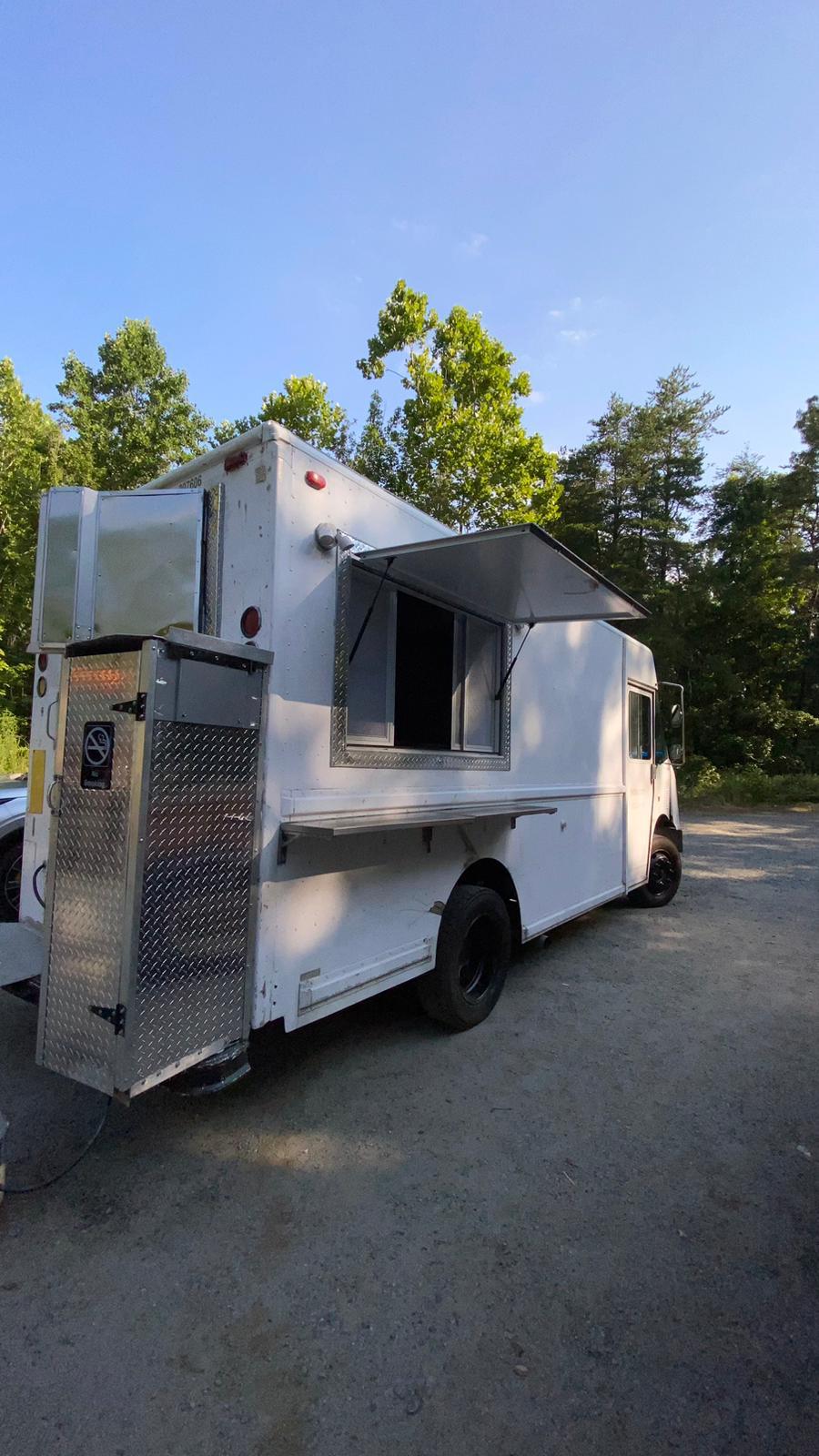
Here's a number that surprises people: the truck itself is often only 20% to 30% of the total build cost. A used step van in decent condition runs $15,000 to $35,000 in 2026. A new chassis is $45,000 and up. The temptation is to buy new because it feels safer. The reality is that a well-inspected used van with a clean frame often makes more sense, because the money you save goes into the kitchen — and the kitchen is what makes you money.
What you're actually checking on the truck: payload capacity, wheelbase, electrical capacity for the alternator, and whether the box is tall enough for a person to work in for ten hours. That last one sounds trivial. It isn't. A truck you can't stand up in is a truck you'll hate by month three.
Step 4: The build-out — where the real money lives
This is the part that separates a $60,000 build from a $140,000 one, and it has almost nothing to do with the truck. It's the fabrication: stainless steel surfaces, the hood and fire suppression system, the plumbing, the electrical panel, the generator, the wrap. A typical Houston conversion breaks down roughly like this:
Fabrication and stainless: $25,000 to $45,000. Equipment (fryers, flat tops, refrigerators, prep tables): $15,000 to $40,000. Electrical and generator: $8,000 to $15,000. Plumbing and sinks: $4,000 to $8,000. Wrap and branding: $3,500 to $6,000. Fire suppression and hood: $5,000 to $12,000.
If you want the full breakdown for the Houston market specifically, the real cost of a food truck conversion in Houston is worth reading before you take a single quote.
And here's where it gets interesting. The wrap isn't decoration — it's the cheapest marketing you'll ever buy. A well-designed wrap on a truck that parks in the same spot every day builds recognition faster than any ad spend. But a bad wrap is worse than no wrap. The food truck wrap design that actually sells in Houston is a different conversation than the one most people have with a sign shop.
Step 5: Get it inspected, then get it moving
The inspection is the finish line, not a formality. If the build was done right, it passes the first time. If it wasn't, you're looking at weeks of rework and a truck that sits idle while you burn through your opening budget. A turnkey food truck built ready for inspection in Houston is the difference between opening on schedule and opening two months late.
Once you're legal, the operating costs start. Commissary rent runs $400 to $900 a month depending on the city. Insurance is $3,000 to $6,000 a year. Permits and licenses are a few hundred to a couple thousand depending on where you operate. None of this is surprising — but it does mean your first six months of revenue need to cover more than just the truck payment.
What nobody tells you about the timeline
A realistic build from decision to first service is four to seven months. Not because the fabrication takes that long — a good shop can build a truck in six to ten weeks — but because permits, commissary agreements, and inspection scheduling eat the rest. The people who plan for four months and get seven are the ones who survive. The people who plan for two and get five run out of money before the truck ever opens.
If you're serious about this, the smartest move is to talk to someone who's built trucks in your market before you commit to a chassis. You can get a custom quote that reflects your actual menu and city, not a generic estimate. And if you're still in the planning stage, mobile kitchen consultations are usually the cheapest hour you'll spend on the whole project.
Here's the thing that reframes all of it: the question isn't how to build a food truck. It's how to build the right one for the market you're actually operating in. Get that order right — menu, permits, truck, build, inspection — and the budget stops being a mystery. Get it wrong, and you'll spend the next year paying for a truck that was designed for someone else's menu.