Food Truck Fire Safety Equipment: What You Need
Most Food Truck Fire Safety Equipment Advice Is Written by People Who've Never Cooked in a Truck
Walk into any restaurant supply store and ask about food truck fire safety equipment. You'll get pointed toward a $400 extinguisher and a shrug. That's not a fire safety plan. That's a receipt.
Here's the thing nobody tells you before you sign the build-out contract: a food truck fire is not a restaurant fire. It's a fire in a sealed metal box with a propane tank bolted to the frame, a fryer running at 350°F, and one door that opens outward. NFPA 96 — the code that governs commercial cooking ventilation — applies to you the same way it applies to a Denny's. But your truck has none of the square footage, none of the clearance, and none of the margin for error.
So let's talk about what you actually need. Not the checklist an insurance broker emails you. The real list.
What the Inspector Actually Looks For (and What It Costs in 2026)
I've watched three food truck inspections in Houston this year. Same routine every time. The inspector doesn't start with your extinguishers. He starts with your hood.
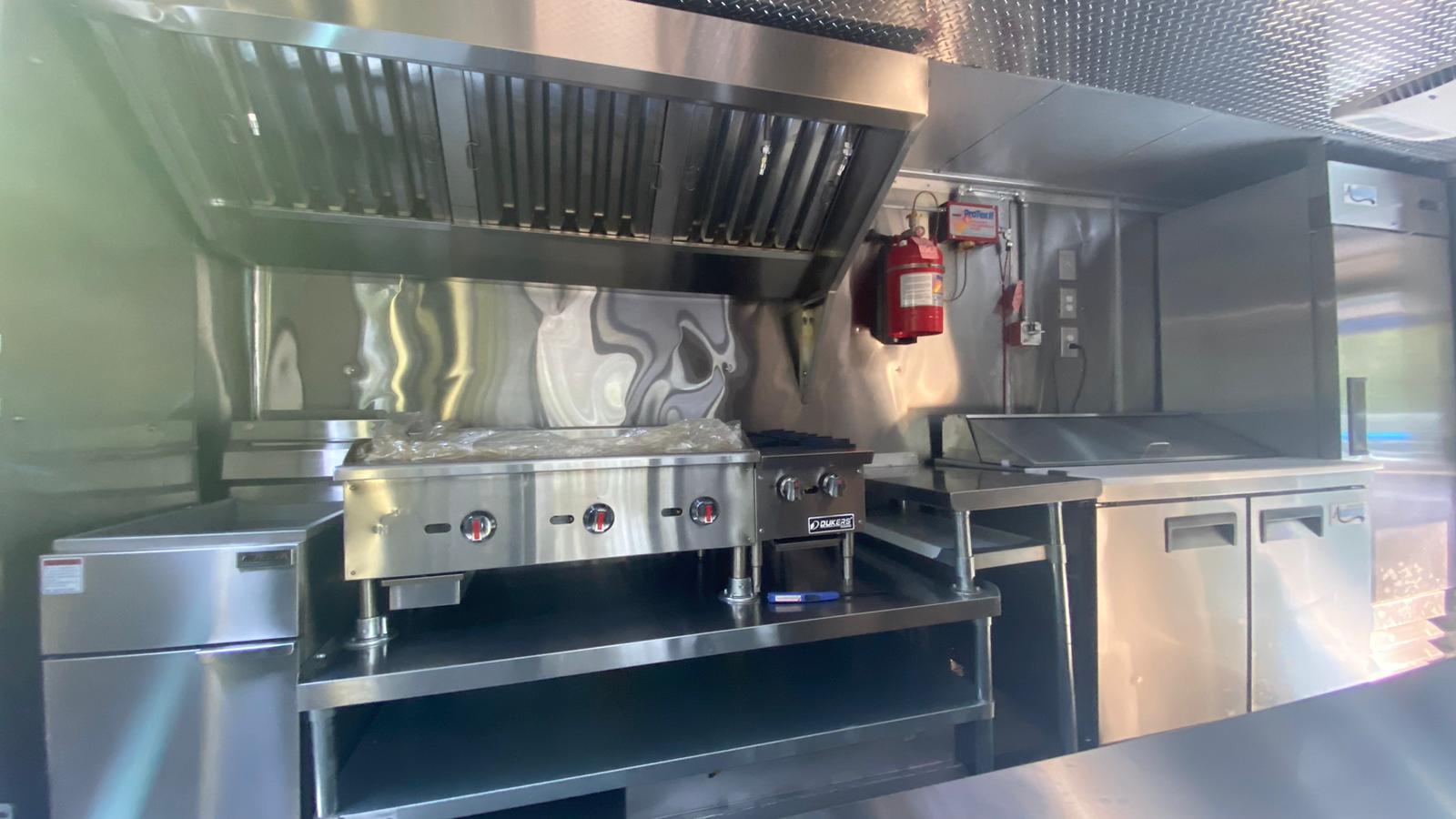
Your Type I hood is the single most expensive piece of food truck fire safety equipment you'll buy, and it's the one most operators try to skip. A commercial-grade hood with a UL 300-compliant suppression system running over a fryer or griddle will cost you $3,500 to $6,000 installed in 2026. That's not a markup. That's the wet chemical tank, the nozzles, the manual pull station, the fusible links, and the certified installer who has to sign off on it.
Skip it and you fail inspection. Cook under a residential hood and your insurance is void the moment a grease fire starts. I've seen a truck in Austin lose everything in eleven minutes because the owner saved $2,800 on the hood and bought a $900 "commercial" one off a marketplace listing.
Extinguishers: You Need Three, Not One
Every food truck needs a Class K extinguisher within arm's reach of the fryer. That's non-negotiable. But you also need a Class ABC extinguisher near the exit and a second Class K or ABC in the cab or near the generator if you're running propane. A 6-liter Class K runs about $220 to $340. The ABC is cheaper — $60 to $90 for a 5-pound unit.
The mistake I see most: operators mount the Class K on the wall behind the fryer. If the fryer is on fire, you can't reach it. Mount it to the side, on the path you'd actually take running out the door.
The Propane Question Nobody Wants to Answer Honestly
Roughly 68% of food truck fires in the U.S. trace back to propane, according to data pulled from fire marshal reports across Texas and California between 2022 and 2025. That number should terrify you more than the fryer.
What you need: a fixed propane system with a manual shutoff valve inside the truck, a regulator rated for your BTU load, and a leak detector. That's another $400 to $900 depending on whether you're running a single tank or a dual setup. And you need the shutoff valve positioned so you can kill the gas without reaching over a flame.
If your build-out quote doesn't list a propane shutoff valve, your builder forgot. Or worse, they don't know. This is why I tell people to ask about mobile kitchen consultations before they sign anything — a 30-minute conversation with someone who's built 200 trucks will save you the $4,000 mistake of a rebuild.
Fire Suppression Systems: The $6,000 Line Item You Can't Fake
UL 300 is the standard. If your suppression system isn't UL 300 certified, it doesn't count. Full stop.
A proper system includes automatic activation via fusible link, manual pull station, and nozzles aimed at every cooking surface. Installation runs $4,000 to $7,500 in 2026 for a standard two-appliance truck. Add a second fryer or a charbroiler and you're looking at $9,000+.
You'll also need it inspected every six months. That's $150 to $300 per visit. Budget it. The inspector will ask for your last service tag, and "I forgot to schedule it" is not a defense when the fire marshal is standing in your truck.
Detectors and Alarms
Smoke detectors are required. Carbon monoxide detectors are required if you're running propane. A combination unit rated for mobile use costs $45 to $120. This is the cheapest part of your entire fire safety setup and the one most likely to save your life at 2 a.m. when a regulator fails while you're prepping for a Saturday market.
What This Actually Adds to Your Build Budget
Let's do the math. Hood and suppression: $5,000. Extinguishers: $500. Propane system with shutoff and detector: $700. CO and smoke detectors: $100. First inspection and certification: $250.
Total: roughly $6,550 on top of your base build.
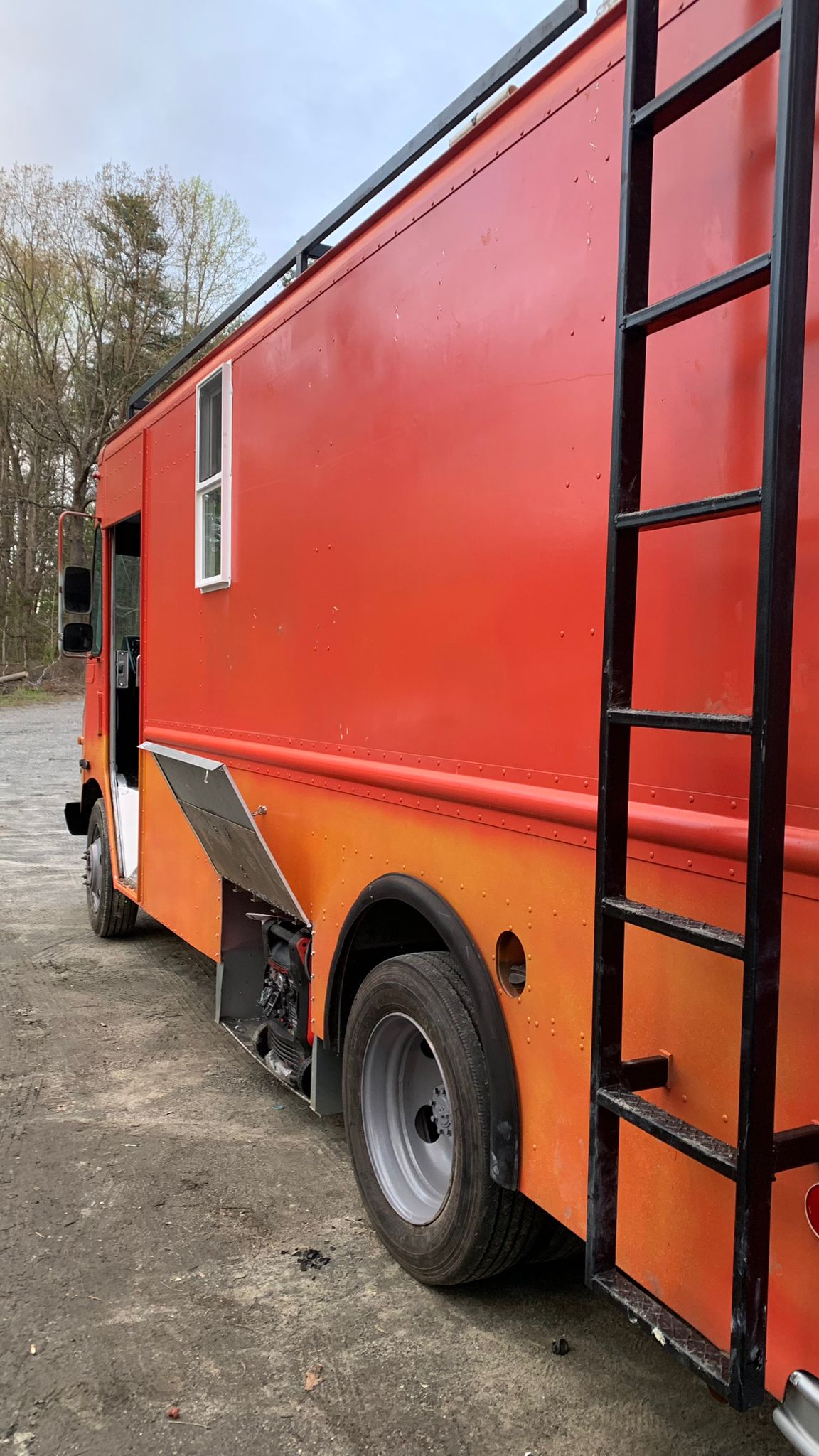
If you're working through a step van conversion, this number shifts — step vans often need custom hood fabrication, which can add another $1,200. And if you're still deciding between a truck and a trailer, read this comparison first. Trailers are cheaper on fire safety because they don't move, and the code treats them differently in most jurisdictions.
One more thing: your fire safety equipment is a fixed cost. Your menu isn't. If you're trying to figure out how to make the numbers work, menu planning is where the real margin lives — not in shaving $200 off your extinguisher budget.
The Question You Should Be Asking
Everyone asks "what do I need to pass inspection?" That's the wrong question. The right one is: if a grease fire starts at 11 p.m. on a Friday with a line of 30 people outside, will my equipment buy me the 90 seconds I need to get everyone out and kill the fuel source?
If the answer isn't a confident yes, you don't have a fire safety plan. You have paperwork. And paperwork doesn't put out fires.
If your build is still on the drawing board, or you're not sure your current setup would pass a 2026 inspection, it's worth a conversation before you spend another dollar. You can get a custom quote and see exactly what your specific truck needs — no generic checklist, just the real numbers for your build. Financing is a separate headache, and if that's where you're stuck, this breakdown of 2026 options is honest about what's actually available.