Food Truck Conversion Services Houston: Real Costs 2026
Food Truck Conversion Services Houston: What Nobody Tells You Before You Sign
Most food truck conversion advice is written by people who've never welded a panel or pulled a permit in Harris County. I've watched operators drop $85,000 on a build that failed its first Houston Health Department inspection because the three-compartment sink drained into a gray tank that was 4 gallons too small. That's not a horror story. That's a Tuesday.
If you're searching for food truck conversion services in Houston, you're probably comparing quotes that range from $28,000 to $140,000 for what sounds like the same truck. It's not the same truck. Not even close. And the gap between the cheapest quote and the most expensive one is almost never about the equipment — it's about what happens after the truck leaves the shop.
Why Houston Is a Harder Market Than Most Conversion Shops Admit
Houston summers hit 105°F with 80% humidity. That matters more than you think. A refrigeration unit specced for a Dallas food truck will run 30% harder here just to hold 38°F in the walk-in. Compressors burn out. Generators overheat. And the electrical panel that "worked fine" in a shop in Pasadena suddenly trips every time you fire up the fryer and the AC at the same time.
Then there's the regulatory layer. You're dealing with the City of Houston Health Department, Harris County, TCEQ for your grease trap, and the fire marshal for your suppression system. Each one has its own inspection. Each one can shut you down on a Friday afternoon before a Saturday event.
What nobody mentions is that most conversion failures aren't mechanical. They're paperwork and spec mismatches. A truck built to pass inspection in San Antonio may not pass in Houston because the local requirements for ventilation hoods and fire suppression are stricter than what the state minimum requires.
What a Real Houston Conversion Actually Costs in 2026
Let's skip the "it depends" and give you actual numbers. For a used 16-foot step van converted into a working food truck in Houston, here's what you're looking at in 2026:
- Base vehicle (used step van, 2015-2019): $18,000 to $32,000
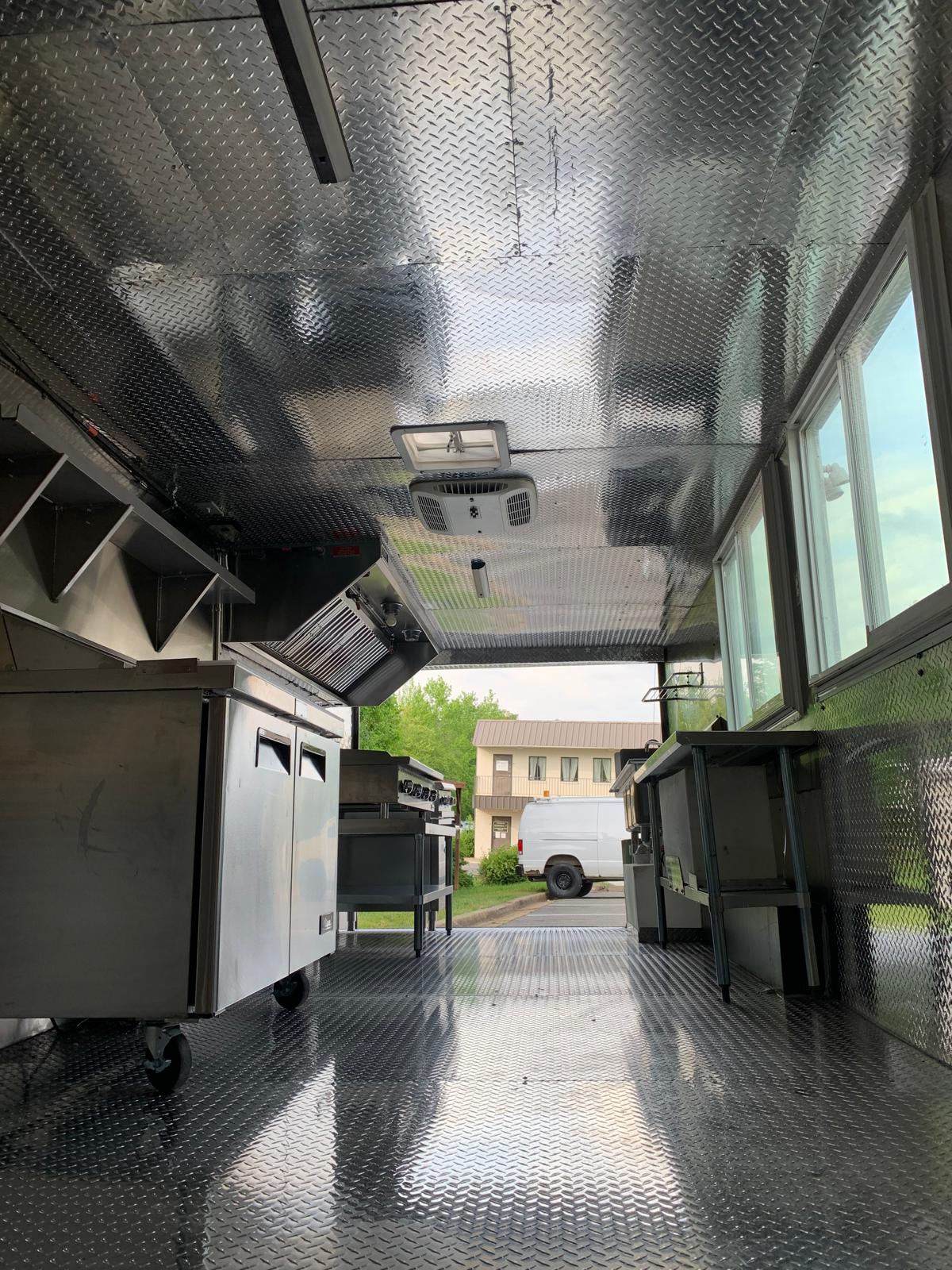
- Shell work — insulation, flooring, wall panels, roof vent: $8,000 to $14,000
- Electrical system (30-amp, generator-ready, GFCI outlets): $6,500 to $11,000
- Plumbing — three-compartment sink, hand sink, freshwater and gray tanks: $5,500 to $9,000
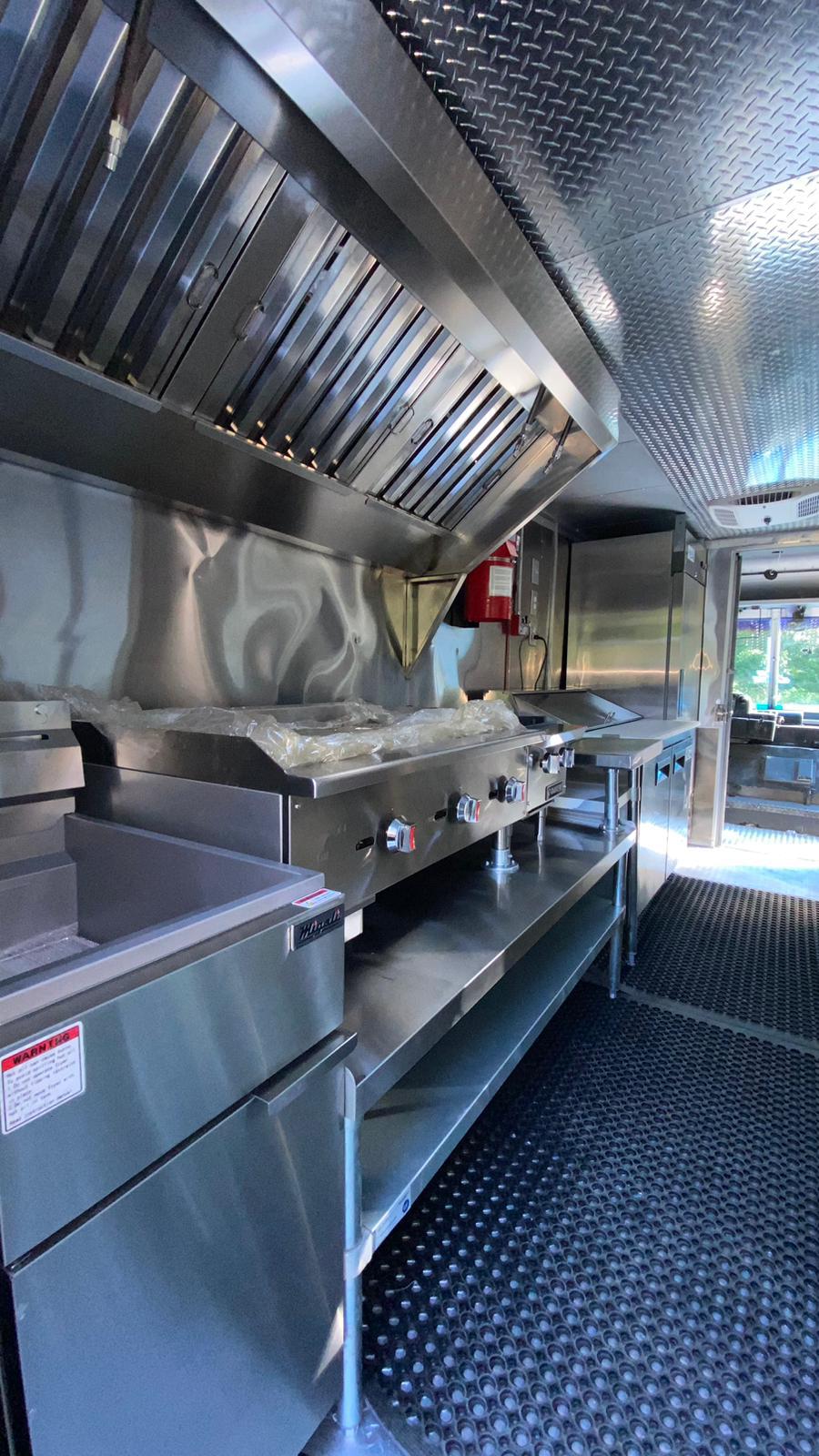
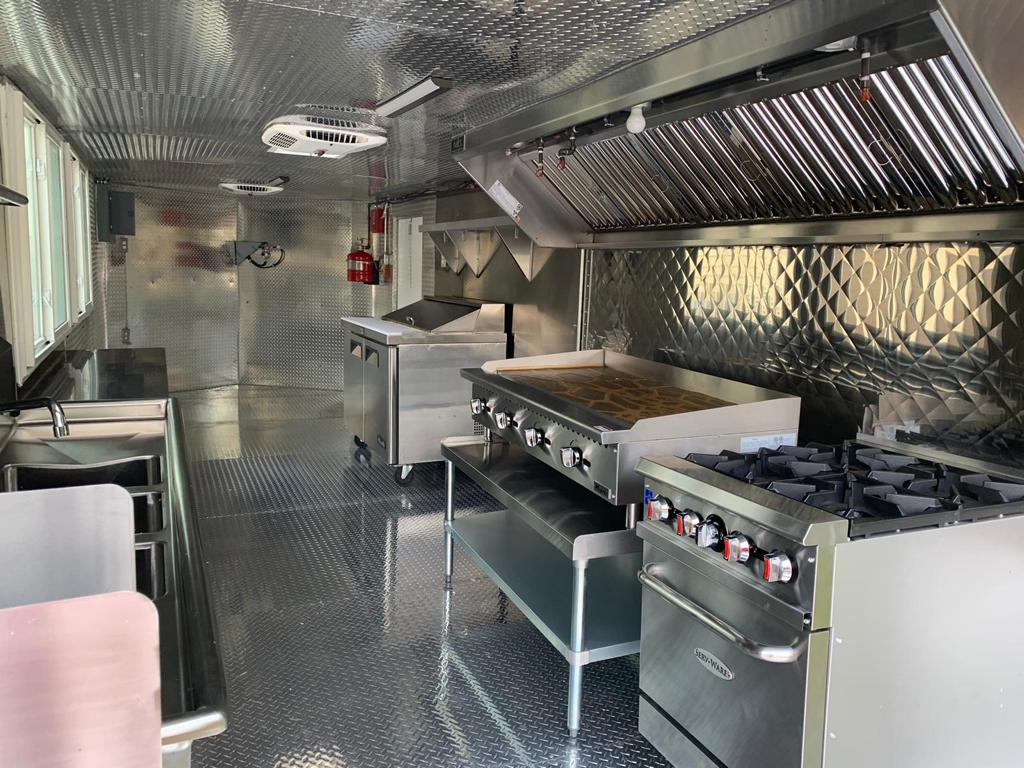
- Commercial hood and fire suppression (required in Houston): $7,000 to $12,500
- Cooking equipment (griddle, fryer, flat top, refrigeration): $12,000 to $28,000
- Wrapping, signage, lighting: $2,500 to $6,000
- Permits, inspections, and compliance: $1,200 to $3,500
Add it up. A legitimate, inspection-ready conversion in Houston runs $61,000 to $116,000 depending on how much of the equipment you buy new versus refurbished. Anyone quoting you $35,000 for a "turnkey" truck is either cutting corners on the fire suppression, using non-commercial equipment, or hoping you won't notice until the inspector does.
And here's the part that stings: the cheapest quote almost always ends up costing more. I've seen operators spend $42,000 on a budget conversion, then drop another $28,000 fixing electrical and plumbing issues within 14 months. That's not a discount. That's a deferred invoice.
The Three Mistakes That Kill Houston Food Truck Builds
1. Undersizing the generator
Everyone wants to save $2,000 by going with a smaller generator. Then they add a second fryer, an ice machine, and a POS system, and suddenly they're running a 7kW unit that can't handle the load. In Houston heat, an undersized generator works at 100% capacity all day. It dies in 18 months instead of 5 years. Buy the next size up. Always.
2. Skipping the fire suppression upgrade
Houston fire marshals have gotten stricter since 2023. If your hood doesn't have a compliant suppression system with the right nozzle coverage for your specific cooking equipment, you fail. Period. This is where the $35,000 truck quote falls apart. The proper system alone is $7,000 to $12,500 installed. If a shop is quoting you a full conversion under $40,000, ask them exactly what fire suppression they're installing. Watch them squirm. If you want to understand the full requirements, here's a breakdown of food truck fire safety equipment worth reading before you sign anything.
3. Designing the menu after the build
This is the most expensive mistake and the most common. Operators build the truck first, then figure out the menu. That's backwards. Your menu determines your equipment. Your equipment determines your electrical load. Your electrical load determines your generator and panel. Get the menu locked before the first panel goes in — food truck menu planning isn't a marketing exercise, it's an engineering input.
What to Ask Every Conversion Shop Before You Pay a Deposit
Three questions separate the shops that build trucks from the shops that build businesses.
First: "Can you show me a truck you built that's been operating in Houston for more than two years?" If they can't, walk. A conversion that looks great on delivery day and falls apart in August isn't a conversion — it's a lease on someone else's problem.
Second: "Who handles the inspection?" The answer should be the shop, not you. A real conversion service walks your truck through the health department and fire marshal inspections as part of the build. If they hand you a checklist and wish you luck, they're not a conversion service. They're a parts installer.
Third: "What's your warranty on electrical and plumbing?" One year minimum. Anything less and they don't trust their own work.
If you're also weighing a trailer instead of a truck, the math changes — custom concession trailer builds in Houston often come in $8,000 to $15,000 cheaper for the same square footage, but you lose the ability to park in tight spots and you'll need a tow vehicle. That's a real trade-off, not a marketing decision.
Financing the Build Without Getting Burned
Here's the reality most shops won't tell you: food truck lending is tighter in 2026 than it was three years ago. Traditional SBA loans are still the best rates, but approval takes 60 to 90 days and requires two years of business tax returns. If you're starting fresh, you're looking at equipment financing at 9% to 14% APR, or a personal loan if your credit is above 680.
If your credit isn't there yet, don't panic and don't sign a predatory lease. There are real financing options for bad credit in 2026 — they just require you to read the fine print on origination fees and prepayment penalties. A 12% loan with no prepayment penalty beats a 9% loan with a 5% origination fee every time if you plan to pay it off early.
One more thing: don't finance the truck and the equipment in the same loan if you can avoid it. Equipment depreciates differently than the vehicle, and separating them gives you flexibility if you need to sell one without the other.
The Question You Should Actually Be Asking
Everyone asks "how much does a food truck conversion cost in Houston?" The better question is "how much does it cost to have a food truck that's still operating in year three?" Those are very different numbers.
The operators who make it past year two in Houston — and roughly 60% don't — are the ones who spent $80,000 on a truck that works instead of $45,000 on a truck that looks like it works. The difference isn't the paint job. It's the panel size, the generator spec, the suppression system, and whether the shop that built it is still answering the phone when something breaks in July.
If you want real numbers for your specific concept — not a generic range — get a custom quote based on your menu, your vehicle, and your service model. And if you're still in the planning stage, mobile kitchen consultations are worth the hour before you spend six figures on a guess.
Because here's the thing nobody says out loud: the truck is the easy part. The hard part is everything you decide before the first cut.