Food truck branding ideas for new business that actually
The number that should keep you up at night: roughly 60% of new food trucks fold within their first three years, and it's rarely the food. It's that nobody could find them, remember them, or tell them apart from the twelve other trucks parked on the same block. That's the real problem behind every search for food truck branding ideas for new business — you're not looking for a cute logo. You're looking for a way to be the truck people walk toward instead of past.
Let me be blunt: most branding advice for food trucks is written by graphic designers who've never stood in a commissary line at 6am. They'll tell you to "define your brand values." Useless. What you need are decisions that cost real money and make real money. So let's talk about those.
The $4,000 question nobody answers honestly
Here's what a full vehicle wrap actually costs in 2026: anywhere from $3,500 to $8,000 for a proper full wrap on a standard step van, and $1,200 to $2,500 for a partial wrap or decal package. That's a real number. And here's what nobody tells you — a $7,000 wrap on a truck with a bad service window position is $7,000 wasted.
Branding starts before the vinyl. The physical layout of your truck is branding. Where the window sits, how the menu reads from 15 feet away, whether the line forms toward the sidewalk or into traffic — that's the stuff that decides if you sell out or stand around. Before you spend a dollar on graphics, read up on how to design a food truck kitchen layout that works. A truck that operates smoothly lets your brand breathe. A chaotic one makes even a great logo look amateur.
Food truck branding ideas for new business: what actually gets remembered
Three things make a customer remember a truck. Not your font. Not your color palette. These:
1. One color, owned ruthlessly
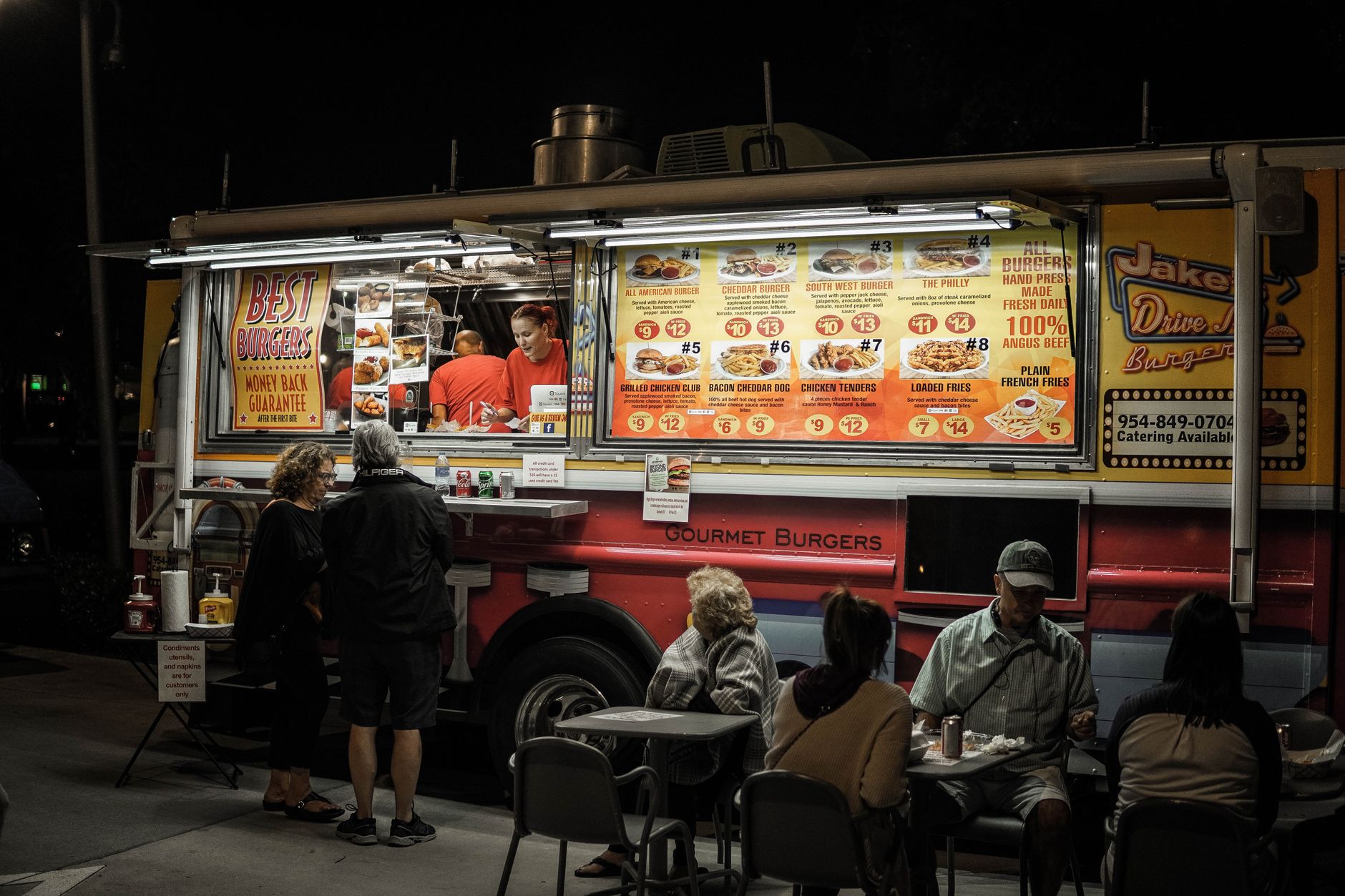
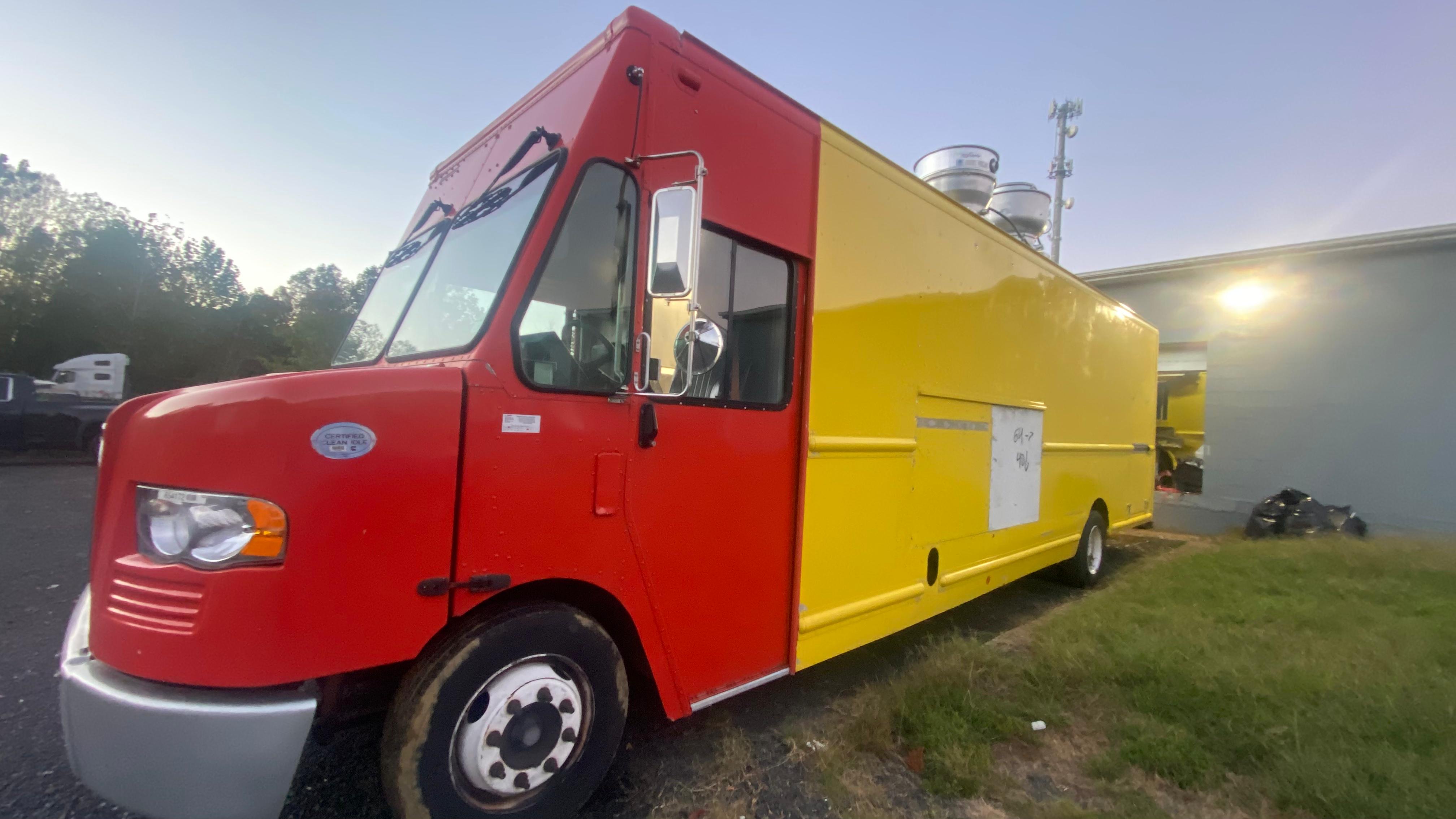
Pick a single high-contrast color and dominate it. The most memorable trucks in any city — the ones people describe as "the yellow one" or "the black truck with the neon sign" — win because they claimed a color nobody else on their route uses. Bright yellow, hot pink, matte black. Skip the tasteful sage green. It disappears at 40 feet.
2. A name that says what you sell
"Ember & Oak" tells a customer nothing. "Ember & Oak Smash Burgers" tells them everything. Your name and your window graphic should answer "what do you sell?" in under two seconds, because that's all the time you get from someone walking past at lunch. Clever loses to clear every single time.
3. A menu you can read from the sidewalk
Six items, max. Big type. Prices visible. If a customer has to squint or ask "what's good?", you've lost a sale to the truck next door. Your menu board is a branding asset, not an afterthought — treat it like one.
Where new truck owners burn money on branding
The single most common mistake: spending the entire branding budget on the outside of the truck and nothing on the inside experience. The wrap gets the customer to the window. What happens in the next 90 seconds decides whether they come back.
That means a clean, organized service area, consistent packaging, and a staff script. A $2,000 branded sticker run on cheap containers that leak is worse than plain containers that work. And a beautiful truck that fails its health inspection never opens at all — which is why you should treat compliance as part of your launch branding. If you're operating in Virginia, the Virginia food truck health inspection checklist that passes is not optional reading.
Let me give you a concrete example. A new operator in Richmond spent $6,500 on a wrap and $400 on a commissary setup, failed inspection twice, and opened three weeks late — right into a soft launch window. The branding was gorgeous. Nobody saw it. The lesson: the boring infrastructure is the brand launch.
The build is the brand: why your builder matters more than your logo
You can't wrap a truck that doesn't exist yet, and you can't brand a kitchen that doesn't function. Before you commit to a fabricator, understand what separates a good build from a money pit — what to look for in a food truck builder: 7 factors covers this in detail. A builder who gets the electrical, ventilation, and window placement right gives your branding a foundation. One who doesn't leaves you with a pretty truck that fails inspection.
And budget honestly. A custom build in 2026 runs $60,000 to $175,000 depending on size and equipment — the custom food truck cost breakdown for 2026 lays out the real line items. Branding is a slice of that pie, not the whole thing. If you're weighing options or need mobile kitchen consultations before you commit, do it before the design is locked. Changing a wrap is cheap. Changing a service window is not.
What your first 90 days should actually look like
Branding isn't a one-time event. It's a habit. In your first three months, your job is to be findable, repeatable, and consistent. That means the same truck, in the same spots, on the same days, so people can build a routine around you. It means a social feed that shows your actual location daily — not curated lifestyle shots. It means answering every DM, because a new truck lives and dies on word of mouth.
If you want to see what a properly built, brand-ready truck looks like before you spend a dollar on vinyl, get a custom quote and compare the real numbers against your plan. Information beats guessing every time.
Here's the thing most people get backwards: they think branding is what you put on the truck. It's not. Branding is what a stranger remembers about you when they're deciding where to eat tomorrow. The wrap just makes sure they can find you again.