How Much Does a Food Truck Wrap Cost? Real 2026 Prices
How Much Does a Food Truck Wrap Cost? The Number Nobody Puts on the Menu
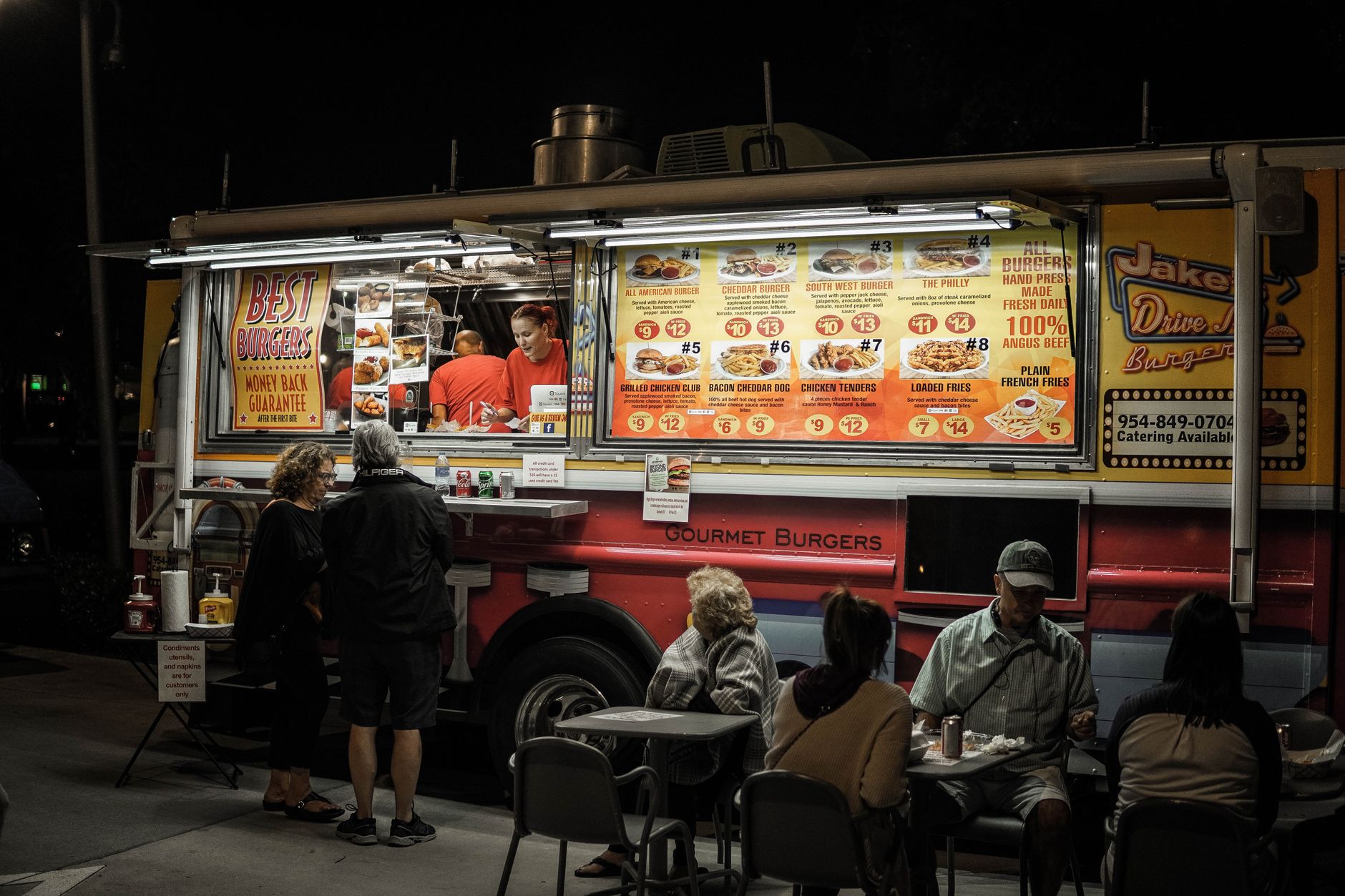
Most food truck advice is written by people who've never priced a wrap, so let's start with the real answer: how much does a food truck wrap cost in 2026? For a full, professionally designed vinyl wrap on a standard 16-to-20-foot truck, you're looking at $3,000 to $6,000. A partial wrap or simple logo package runs $1,200 to $2,500. A premium custom design with complex artwork and a full vehicle color change can hit $8,000.
That's the range. Now here's what nobody tells you: the wrap is one of the cheapest line items in your entire build — and one of the easiest to screw up by spending it in the wrong order.
I've watched owners drop $5,500 on a gorgeous wrap for a truck that still had no working hood system. The wrap was flawless. The truck never passed inspection. The money was gone.
What Actually Drives the Price Up (and What Doesn't)
Square footage is the base unit. A 14-foot step van has far less surface area than a 22-foot box truck, and every extra foot of length adds roughly $150 to $300 in material and labor. But square footage is only the starting point.
Design complexity is where budgets quietly explode. A two-color logo with clean lines installs fast. A full photographic mural with gradients, shading, and a dozen brand colors means more print time, more material waste, and a longer install. That difference alone can swing your quote by $1,500.
The install itself matters too. Curved panels, rivets, and windows force the installer to cut, stretch, and hand-fit — work that takes hours and shows up on the invoice. A flat-sided trailer is a cakewalk. A vintage step van with rounded corners is not.
Partial vs. Full Wrap: The Honest Math
A partial wrap covers the prime real estate — doors, sides, maybe the back — and leaves the rest of the original paint. It costs 40% to 60% less than a full wrap and, done well, reads just as loud from across a parking lot. If your truck's base color is already clean, a partial wrap is the smart money. If it's a faded white 2009 model with rust spots, a full wrap hides everything and is worth the premium.
Here's the part that ties into the bigger picture: your wrap decision doesn't live in isolation. It lives inside your total build budget, which is why it's worth reading our breakdown of how much it costs to build a food truck in 2026 before you commit a dollar to vinyl.
The Sequencing Trap That Costs Owners Thousands
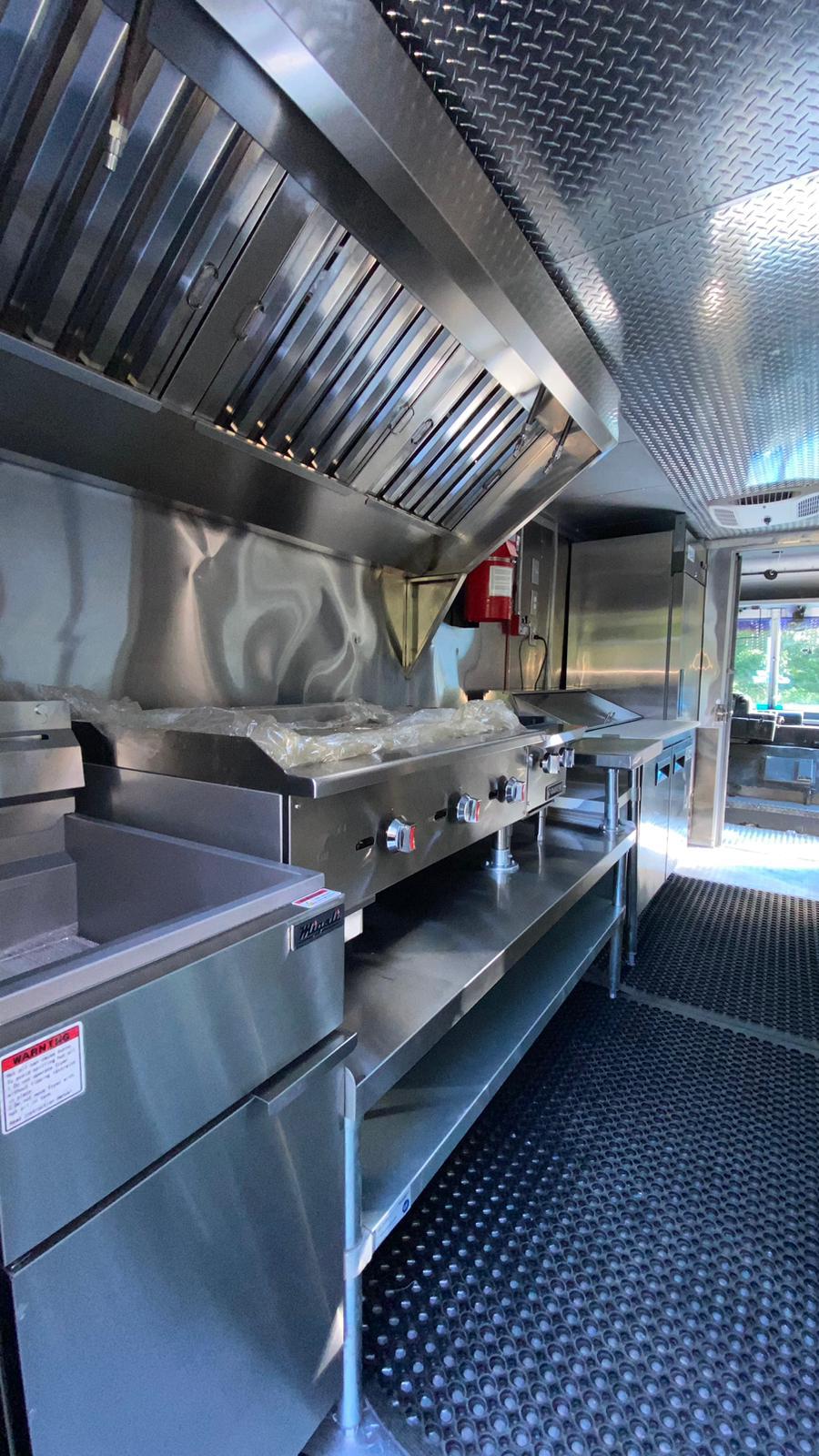
Let me give you a concrete example. An owner in Houston budgets $5,000 for a wrap and orders it in month one, before the kitchen build. Then the fabrication crew cuts a new service window, welds a generator bracket, and mounts a vent hood that clips the rear panel. The wrap gets sliced, patched, and re-printed. That's $800 to $1,500 in rework for a decision made in the wrong order.
The rule is simple: wrap last. Finish the build, mount every piece of equipment, and only then let the vinyl go on. This isn't just about the wrap — it's the same logic behind our real timeline for building a food truck. Sequence is everything, and the wrap is the final coat of paint on a finished machine.
And if you're building in Texas, the permit clock runs alongside the build. Wrapping before you've cleared Houston food truck permit requirements can mean re-wrapping after an inspector asks you to change signage. Check the rules first.
Why the Cheapest Quote Is Usually the Most Expensive
You will find shops quoting $1,800 for a full wrap. Some are legitimately cheaper because they're new and hungry. Most are cutting corners you can't see: thinner vinyl that fades in 18 months, cheap laminate that peels at the edges, and installers who skip the surface prep that keeps a wrap bonded through a Gulf Coast summer.
A quality cast vinyl wrap with proper laminate lasts five to seven years. A bargain wrap often looks tired in two. Run the math: $1,800 that dies in 24 months versus $4,500 that lasts six years. The "cheap" option costs more per year, every year.
What few people know is that the laminate — the clear protective top layer — is often the difference between a wrap that survives a Houston summer and one that doesn't. Ask specifically what laminate the shop uses. If they can't answer, walk.
Where the Wrap Fits in Your Whole Budget
Step back for a second. A $4,500 wrap on a $90,000 truck build is 5% of your total. It's the cheapest way to look like a $200,000 operation. But it's also the most visible thing you own, and visible things get judged.
That's why the wrap should be the last check you write, not the first. Get the equipment right first — our essential 2026 kitchen equipment list covers what actually matters — then wrap the finished product. If you're starting from zero in Texas, our guide to starting a food truck in Houston with real costs puts the wrap in its proper place in the stack.
If you want to see real numbers for your specific concept — truck size, design scope, and build stage — get a custom quote and stop guessing. For owners still planning the build itself, mobile kitchen consultations can map the whole sequence so the wrap lands where it belongs: last.
The wrap is the loudest $4,000 you'll ever spend. Spend it on a truck that's actually finished — and it'll pay you back every time someone pulls over because they saw your name from a block away.