How to Choose a Turnkey Food Truck Builder: 5 Tips
How to Choose a Turnkey Food Truck Builder Without Getting Burned
Most turnkey food truck builders are assemblers. They buy a shell, bolt in a used fryer, and call it "turnkey." The real builders design the kitchen around your menu, pull the permits, and hand you a truck that passes inspection on the first walk-through. Learning how to choose a turnkey food truck builder is really about telling those two apart — and the difference shows up in your first $40,000, not your first Yelp review.
Here's the number that matters: a properly built turnkey truck in 2026 runs $85,000 to $175,000 depending on size and equipment. A "budget" builder will quote you $55,000. That gap isn't a discount. It's a list of things you're about to pay for twice — underpowered electrical, a hood that fails fire code, a generator that dies in August.
So let's talk about how to actually vet one. Not the glossy stuff. The questions that make a weak shop go quiet.
1. Ask What "Turnkey" Actually Includes — in Writing
"Turnkey" is the most abused word in this industry. For one builder it means a finished, inspected, titled vehicle. For another it means a box on wheels with a sink. You need the line items spelled out before you compare a single price.
Ask for a written scope that covers: chassis or trailer, kitchen fabrication, electrical and propane, fire suppression, hood and ventilation, plumbing, finishes, and — critically — who handles the health department inspection and the title/registration paperwork. If a builder can't produce that document in 24 hours, that tells you something about how they'll handle your build.
The three items builders quietly leave out
Fire suppression systems (a real one runs $3,500–$6,000). Commercial-grade ventilation sized to your actual cooking load. And the electrical capacity to run everything at once — not one appliance at a time on paper. These are the three line items that turn a $60,000 quote into an $80,000 invoice after signing. Get them in the contract or walk.
2. Look at the Kitchen Layout, Not the Paint Job
Anyone can wrap a truck in matte black and Instagram it. The build quality lives in the layout — and the layout lives in your menu. A builder who designs your kitchen before asking what you cook is guessing.
A real turnkey shop will ask about your peak ticket volume, your hottest cooking method, your cold storage needs, and your service window flow. If they hand you a stock layout, you're buying a template, not a truck. This is where the difference between a truck and a trailer also matters — a good builder will tell you honestly which one fits your concept instead of upselling. If you're still weighing that, read which is better, a food truck or trailer before you commit.
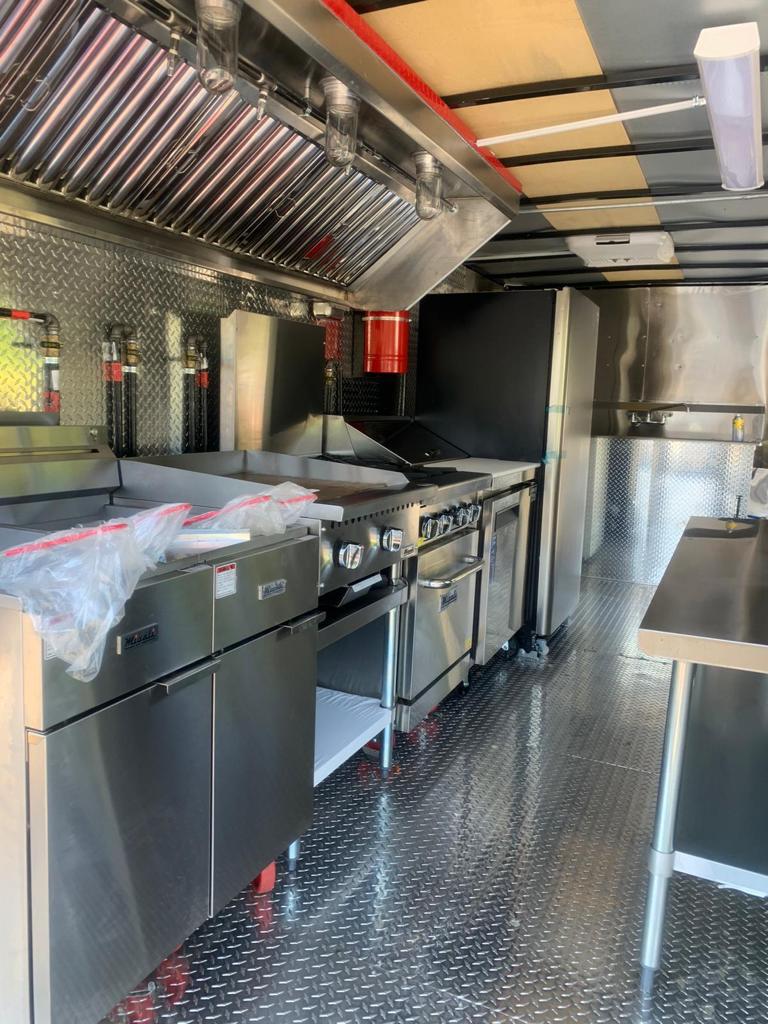
Walk the layout with your actual service flow in mind. Where does the cook stand at 12:30pm on a Saturday with 30 people in line? If the answer is "cramped against the fryer," the layout failed. The best builders design around that moment — see how a food truck kitchen layout that actually works gets built.
3. Demand Real Numbers — and Compare Them to 2026 Market Prices
Vague quotes are a red flag. A serious builder gives you a line-item breakdown: chassis, fabrication hours, equipment by brand and model, electrical, plumbing, finishes, permits. If you get a single lump sum with no detail, you have no way to know what you're actually paying for.
Use the market as your ruler. A full custom build in 2026 breaks down roughly like this: $30,000–$55,000 for the vehicle or trailer, $25,000–$45,000 for fabrication and kitchen, $12,000–$25,000 for equipment, and $5,000–$10,000 for electrical, plumbing, and fire systems. If a builder's numbers are wildly below these, they're cutting somewhere. For a deeper line-by-line look, the 2026 custom food truck cost breakdown is worth reading before you sign anything.
And ask for two references from the last 12 months — then actually call them. Ask one question: "Did the final invoice match the quote?" The pause before the answer tells you everything.
4. Check Who Owns the Permits and the Paperwork
This is the tip almost nobody gives you, and it's the one that sinks builds. A turnkey builder should know your local health department requirements cold — not "generally," but your city's specifics. In Virginia, for example, the health inspection checklist is unforgiving on hand-sink placement, hot-water capacity, and surface materials. A builder who's never done a Virginia build will learn on your dime.
Ask directly: "Have you delivered a truck in my jurisdiction in the last year? Who handles the inspection appointment? Who files the title?" If the answer is "you'll figure that out," you're not buying turnkey. You're buying a kit with extra steps. Familiarize yourself with what inspectors actually check — the Virginia health inspection checklist is a good reality check on how detailed this gets.
5. Read the Contract for the Three Clauses That Matter
Every build contract has three clauses that decide whether you get a truck or a lawsuit: the delivery date (with a penalty for delays), the change-order process (how overages get priced), and the warranty (what's covered and for how long). Builders with a 16–20 week lead time should be able to commit to a date in writing. If they won't put a date in the contract, they don't control their own schedule.
Watch the change-order clause especially. A fair builder prices changes at a defined rate. A weak one leaves it open — which is how a $70,000 build becomes $95,000 with no warning. And confirm the warranty covers fabrication, not just the appliances the manufacturer already warranties.
If you want to pressure-test your numbers against a real builder before you commit, it's worth having a conversation early — you can get a custom quote and see how a detailed breakdown compares to the vague ones you've been collecting. And if you're still shaping your concept, mobile kitchen consultations can save you from designing a truck around a menu that won't fit it.
The Builder You Want Is Boring on Paper and Ruthless About Details
The best turnkey builder you'll talk to won't have the flashiest Instagram. They'll have a scope document, a line-item quote, two references who answer their phone, and a delivery date they'll actually sign. They'll ask about your menu before they show you a truck. They'll tell you when a trailer beats a truck for your concept, even though it's less money for them.
That's the tell. The builder who's willing to talk you out of something is the one who'll build you something that lasts. The one who says yes to everything is selling you a shell and hoping you don't notice until the first inspection. Which kind do you think calls you back after the deposit clears?