Most "Custom" Food Truck Builds in Virginia Aren't Custom at All
Walk onto any lot in Richmond or Virginia Beach and you'll hear the same pitch: "We do custom builds." Then they show you three layouts — a sandwich truck, a coffee truck, and a burger setup — and ask you to pick one. That's not custom. That's a menu.
Real Virginia food truck conversion specialists do something different. They start with your menu, your cooking equipment, your service window position, and your generator capacity, then work backward to the chassis. The difference isn't cosmetic. It's the difference between a truck that makes you money for eight years and one you're trying to unload after eighteen months.
Here's what nobody tells you before you start this process: the conversion is where your entire business succeeds or fails. The food matters. The location matters. But if your electrical system can't handle your fryer and your refrigerator simultaneously, none of that matters.
What Van-to-Food-Truck Conversions Actually Cost in Virginia
Let's talk real numbers because the vague "it depends" answers you've been getting are useless.
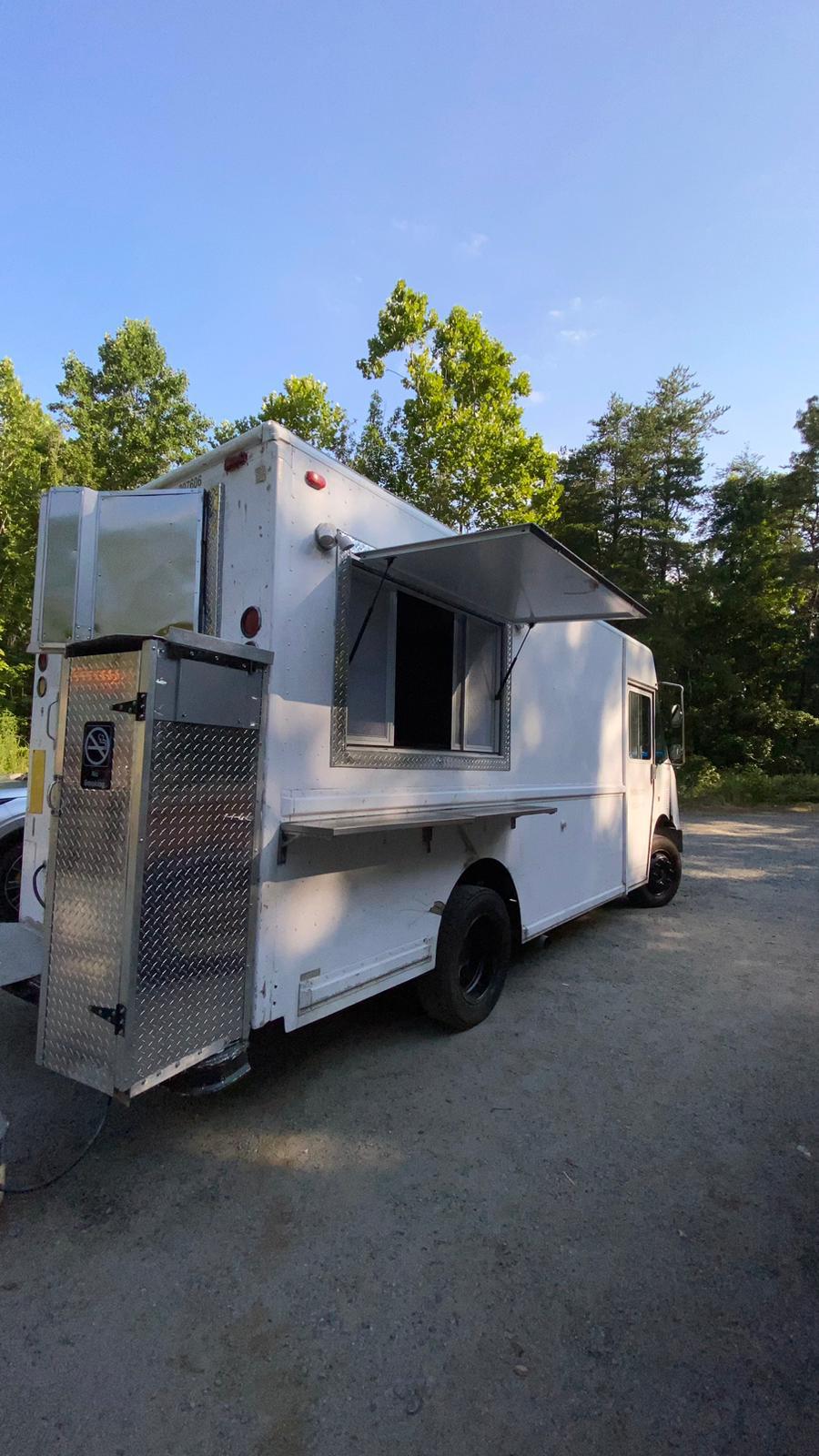
A bare cargo van — say, a used Ford Transit 350 or Mercedes Sprinter — runs between $28,000 and $45,000 depending on mileage and condition. Then the conversion starts. For a basic setup with a flat-top grill, a refrigerator, a hand-wash sink, and a simple electrical system, you're looking at $35,000 to $55,000 in conversion costs alone.
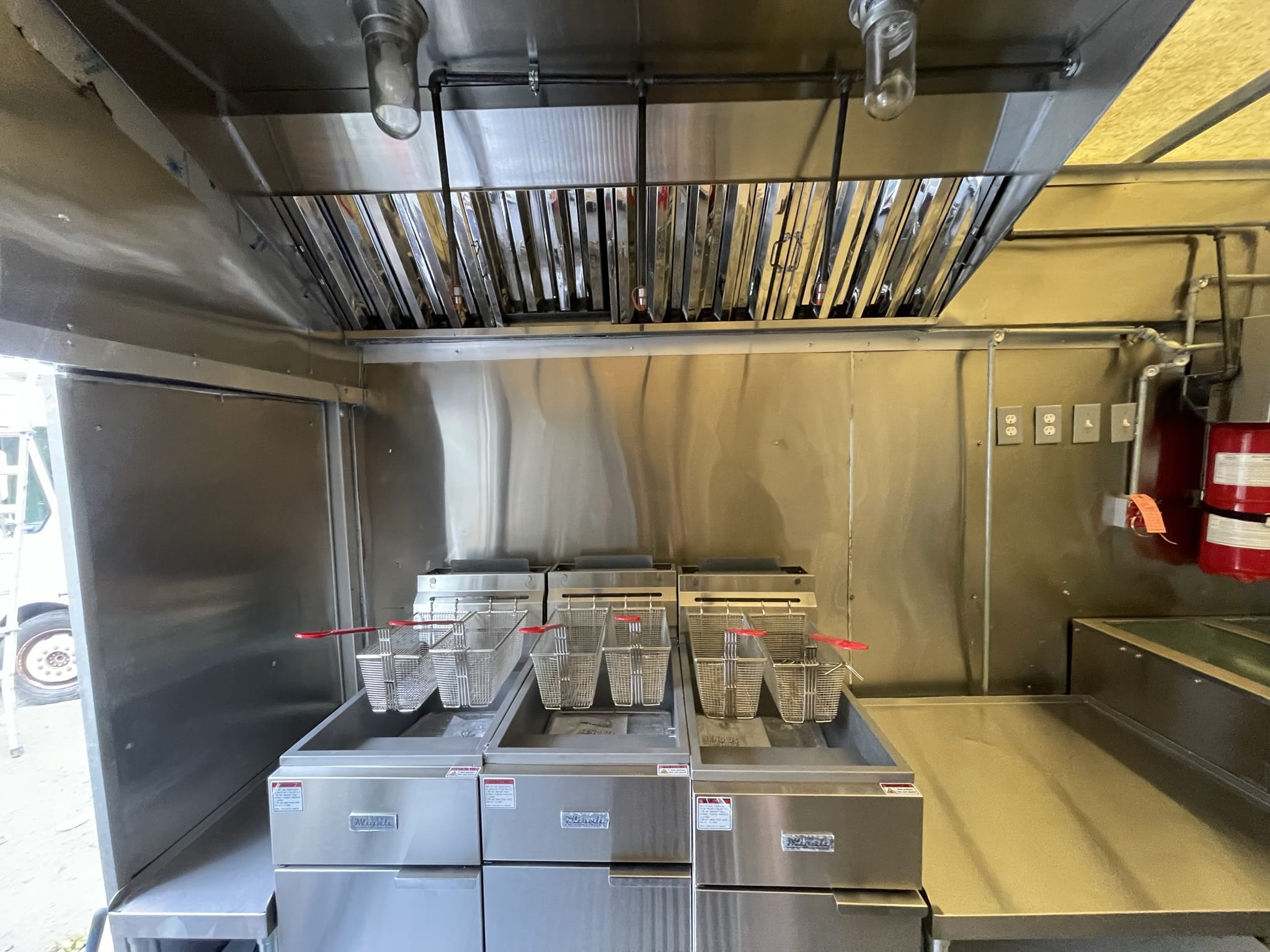
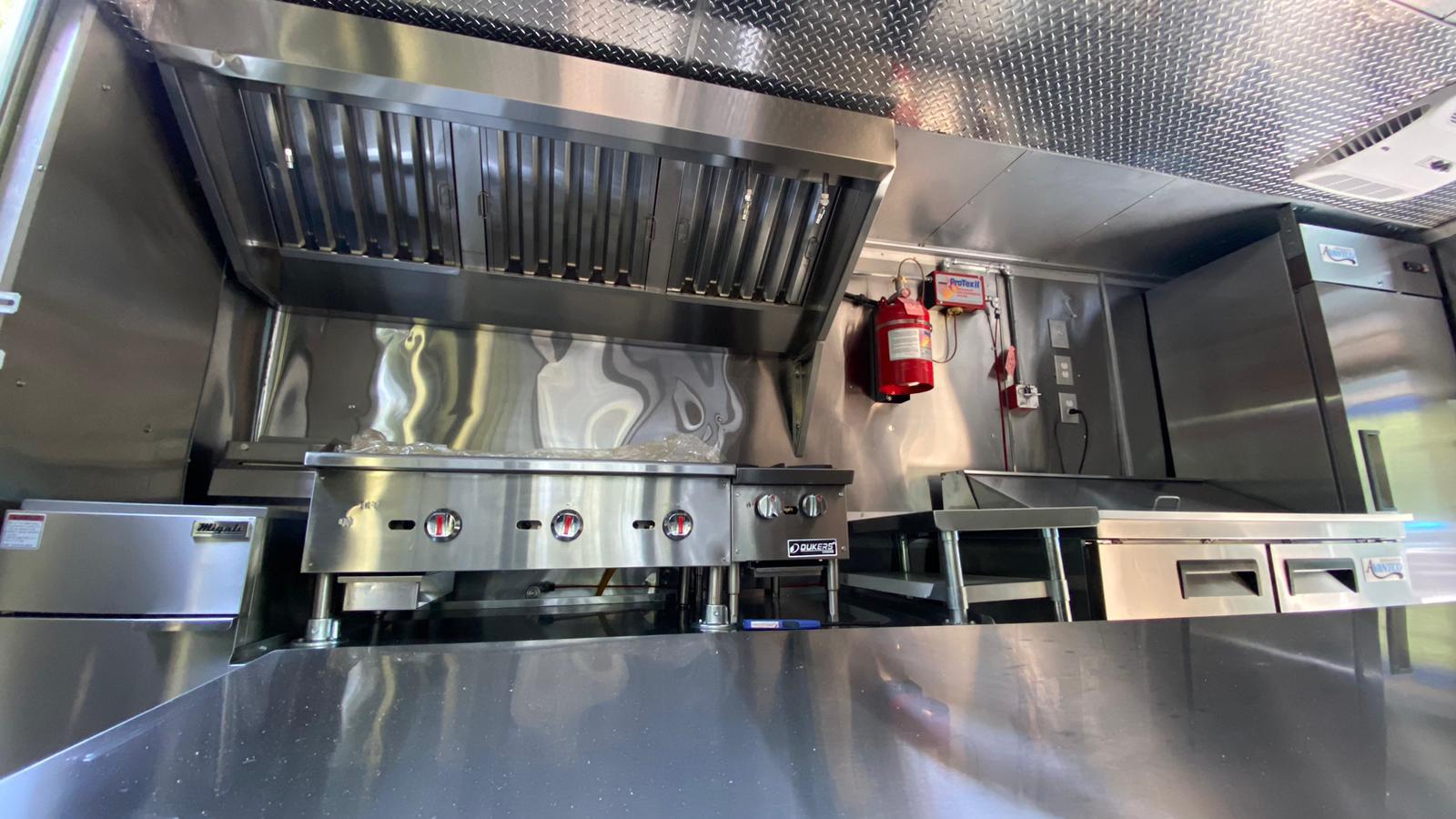
Here's the part that surprises people: a full custom build with commercial-grade equipment, proper ventilation, fire suppression, and a generator capable of running everything simultaneously lands between $75,000 and $120,000. That's before you spend a dime on permits, insurance, or your first inventory order.
The truth is that 60% of first-time food truck owners underestimate their total startup costs by at least $25,000. They budget for the truck and forget the equipment, the build-out, the permitting, and the three months of operating expenses they'll need before turning a profit.
Why Virginia's Health Department Rules Should Shape Your Build
Here's where working with specialists who know Virginia specifically matters. The Virginia Department of Agriculture and Consumer Services (VDACS) enforces food establishment regulations that differ from neighboring states. Your three-compartment sink needs specific dimensions. Your hand-wash station needs to be positioned within certain distances from your food prep area. Your floor-to-ceiling clearances for ventilation aren't suggestions — they're code.
A generic builder in another state might not know that Virginia requires a test kit for your sanitizer solution on board. They might not know that your water tank capacity needs to meet specific thresholds depending on your menu. These details seem small until your inspection fails and you're parked for two weeks waiting for a re-inspection.
This is why the "specialist" part of Virginia food truck conversion specialists matters. You're not just paying for fabrication skills. You're paying for regulatory knowledge that keeps you on the road instead of parked.
The Equipment Decisions That Make or Break Your Budget
Let me give you a concrete example. Two owners in Norfolk both wanted taco trucks. Owner A went with a cheap propane grill and a standard under-counter refrigerator. Total equipment cost: around $6,000. Owner B invested in a commercial flattop with proper BTU output and a reach-in refrigerator with a compressor rated for constant vibration. Total equipment cost: around $11,000.
The difference? Owner A's grill couldn't maintain temperature during the lunch rush. They were serving lukewarm food by 1pm. Owner B's equipment handled the volume without breaking a sweat. Within six months, Owner B was doing double the daily revenue.
The lesson isn't that expensive equipment is always better. It's that matched equipment — sized correctly for your menu and your expected volume — is non-negotiable. Your conversion specialist should be asking you how many covers you expect per hour before they recommend a refrigerator size. If they're not asking that question, find someone else.
Generator Sizing: The Mistake Almost Everyone Makes
One of the most common failures in food truck builds is undersized generators. Owners calculate their total electrical load, add a small buffer, and call it done. Then they discover that their refrigerator compressor has a startup surge three times its running wattage, and their generator trips every time the compressor kicks on.
A proper generator sizing calculation accounts for startup surges, simultaneous operation, and degradation over time. Most specialists recommend a generator rated at least 25% above your calculated peak load. That's not a luxury — that's insurance against being dark during your busiest service window.
The same logic applies to your electrical panel. If your specialist is installing a panel without room for future expansion, they're not thinking about your business growth. Adding a second refrigerator later means rewiring the entire system if the panel is maxed out.
What to Look for When Choosing a Conversion Shop
You should ask every potential builder these questions before signing anything:
- How many commercial food trucks have you completed in the last two years? The answer should be at least ten, not "we've done some vans."
- Can you show me completed builds that passed VDACS inspection on the first attempt? If they can't, that's a red flag.
- Do you handle the electrical and gas certification in-house, or do you subcontract? Subcontracted work creates coordination gaps that cause delays.
- What's your warranty on the conversion work? A one-year warranty is the minimum you should accept.
And here's the question most people forget: what happens if my menu changes in year two? A good builder designs for flexibility. A bad one locks you into a layout that can't adapt.
Why Location Matters More Than You Think
Virginia's food truck scene isn't uniform. Richmond has a thriving food truck culture with regular gatherings at places like Hardywood Park Craft Brewery and the RVA Food Truck Court. Northern Virginia serves a different demographic entirely — higher income, more office workers, different menu expectations. Virginia Beach has seasonal tourism that changes your volume calculations dramatically.
Your conversion should account for your operating territory. A truck built for year-round Richmond street service needs different insulation and heating than one serving summer beach crowds. A truck serving the D.C. suburbs needs a generator quiet enough for residential-adjacent locations.
These aren't luxury considerations. They're operational requirements that affect your daily revenue.
The Permit Process Nobody Warns You About
Virginia requires a mobile food unit permit through VDACS, and the process takes time. Plan for 4-6 weeks between your completed build and your approved permit — and that's if everything goes smoothly. Your conversion specialist should be able to walk you through the inspection checklist before you ever schedule your inspection. If they can't, you're going to learn about your mistakes the hard way.
The cost structure varies by county, but expect to budget between $200 and $500 for your initial permit, plus annual renewal fees. Some localities add their own requirements on top of state regulations. Arlington County, for example, has additional fire safety requirements that other parts of the state don't enforce.
This is why you want a builder who's done this before in Virginia specifically. They know the local quirks. They know which counties are strict and which are more lenient. That knowledge saves you weeks of back-and-forth.
Financing Your Build Without Getting Burned
Most people can't write a $90,000 check for a custom build. That's normal. What's not normal is the financing terms some owners accept because they're desperate.
Equipment financing through the builder's preferred lender often carries higher interest rates than you'd get through a credit union or SBA microloan. Shop around. A 2% difference in interest rate on a $70,000 loan over five years is about $3,700 in extra interest payments.
Also, understand the difference between financing the truck and financing the conversion. If you're converting an existing van, the conversion cost might not be eligible for standard auto financing. You may need equipment financing or a business loan instead. Your specialist should be able to point you toward
mobile kitchen consultations that cover these financial questions alongside the technical ones.
What a Proper Build Timeline Looks Like
A realistic timeline for a custom build in Virginia is 8-12 weeks from deposit to completion. That includes design finalization, fabrication, equipment installation, and inspection preparation. If a builder promises four weeks, they're either doing a minimal conversion or they're lying.
The design phase alone takes 1-2 weeks. You need to finalize your menu, your equipment list, your layout, and your exterior branding. Changes after fabrication starts cost time and money, so get everything locked down before the build begins.
The fabrication phase takes 4-6 weeks for a quality build. Wiring, plumbing, gas lines, ventilation, and interior finishing all need to happen in the right sequence. Rushing this phase creates problems that surface months later when you're on the road.
The final 1-2 weeks are for inspections, testing, and corrections. Your specialist should do a full walkthrough with you before you take delivery — testing every system, checking every connection, and demonstrating how everything works.
Why You Should Invest in Branding During the Build
While your truck is being built, you have time to work on your branding.
Strong food truck branding matters because your truck is your storefront. It's moving advertising. A well-designed wrap costs between $3,000 and $6,000, and it's one of the best investments you'll make.
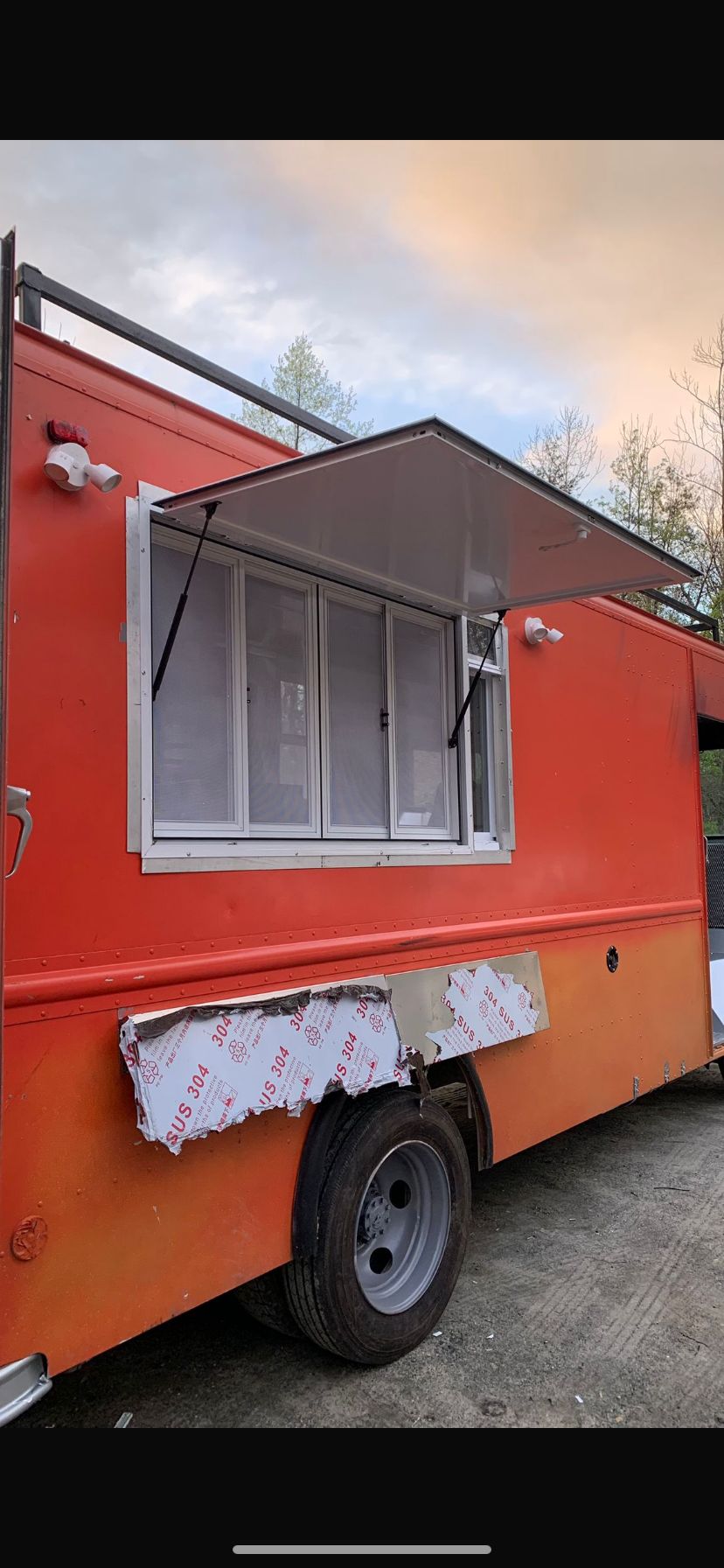
Your conversion specialist should coordinate with your wrap installer so that the wrap goes on after all the exterior work is complete. Getting this sequencing wrong means your wrap gets damaged during fabrication, and you're paying for a replacement.
The same logic applies to your menu boards, your service window design, and your ordering system. These details contribute to the customer experience as much as your food does.
The Real Question: What's Your Break-Even Number?
Here's what all of this comes down to. If your fully loaded truck costs $120,000 — including the vehicle, conversion, equipment, permits, and initial inventory — you need to generate about $1,400 per week just to cover your truck payments over five years. That's before food costs, labor, fuel, insurance, and your own salary.
Most successful food trucks in Virginia do between $3,000 and $8,000 in weekly revenue depending on location, season, and menu. The ones that fail are the ones who thought the truck was the business. The truck is just the tool. The business is the food, the location, the marketing, and the operations.
If you're serious about this, start with the numbers. Know your menu costs. Know your expected volume. Know your break-even point. Then find
Virginia food truck conversion specialists who can
get a custom quote that fits your actual business plan — not a template that fits their inventory.
The trucks that survive in this industry aren't the ones with the flashiest wraps or the most expensive equipment. They're the ones whose owners did the math before they ever signed a contract. That's the real custom build — a business designed as carefully as the truck itself.