Turnkey Food Truck for Sale Houston: Inspection-Ready
What "Turnkey" Actually Means in Houston (Hint: Not What Sellers Tell You)
Search for a turnkey food truck for sale in Houston and you'll get 40 listings that all say the same thing: "Fully equipped, ready to operate, motivated seller." Then you show up, open the back door, and find a three-compartment sink that drains into a bucket and a hood system that a fire marshal would laugh at.
Here's the reality. In Houston, turnkey has a legal definition whether sellers like it or not: your truck passes a Harris County Public Health inspection and a Houston Fire Department permit review on the same week. Not "almost." Not "just needs a small fix." Passes.
And most don't. Not on the first try.
The Houston Health Department conducts thousands of mobile food unit inspections each year, and a significant chunk of new operators fail their first walkthrough for issues that were baked into the truck before they bought it. Cold holding at 45°F instead of 41°F. No backflow preventer on the water inlet. A hand sink that's technically there but positioned where nobody can actually wash their hands without elbowing the fryer.
That's the gap between "turnkey" as a sales word and turnkey as an operational fact.
The Three Things Inspectors in Houston Always Check First
I've talked to enough operators who've been through this to know the pattern. When a Harris County inspector walks into your truck, they're not admiring your wrap or your menu board. They're looking at three systems, in this order:
1. Water: Hot, Cold, Pressurized, and Plumbed Correctly
You need a potable water tank (minimum 5 gallons, though most Houston operators run 30-40 gallons for a full service day), a dedicated hand sink with hot and cold running water under pressure, and a three-compartment sink for wash-rinse-sanitize. If your water heater is a 2-gallon point-of-use unit, you'll run out of hot water by your 15th customer. Inspectors know this. They'll test it.
Backflow prevention is where trucks fail most often. A simple $40 dual-check valve on your city water inlet solves it. Sellers who "forgot" to install one are handing you a failed inspection.
2. Refrigeration That Holds 41°F — Not "Around 41°F"
Texas follows the FDA Food Code on cold holding: 41°F or below, measured at the food surface, not the air. A used commercial fridge that's "working fine" in a garage at 70°F ambient will struggle in a Houston summer when the truck interior hits 110°F. This is not a minor detail. It's the difference between passing and getting a re-inspection fee.
If you're buying used, bring a calibrated thermometer and test the unit after it's been running for at least an hour in the heat. If the seller won't let you, walk away.
3. Fire Suppression and Hood Ventilation
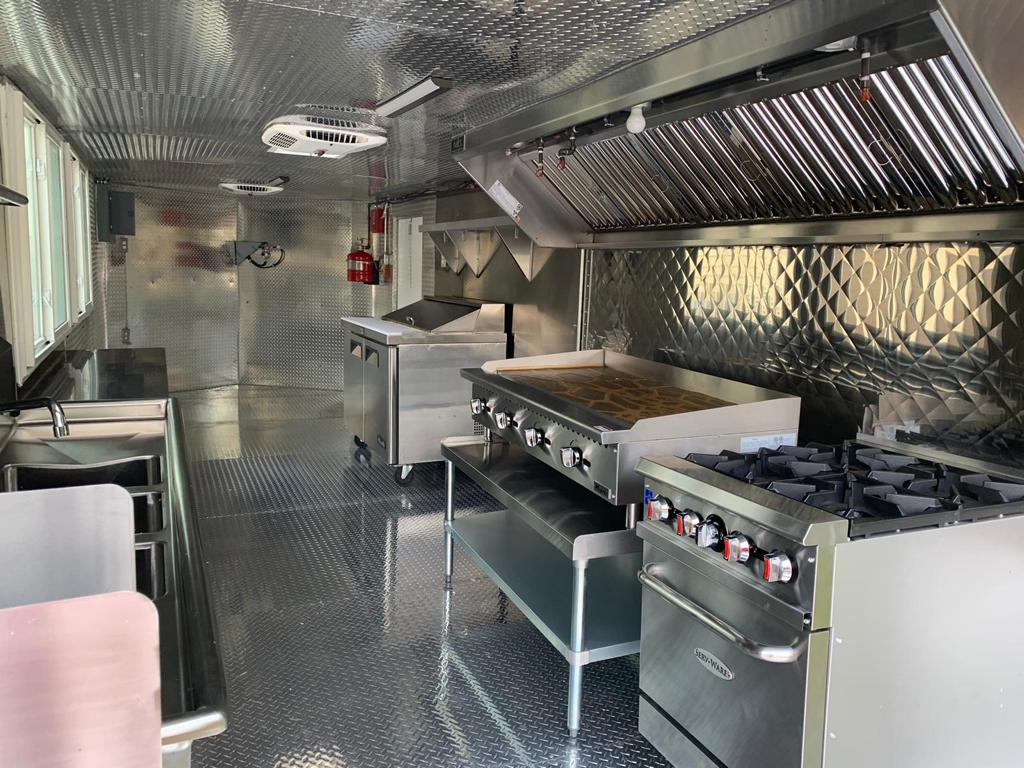
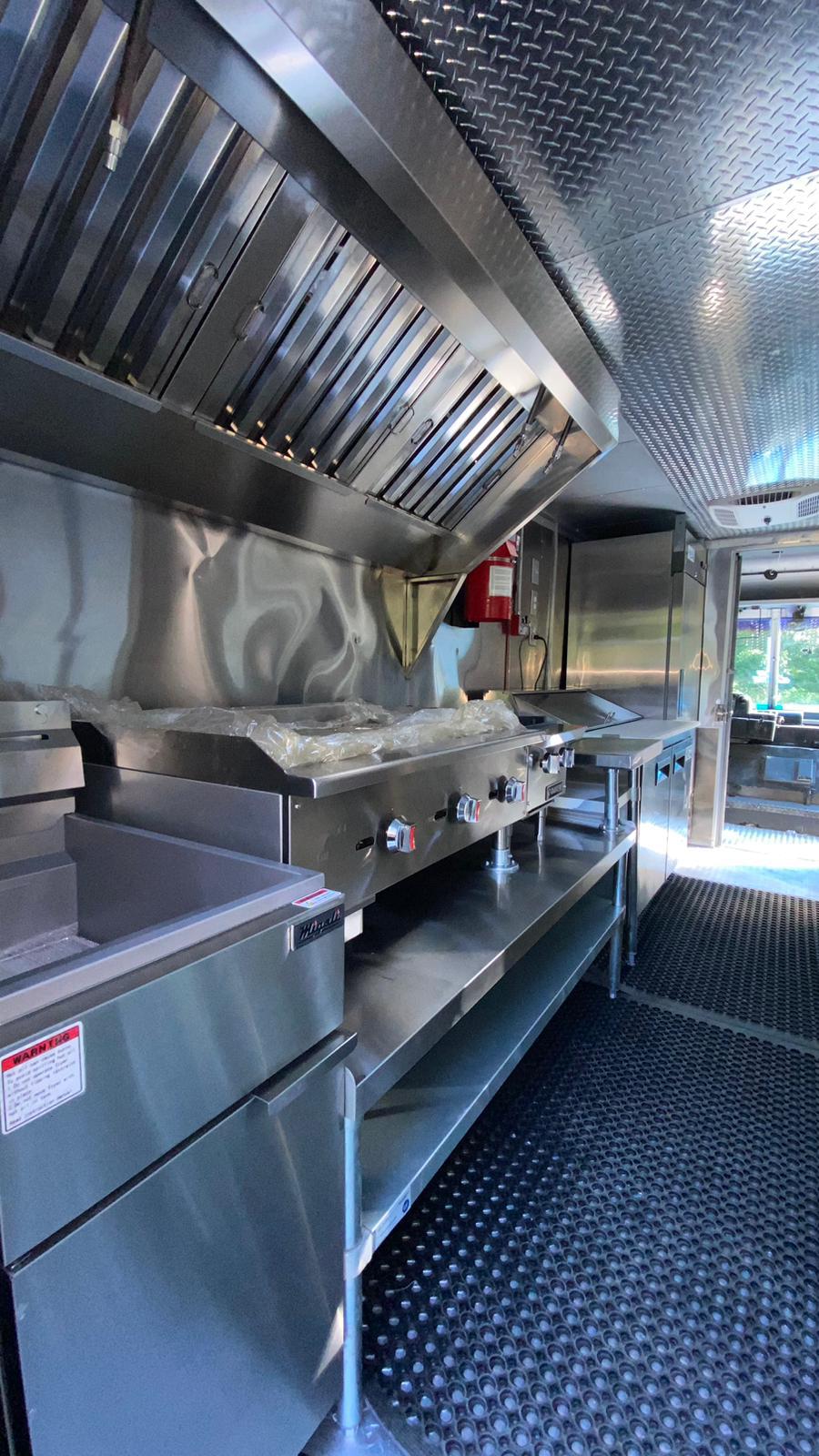
Any truck with a fryer, griddle, or charbroiler needs a Type I hood with a UL 300 fire suppression system, tagged and certified within the last six months. Houston Fire Department won't issue your operational permit without it. A new suppression system installed runs $2,500-$4,500 depending on the hood length. If a seller says "it's already there" but can't produce a tag, budget for a full replacement.
Why a Used "Turnkey" Truck in Houston Usually Costs More Than a Build
Here's a number that surprises people: a used food truck listed at $65,000 in Houston often needs $18,000-$25,000 in compliance work before it passes inspection. New refrigeration. Fire suppression certification. Plumbing corrections. A hood cleaning that reveals the motor's shot. Suddenly your $65K "deal" is an $85K project with a truck that's still five years old.
A ground-up build through a shop that knows Texas code runs $75,000-$140,000 depending on size and equipment — but it comes with a warranty, a clean inspection history, and equipment you chose. If you're comparing the two, compare the finished, inspected number. Not the sticker.
For a deeper breakdown of what conversions actually cost in this market, the numbers in this breakdown of Houston conversion costs line up with what I've seen from operators in 2025 and 2026.
The Inspection Checklist Sellers Hope You Don't Bring
Print this. Bring it to every showing. If a seller gets defensive about any item on it, that's your answer.
- Current Harris County health permit — is it in the seller's name and transferable, or will you need to re-apply from scratch?
- Fire suppression tag — dated within six months, from a certified installer
- Hood cleaning certificate — quarterly service records if it's a high-volume fryer setup
- Water heater capacity and recovery rate — run the hot water for 10 minutes and check the temperature at the sink
- Refrigeration performance under load — not empty, not in the shade
- Backflow preventer — physically present on the city water inlet
- Grease trap — properly sized and documented, especially if you'll be parked in the Loop
- Electrical panel — 50-amp minimum for most setups, and confirm the generator or shore power matches
That's eight items. Most used trucks fail at least three.
What a Real Turnkey Build Looks Like in 2026
The operators who skip the used-truck gamble and go straight to a builder aren't doing it because they have money to burn. They're doing it because the math works. A truck built to Texas code, inspected before delivery, and equipped with the systems you actually need starts earning on day one instead of sitting in a shop for six weeks.
That's where working with a shop that handles the whole thing — design, build, equipment install, and pre-inspection — changes the outcome. You're not buying a truck and hoping. You're buying a truck that's already been through the checklist.
If you want to see what that looks like for your specific concept, get a custom quote with your menu, your volume, and your parking situation. The number you get back will be real, not a starting point for negotiation.
And if you're still deciding between a trailer and a truck, the pricing structure for a custom concession trailer in Houston is often 15-20% lower for the same equipment package, mostly because you skip the engine and drivetrain.
Where Most First-Time Buyers Get Burned
The single most expensive mistake I see is buying a truck that was built for a different city's code and assuming Houston will accept it. It won't. Every municipality interprets the food code slightly differently, and Texas has its own quirks around commissary requirements, wastewater disposal, and where you can legally park and operate.
Houston requires you to operate from a permitted commissary for servicing — water refill, wastewater dump, and in some cases food storage. If your business plan doesn't include a commissary agreement, you don't have a business plan. You have a truck that can't legally open.
Commissary access in Houston runs $400-$900 per month depending on location and what services you need. That's a fixed cost most first-time buyers forget to model. Add it to your opening budget before you sign anything.
For the equipment side — the stuff that has to be installed and certified, not just bought — commercial kitchen equipment installation in Houston is where a lot of DIY builds quietly fall apart. A $4,000 range hood that isn't installed to code is a $4,000 piece of scrap metal.
The Question You Should Ask Before You Buy Anything
Not "is it turnkey?" Every seller says yes. Ask this instead: "When was the last time this truck passed a health inspection, and can I see the report?"
If they can't produce it, you're not buying a turnkey truck. You're buying a project with a nicer name. And in a city where the health department doesn't do second chances for free, that distinction is worth about $20,000.
The operators who make it in Houston aren't the ones who found the cheapest listing. They're the ones who walked away from three bad ones first. If you want to talk through what a compliant build actually looks like for your concept — menu, volume, parking, commissary — mobile kitchen consultations are free and they'll save you from the mistake that ends most food truck stories in this city.