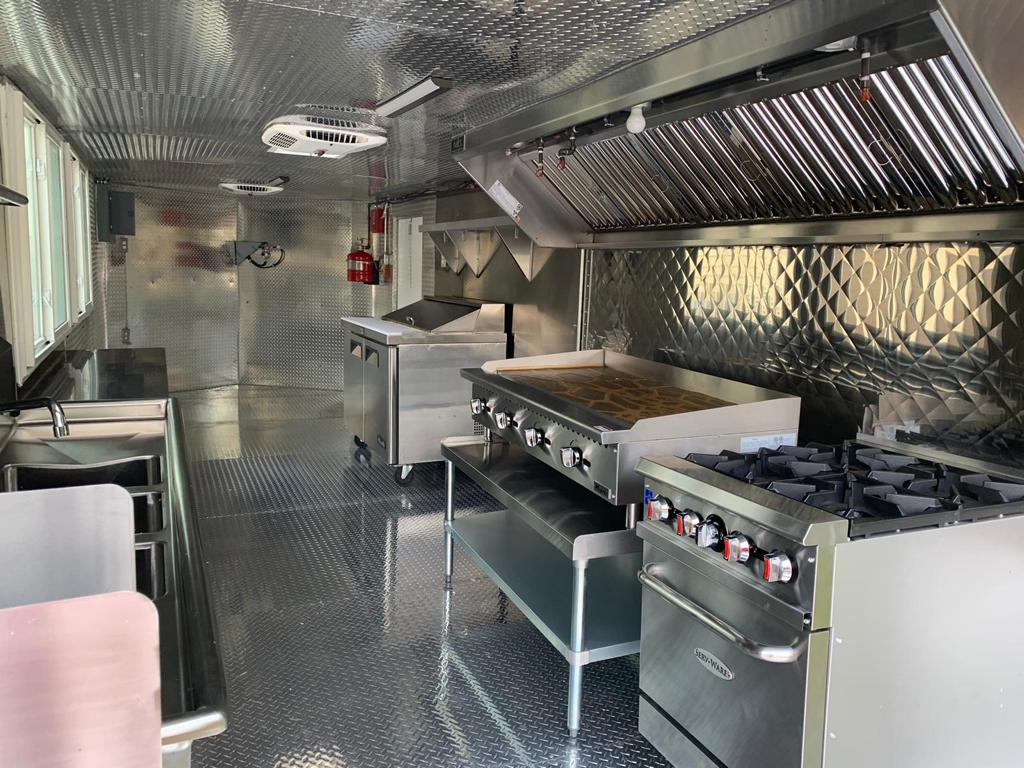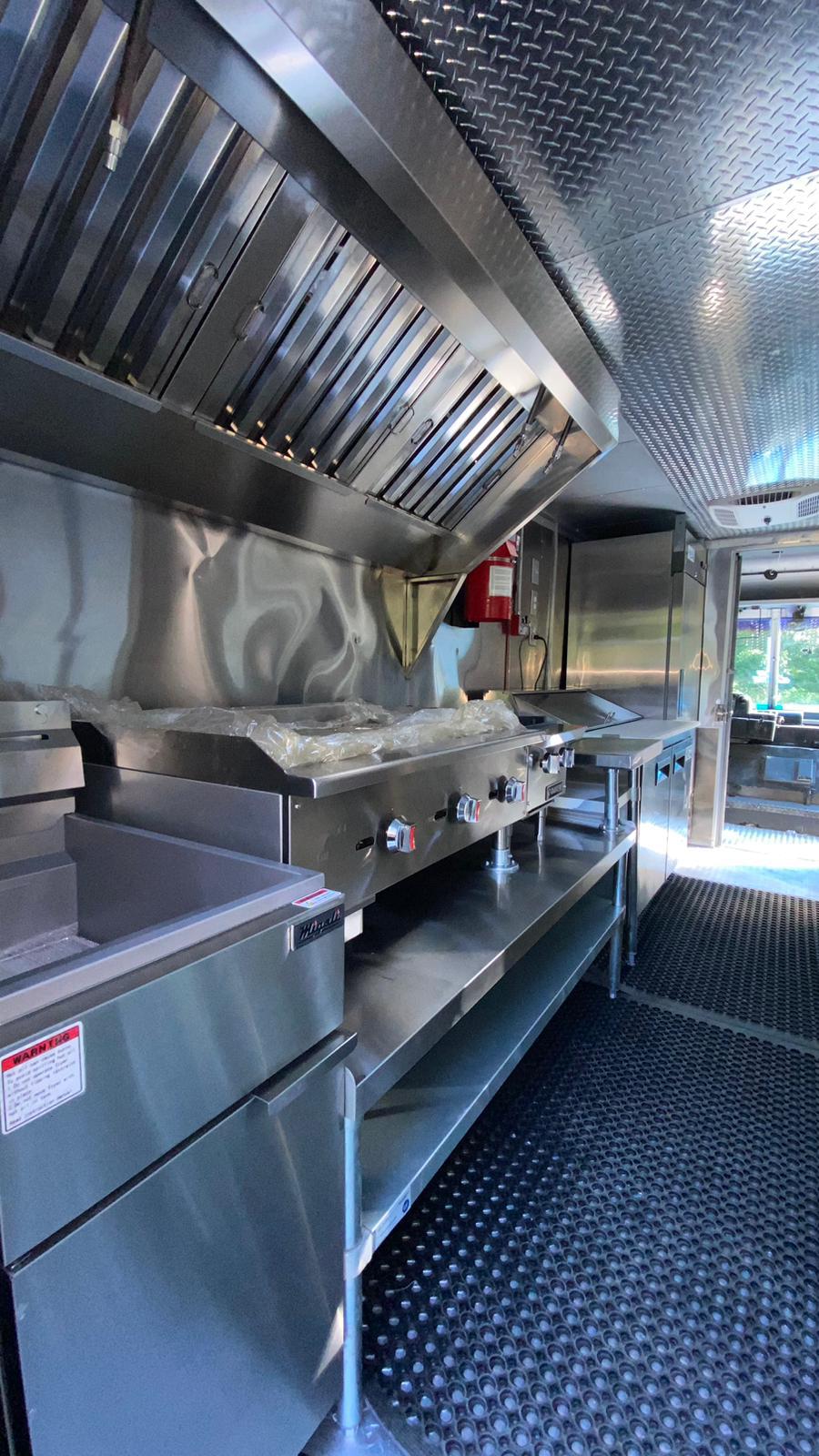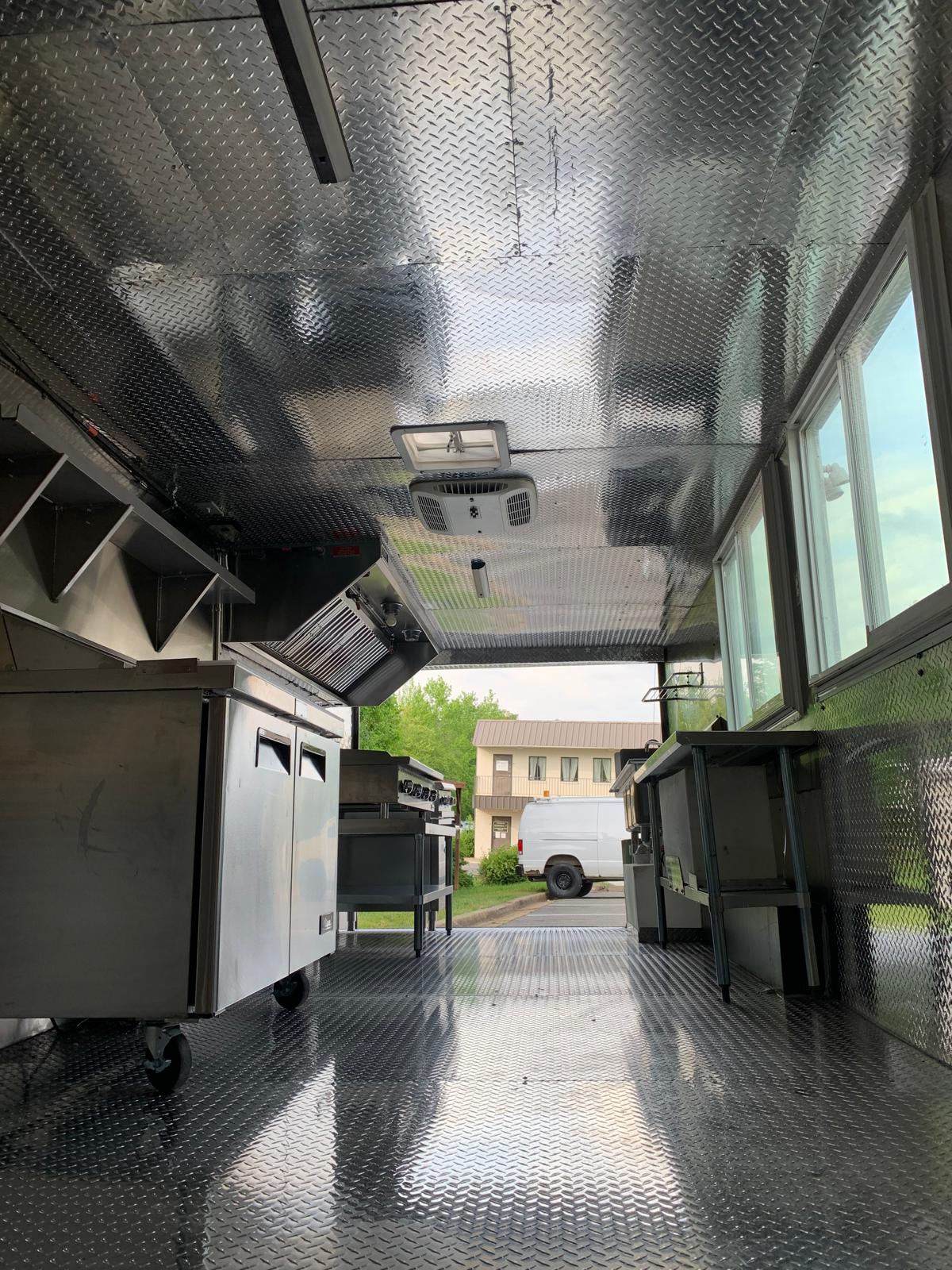
Commercial Kitchen Equipment Installation Houston
Most Houston Food Truck Builds Fail Before the First Service
I've watched more than a hundred builds come together across Houston, and the pattern never changes: the truck looks great on Instagram and the kitchen inside is a disaster. Commercial kitchen equipment installation in Houston isn't a hardware problem. It's a planning problem. People buy a 48-inch range because it looked impressive at the restaurant supply store on I-45, then discover it won't fit through the serving window framing, the generator can't carry the load, and the fire marshal won't sign off on the hood clearance.
That's not a small mistake. That's $6,000 to $12,000 in rework, plus three to six weeks of downtime you didn't budget for.
So let's talk about what actually matters when you're installing a commercial kitchen into a mobile platform in Houston — because the rules here are not the same as Dallas, and they're definitely not the same as building a restaurant.
What Houston Actually Requires Before You Install Anything
Houston sits in Harris County, and Harris County Public Health runs the food truck permitting. Before a single piece of equipment gets bolted down, you need to know what they're going to inspect. And what they inspect is not what most builders tell you.
Three things trip up almost every first-time operator:
1. The hood and fire suppression have to match the cooking method — not the equipment you bought
If you're doing griddle and fryer work, you need a Type I hood with a UL 300-compliant suppression system. That's non-negotiable. But here's what nobody tells you: the suppression system has to be sized to the specific appliances underneath it, and it has to be installed by someone certified to do it. A generic hood kit from an online retailer will fail inspection. We covered the details in our breakdown of food truck fire safety equipment, and it's worth reading before you buy anything with a flame.
Typical cost for a properly installed Type I hood with suppression in a Houston food truck build in 2026: $4,500 to $9,000, depending on hood length and whether you need a make-up air unit.
2. Your electrical load is almost always underestimated
The average food truck operator adds up their equipment wattage and assumes that's the number. It's not. You need to account for startup surges, simultaneous operation, and the fact that Houston summers push refrigeration compressors harder than anywhere else in Texas. A truck that runs fine in March will trip breakers in August.
What does this look like in practice? A 48-inch griddle pulls around 11 kW. A double fryer pulls 12 to 15 kW. A three-door reach-in refrigerator adds another 1.5 kW running, more on startup. Add lights, POS, and a water heater and you're looking at 30 kW minimum for a serious operation. That's a 50-amp, 240-volt service at the absolute floor, and most builders will push you toward 100 amps for headroom.
If your builder quoted you a 30-amp service, ask why. Then ask again.
3. Gas vs. electric is a Houston-specific decision
Houston has LP gas suppliers everywhere, and propane is cheaper per BTU than running a generator to power electric equipment. But propane adds ventilation requirements, tank mounting rules, and a whole separate inspection layer. Electric is simpler to permit but demands a bigger generator and more fuel. There's no universal right answer — it depends on your menu, your commissary access, and how far you're driving between service locations.
And that's not a vague answer. It's the actual variable that determines your install cost.
What Commercial Kitchen Equipment Installation in Houston Really Costs in 2026
Here's the number range nobody publishes, because it varies so much that quoting it feels risky. I'll give it to you anyway, because you deserve a real starting point.
Basic food truck equipment installation (single-axle, limited menu): $18,000 to $28,000
Mid-tier build (double-axle, full menu with griddle, fryer, refrigeration): $32,000 to $55,000
High-output build (trailer or large truck, catering-capable): $60,000 to $110,000+
Those numbers include the equipment itself, the installation labor, the hood and suppression, the electrical rough-in, the plumbing, and the inspection pass. They do not include the vehicle, the wrap, or the commissary contract.
For a more granular breakdown of what drives those numbers, our piece on food truck conversion services in Houston goes line by line.
And here's the part that surprises people: the equipment is usually 40 to 50 percent of the install cost. Labor, permits, and compliance eat the rest. If you're budgeting $30,000 for a build and assuming $25,000 of that is equipment, you're already upside down.
The Mistake That Costs Houston Operators the Most Money
Buying equipment before you've mapped the truck.
I know it sounds obvious. It isn't, because the restaurant supply stores in Houston run sales, and operators get excited, and next thing you know there's a 60-inch charbroiler sitting in a storage unit that will never fit in the truck they haven't built yet.
The sequence that works is the opposite of what most people do:
- Define the menu first — what you're actually cooking, in what volume
- Map the workflow — where the cook stands, where the expo happens, where the window is
- Size the equipment to the workflow, not the other way around
- Then buy
This is why custom builds almost always outperform retrofit jobs on cost-per-square-foot of usable kitchen. When you design the truck around the menu, every inch earns its keep. When you design around equipment you already bought, you spend the next two years working around your own bad decisions.
If you're at the design stage, our guide to working with a custom food truck builder in Houston walks through how to structure that conversation so you don't end up paying for it twice.
Trailer vs. Truck: The Installation Question Nobody Asks Early Enough
Concession trailers are cheaper to build, cheaper to insure, and easier to install equipment into because you're working with a rectangular box instead of a cutaway van. That's the honest advantage.
The honest disadvantage: you need a tow vehicle, you can't park it in as many places, and Houston's summer heat turns a trailer into an oven unless your HVAC and insulation are spec'd correctly from day one.
For equipment installation specifically, trailers win on cost. A full concession trailer build with commercial kitchen equipment installed runs roughly 15 to 25 percent less than the equivalent truck build, mostly because the labor is simpler and the electrical runs are shorter. Our breakdown of concession trailer builds and pricing in Houston has the detailed numbers.
But cheaper isn't always better. If your business model depends on mobility and quick setup, the trailer savings disappear the first time you can't get into a spot because you're towing.
What to Ask Before You Sign Anything
When you're evaluating a builder or installer in Houston, these are the questions that separate the professionals from the people who will cost you $10,000 in rework:
- Who pulls the permit, and who handles the inspection if it fails?
- Is the hood suppression system UL 300 certified and installed by a licensed tech?
- What's the electrical service amperage, and how was that number calculated?
- Does the quote include the commissary hookup requirements, or is that on me?
- What's the change-order process if I need to swap equipment mid-build?
If a builder can't answer all five without hedging, keep looking. There are good operators in this city. There are also plenty who will take your deposit and disappear.
The best ones will walk you through the whole plan before you commit — which is exactly what mobile kitchen consultations are for. Not a sales pitch. A real conversation about what your menu actually needs.
The Real Question Isn't What It Costs
Every operator I've talked to in Houston eventually asks the same thing: "How much should I spend on the kitchen?"
Wrong question. The right one is: "What does my menu require, and what's the minimum build that delivers it reliably for the next three years?"
Answer that honestly and the budget falls into place. Skip it and you'll spend the next two years patching a kitchen that was never designed for the food you're actually selling. If you want to see real numbers for your specific concept, get a custom quote — but come with your menu in hand, not just a wish list.