Houston Food Truck Permit Requirements 2026: What You Need
Houston Food Truck Permit Requirements 2026: The Part Nobody Puts in the Brochure
Most food truck advice is written by people who've never stood in line at the Houston Health Department. The Houston food truck permit requirements 2026 are not a checklist you knock out in an afternoon — they're a stack of inspections, fees, and jurisdictional quirks that can stall your launch by weeks if you don't know the order of operations. And the order matters more than the fees.
Here's the reality. Harris County alone has over 4.7 million residents, and the city issues mobile food unit permits through a process that touches public health, fire safety, and sometimes zoning depending on where you park. Miss one step and you're a truck with a great menu and no legal place to sell it.
Let me give you the numbers first, because that's what you actually came for.
What the City Actually Charges You in 2026
The Houston Health Department mobile food unit permit runs roughly $350 to $500 annually, depending on your unit type and how many commissary arrangements you file. Add the fire marshal inspection — a separate fee, usually in the $100 to $200 range — and you're looking at $500 to $700 before you've cooked a single taco.
But the permit fee is the cheap part. What nobody mentions is the commissary requirement. Houston requires mobile food units to operate from an approved commissary for potable water, wastewater disposal, and food storage. A monthly commissary agreement in the Houston metro commonly runs $300 to $600 a month. That's $3,600 to $7,200 a year — ten times the cost of the permit itself.
This is the number that kills budgets. If you're pricing out your build, read our breakdown of real costs to start a food truck in Houston before you sign anything.
Passing the Health Inspection the First Time
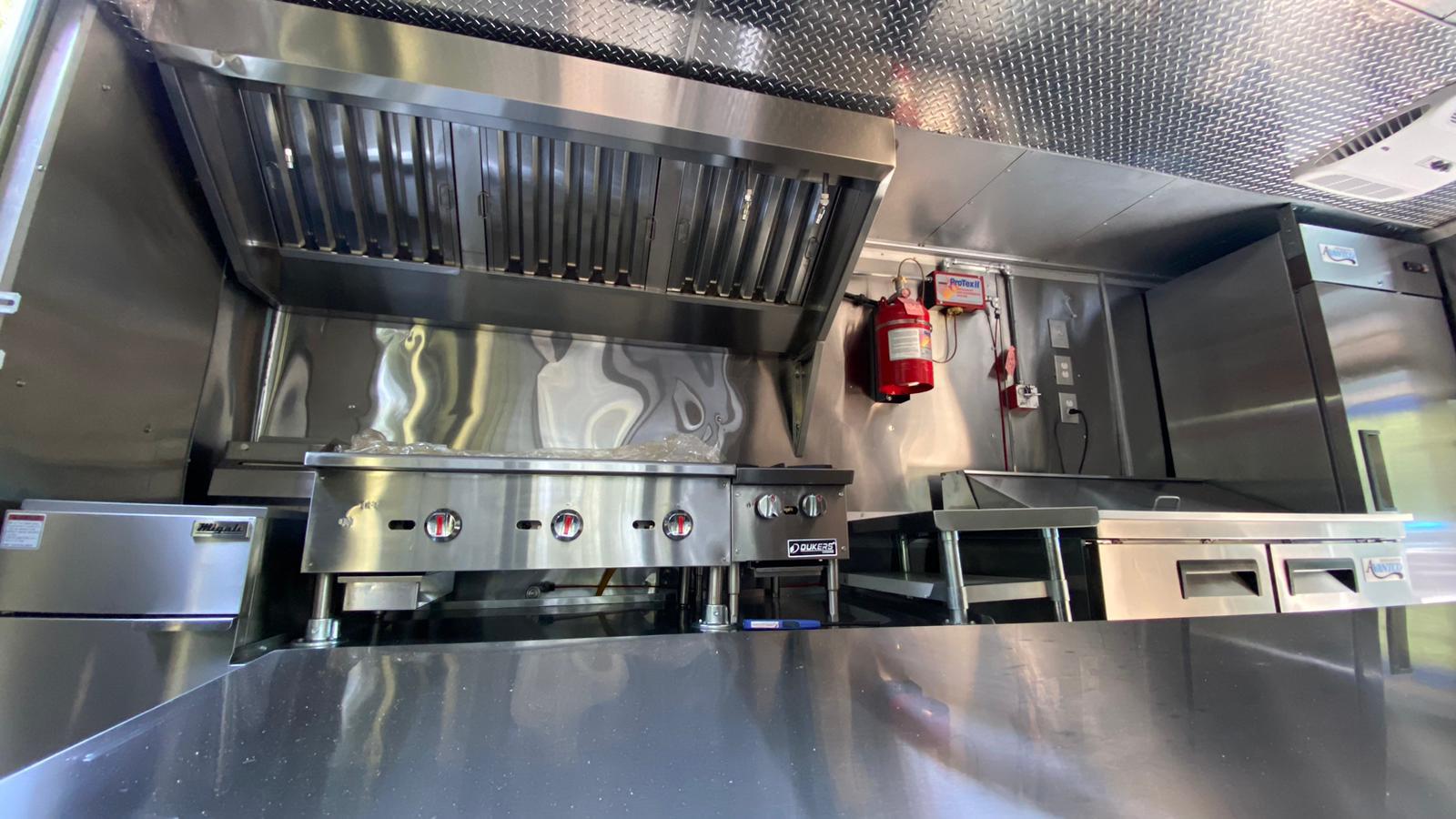
You'll need a pre-operational inspection before the health department issues your permit. The inspector is checking your handwashing sink, your three-compartment sink, your hot and cold holding, and your ventilation. If your build-out was done cheap, this is where it shows.
What few people know: the inspection standards are the same whether you're in a $150,000 custom build or a $40,000 conversion. The truck doesn't get graded on looks. It gets graded on whether a health inspector can wash their hands, store raw food below cooked food, and read a thermometer. A well-planned budget build passes faster than a fancy one with a poorly placed sink.
That's why the build matters before the paperwork does. If you haven't settled on your platform yet, our comparison of food truck vs. trailer explains which one clears Houston's commissary and inspection requirements more easily.
Fire Marshal and Propane Rules
Propane is the silent killer of launch timelines. Houston's fire code restricts how much LP gas you can carry and requires proper mounting, ventilation, and a fire suppression system for any cooking involving grease-laden vapors. A commercial hood and suppression setup adds $4,000 to $9,000 to your build — and it's non-negotiable if you're frying.
Plan for it in the design phase, not after. Retrofitting a hood into a finished truck costs more and delays your permit.
Where You Park Is a Separate Permit Problem
Here's where the Houston food truck permit requirements 2026 get genuinely confusing: the city permit doesn't give you the right to park anywhere. Private property in Midtown or the Heights requires the property owner's written permission, and some management districts impose their own vendor rules. Downtown has stricter curbside regulations than the outer neighborhoods.
So you can be fully permitted and still get moved along by a property manager or a district enforcement officer. The smart operators lock in their commissary and two or three recurring private spots before they ever pick up the keys.
How Long This All Takes
Realistically, budget six to ten weeks for permits and inspections once your truck is physically ready. The health department inspection alone can take two to three weeks to schedule in a busy season. If your build isn't finished, the clock hasn't started.
Which is why the build timeline and the permit timeline have to run in parallel, not in sequence. Our article on how long it takes to build a food truck walks through the real schedule — and why the operators who finish fastest start their permit paperwork the day they order the chassis.
And if you're still choosing who builds the thing, the difference between a builder who understands Houston's inspection quirks and one who doesn't is measured in weeks. These five tips for choosing a turnkey builder will save you from the wrong one.
The Mistake That Costs New Operators the Most
They budget for the truck and forget the operating layer. The permit fees, the commissary, the fire suppression, the insurance — together these often add $8,000 to $15,000 to first-year costs beyond the vehicle itself. Operators who plan for the full stack launch clean. Operators who don't end up selling a half-finished truck on Facebook Marketplace by month four.
If you want to see what your specific concept actually needs — the build, the equipment, and the compliance pieces — get a custom quote and skip the guesswork. For operators still mapping out the whole plan, the mobile kitchen consultations are where the real numbers come out.
The permit isn't the hard part. Knowing what you're building before you build it is.