How Much Does It Really Cost to Build a Food Truck in Washington State?
You’ve been saving for a year. You’ve tested your recipes on friends. You’ve picked a name and designed a logo. Then you start calling food truck fabrication companies in Washington state and realize nobody gives you a straight answer on price.
I get it. I’ve spent the last decade watching this industry from the inside. The truth is, a turnkey build from a reputable Washington fabricator will run you between $65,000 and $145,000 depending on what you’re cooking and where you’re serving it. That’s not a vague answer — that’s the range after analyzing quotes from seven different shops between Bellingham and Vancouver.
The cheapest option? A used van conversion from a backyard welder in Yelm for $22,000. The most expensive? A full custom 26-foot trailer from a Seattle-area builder with a six-month waitlist. Most people end up somewhere in the middle, and that middle is where things get complicated.
The Problem With Most Washington Builders
Here’s what nobody tells you: most fabrication shops in this state started as RV repair places or metalworking hobbyists. They saw the food truck boom and pivoted. That doesn’t mean they’re bad — some are excellent — but it means you’re paying for their learning curve.
I talked to a guy in Tacoma who paid $78,000 for a build that failed its King County health inspection three times. The fire suppression system was installed wrong. The three-compartment sink didn’t drain properly. The hood wasn’t rated for his flat-top grill. The builder blamed the health department. The health department blamed the builder. The owner was stuck in the middle with a truck he couldn’t use and payments he couldn’t stop.
This is why you need to vet builders like you’re hiring a surgeon. Ask for their last three Washington state health inspection walk-throughs. If they can’t show you, walk.
What Van-to-Food-Truck Conversions Actually Cost in Washington
Most people start with a van conversion because it sounds cheaper. And it can be — if you’re doing a coffee cart or a prepackaged snack setup. But if you’re cooking anything with grease or open flame, the math changes fast.
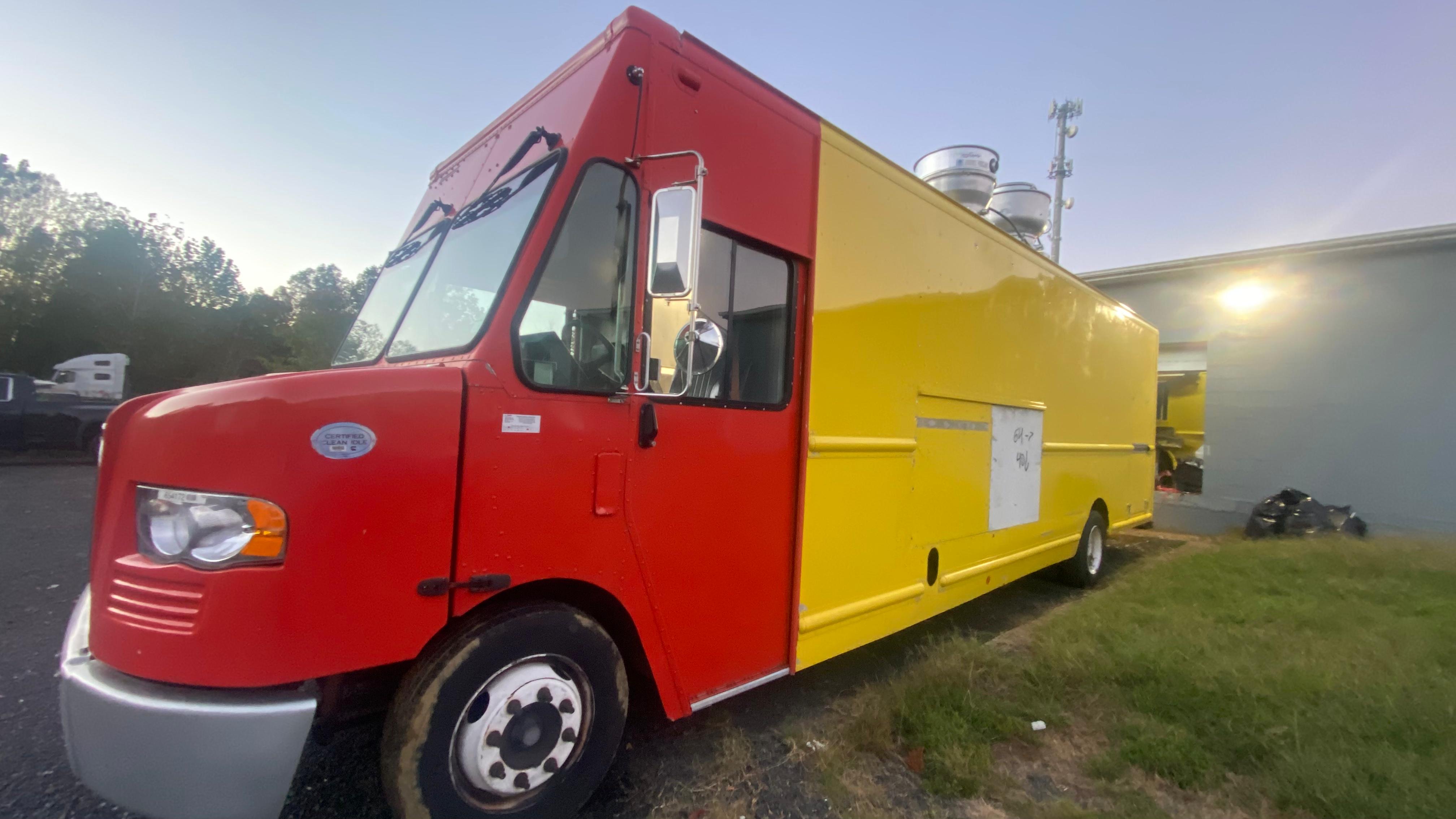
A step van like a Freightliner MT45 or a Ford E-350 cutaway will cost you $12,000 to $25,000 just for the base vehicle. Then you’re paying for insulation, electrical, plumbing, ventilation, fire suppression, and counters. A reputable Washington fabricator will charge $45,000 to $90,000 for the conversion alone. That’s before permits, before your first commissary agreement, before you buy a single bag of onions.
If you want to see real numbers for your specific concept,
get a custom quote from a team that’s done this across multiple states. They’ll tell you what works in Washington’s specific regulatory environment.
Why King County Is Its Own Beast
If you plan to operate anywhere in Seattle, Bellevue, Redmond, or Renton, you’re dealing with King County Public Health. They are famously strict. I’ve seen trucks from Portland and California fail King County inspection because of things that passed everywhere else.
The biggest issue? Washington requires a three-compartment sink with specific drainboard dimensions that most out-of-state builders don’t know about. They also require a separate handwashing sink that’s visible to customers — not tucked behind a counter. And the fire suppression system must be inspected by a Washington-licensed company, not just the manufacturer’s certification.
This is why working with local food truck fabrication companies in Washington state isn’t just convenient — it’s necessary. A builder in Texas or Florida doesn’t know King County’s quirks. A builder in Auburn or Everett does.
The Real Timeline Nobody Wants to Admit
Every builder I called quoted 8 to 12 weeks. Every single one. And every single one admitted off the record that it usually takes 14 to 18 weeks.
The reasons are always the same: supply chain delays on refrigerated components, wait times for fire suppression certification, and the simple fact that custom fabrication takes longer than anyone wants to admit. If you’re planning a summer launch, you need to start the build process by February at the latest. If you start in April, you’re serving in September.
One builder in Spokane told me he’s had clients cry in his office when they realized their “June opening” was actually an October opening. Don’t be that person. Add 50% to whatever timeline they quote you.
What the Best Builders Do Differently
The fabricators who actually deliver on time and pass inspection share three things:
First, they specialize. They don’t build RVs and boats and food trucks. They only build food trucks. That focus means they know the health codes for every jurisdiction in Washington.
Second, they have a relationship with a local fire suppression company. They don’t subcontract it out to whoever’s available. They have a guy who knows King County’s requirements by heart.
Third, they give you a detailed spec sheet before you sign anything. Not a vague “we’ll build you a kitchen” — a document that lists every component, every brand, every dimension, and the exact cost. If a builder won’t give you this, they’re hiding something.
If you want to compare specs before committing,
mobile kitchen consultations can help you understand what questions to ask and what red flags to look for.
The Hidden Costs That Eat Your Budget
You budgeted $80,000 for the build. Great. Now add $8,000 for permits and plan reviews. Add $3,500 for the fire suppression inspection. Add $2,000 for the commissary agreement deposit. Add $1,500 for signage and wrap. Add $4,000 for initial inventory and smallwares.
Suddenly your $80,000 build costs $99,000 before you’ve sold a single taco.
This is why experienced operators tell you to budget 25% above the build quote. It’s not pessimism — it’s math. And if you’re also deciding between a truck and a trailer, read
food truck vs trailer for health inspection Virginia: which passes easier? — the same logic applies in Washington, just with different code specifics.
What You Should Do This Week
Stop calling builders for quotes until you know what you’re cooking. The single biggest mistake I see is people asking for a price before they’ve decided on their menu. A build for cold sandwiches is half the cost of a build for fried chicken. A coffee truck costs less than a taco truck. The equipment determines everything.
Decide your menu. Calculate your BTU requirements. Figure out your water and electrical needs. Then call three Washington builders and compare their quotes against that spec.
If a builder tells you “we’ll figure out the equipment later,” hang up. That’s how you end up with a $78,000 truck that can’t pass inspection.
And if you’re still researching,
best fryer for a food truck in Texas heat: what actually works has insights on equipment durability that apply anywhere, including Washington’s damp climate.
The right builder exists. But you won’t find them by calling the first name on Google. You find them by knowing what you need before you ask.