How Much Does It Really Cost to Install a Commercial Kitchen in a Food Truck in Houston?
You’ve seen the Instagram trucks. The wrap is flawless, the neon sign glows, and there are forty people in line outside a blue truck in Midtown. What you don’t see is the $18,000 electrical bill the owner paid before serving a single taco.
Food truck commercial kitchen equipment installation in Houston isn’t a line item. It’s the line item. And if you’re budgeting like it’s 2023, you’re already behind.
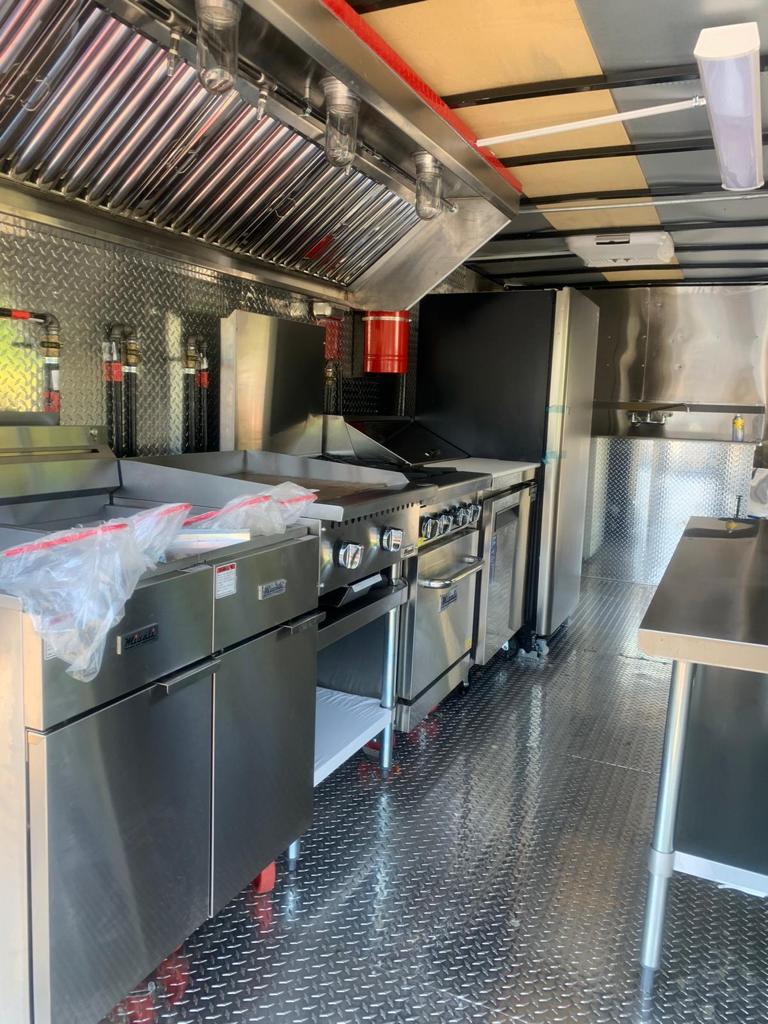
Let me give you the real numbers. A basic install—sink system, hood, refrigeration, cooking equipment, gas lines, electrical—starts around $12,000 for a small build-out. A full, code-compliant installation with commercial-grade equipment, proper ventilation, and a fire suppression system? You’re looking at $25,000 to $45,000. That’s before the truck itself.
And here’s the part nobody mentions: Houston’s health department requires a three-compartment sink, a handwash sink, and a mop sink. That alone runs $3,000–$5,000 with plumbing. Miss one sink, and you don’t open.
What Everyone Gets Wrong About Equipment Installation Costs
The mistake I see every time: people price the equipment, not the installation. They see a $2,000 griddle and think that’s the cost. It’s not. The installation—gas line, electrical hookup, ventilation hood, fire suppression, countertop cutout, anchoring—can double that number.
A
high-volume commercial griddle might cost $2,500. Installing it in a food truck? Another $1,800–$2,200. The hood system for that griddle? $3,500–$6,000 installed. The fire suppression system required by Houston fire code? $1,200–$2,000.
Add a deep fryer. Add a refrigerator. Add a freezer. Add a generator that can actually power all of it. Suddenly your $15,000 equipment budget needs $30,000 for installation.
The truth is: food truck commercial kitchen equipment installation is 40–60% of your total build-out cost. If you’re not accounting for that, you’re not budgeting.
Houston’s Specific Requirements That Raise Your Installation Price
Houston isn’t Austin. It’s not Dallas. The city has its own health department regulations, and they’re specific about food truck kitchens.
You need:
- NSF-certified equipment. Not “commercial-grade.” NSF-certified. That adds 15–20% to equipment costs.
- A hood system with a UL 300 fire suppression system. Required by Houston Fire Code. Non-negotiable.
- A backflow prevention device on your water supply. Another $400–$800.
- A wastewater holding tank that meets Houston’s 40-gallon minimum. Most standard tanks are 30. That’s an upgrade.
- A separate handwash sink with its own hot water supply. Not connected to the three-compartment sink.
Every one of these adds to your food truck commercial kitchen equipment installation. And if your builder doesn’t know Houston’s code, you’ll pay twice—once to install it wrong, once to fix it.
I’ve seen a truck fail inspection because the handwash sink was 14 inches deep instead of the required 16. That’s a $600 mistake in labor alone.
The Generator Problem Nobody Warns You About
Here’s where your budget really gets tested. Your equipment list demands power. A standard food truck generator—8kW to 12kW—runs $3,000–$5,000. But installation? That’s another $1,500–$2,500 for the transfer switch, wiring, and mounting.
And if you’re running a fridge, freezer, griddle, fryer, and exhaust fan simultaneously? You need a
generator size calculator that accounts for startup loads. Most calculators don’t. A fridge pulls 3x its running amps on startup. A freezer pulls 5x. If your generator can’t handle that spike, your equipment cycles off mid-service.
That’s not an installation problem. That’s a planning problem that manifests during installation. And it costs you another $2,000 to upgrade the generator and redo the wiring.
What a Turnkey Package Actually Includes—And What It Doesn’t
You’ll see turnkey packages advertised for $40,000–$60,000. “Ready to cook.” And they are—if you don’t read the fine print.
A
real turnkey food truck package in Houston should include:
- All NSF-certified equipment installed and wired
- Hood and fire suppression system installed and certified
- Three-compartment sink, handwash sink, mop sink with hot water
- Gas lines pressure-tested and leak-checked
- Electrical panel with GFCI breakers
- Flooring, counters, shelving, and storage
- City inspection walk-through
What it often doesn’t include: the generator, the water tanks, the backflow preventer, the fire extinguisher, the grease trap, the permits. Those add $5,000–$10,000.
Ask for a line-item breakdown. If they won’t give you one, walk.
The Hidden Costs of DIY Installation
I get it. You’re handy. You’ve watched YouTube. You think you can save $5,000 by doing the installation yourself.
You can’t.
Houston requires licensed plumbers for gas lines and water connections. Licensed electricians for the panel and generator hookup. A certified hood installer for the fire suppression system. If you do it yourself, you don’t pass inspection. And if you do pass and something fails? Your insurance won’t pay.
The average DIY installation I’ve seen ends up costing more than a professional install because:
- You buy the wrong equipment (non-NSF, wrong size, wrong voltage)
- You fail inspection (re-inspection fees are $150–$300 each)
- You pay a pro to fix what you did (double labor because they have to undo it first)
The cheapest food truck commercial kitchen equipment installation is the one done right the first time.
How to Budget for Your Houston Food Truck Installation
If you’re serious about opening in Houston by mid-2026, here’s your budget framework:
- Small truck (one cook, limited menu): $12,000–$18,000 for installation
- Medium truck (two cooks, full menu): $18,000–$30,000
- Large truck (three cooks, multiple stations): $30,000–$45,000
- Trailer (full kitchen, catering): $25,000–$40,000
These numbers include everything: equipment installation, plumbing, electrical, gas, hood, fire suppression, and inspection fees. They do not include the truck or trailer itself.
And here’s the rule I tell every operator: add 20% to whatever your builder quotes. Not because they’re dishonest. Because you’ll discover something during installation. A water line that needs rerouting. A generator that’s undersized. A sink that doesn’t fit. That 20% is your contingency. Don’t skip it.
The Only Question That Actually Matters
You can read ten more articles about food truck commercial kitchen equipment installation. You can watch fifty more videos. But none of that replaces a conversation with someone who builds them for a living.
The difference between a truck that passes inspection in two weeks and one that takes three months is knowing what Houston requires before you start. Not after.
If you want real numbers for your specific menu and truck size, get a custom quote from a builder who knows Houston code. Not a generalist. Not someone who builds trucks in California and ships them to Texas. Someone who’s dealt with Houston’s health department, fire department, and permitting office.
That conversation will save you more money than any article can.
Get a custom quote for your build-out. Or schedule one of our
mobile kitchen consultations to walk through your equipment list and budget before you buy anything.
And if you’re still deciding on your wrap?
Design it after the kitchen is installed. Because a beautiful truck that can’t cook is just a pretty parking lot ornament.