How much does it really cost to design a custom food truck from scratch? Nobody gives you the real number. They'll tell you "it depends" and move on. I'll give you the number: $85,000 to $175,000 for a fully built-out truck in 2026, depending on size, equipment, and complexity. And that's before you buy a single bag of onions.
The custom food truck design process step by step isn't a linear checklist. It's a loop of decisions, setbacks, and compromises. Here's what that loop actually looks like.
Phase 1: The Concept That Survives Reality
You have a menu. Great. Now answer these three questions before you sketch anything:
1. What's your peak-hour ticket time? If it's over 90 seconds, your layout is wrong.
2. How much storage do you actually need? Most first-timers underestimate by 40%.
3. What's your power budget? A flat-top griddle pulls 12,000 watts alone.
The biggest mistake I see in Houston: people design a truck around a menu they've never cooked in a confined space. Go rent a commercial kitchen for a weekend. Cook your entire menu in a 7x14 foot space. Then you'll understand why the custom food truck design process step by step starts with a tape measure, not a dream.
Phase 2: The Floorplan That Makes or Breaks Your Shift
This is where most people screw up. They pick a truck size first—usually a 20-foot step van—then try to fit everything inside. Wrong move.
You need to decide your workflow before you decide your vehicle. The three most common layouts:
-
Straight-line: Good for solo operators. Everything in one row. Cheap to build. Slow for two cooks.
-
L-shaped: The sweet spot for 2-person crews. Prep on one side, cooking on the other. This is what 68% of successful Houston trucks use.
-
Island: A center cooking station with perimeter prep. Only works in trucks 24 feet or longer. Costs 15-20% more to fabricate.
The custom food truck design process step by step gets real here. You'll spend 2-3 weeks iterating floorplans. That's normal. Don't rush it.
Phase 3: The Build-Out Where Budgets Explode
Let me give you a concrete example. A client in Austin wanted a 20-foot truck with a 4-burner range, a flat-top, a fryer, and a sandwich prep station. Base cost: $92,000. Then came the surprises:
- Electrical upgrade for the fryer: +$4,200
- Fire suppression system: +$3,800
- Generator that actually powers everything simultaneously: +$6,500
- Water tank upgrade to 60 gallons: +$1,900
- Custom shelving for their specific prep containers: +$1,200
Total: $109,600. They'd budgeted $85,000.
This is why you need to work with a builder who gives you line-item pricing, not a lump sum. If you're looking at the custom food truck design process step by step and want real numbers, check out our breakdown of
food truck fabrication cost per square foot. It'll save you from the budget shock.
What Nobody Tells You About Equipment Installation
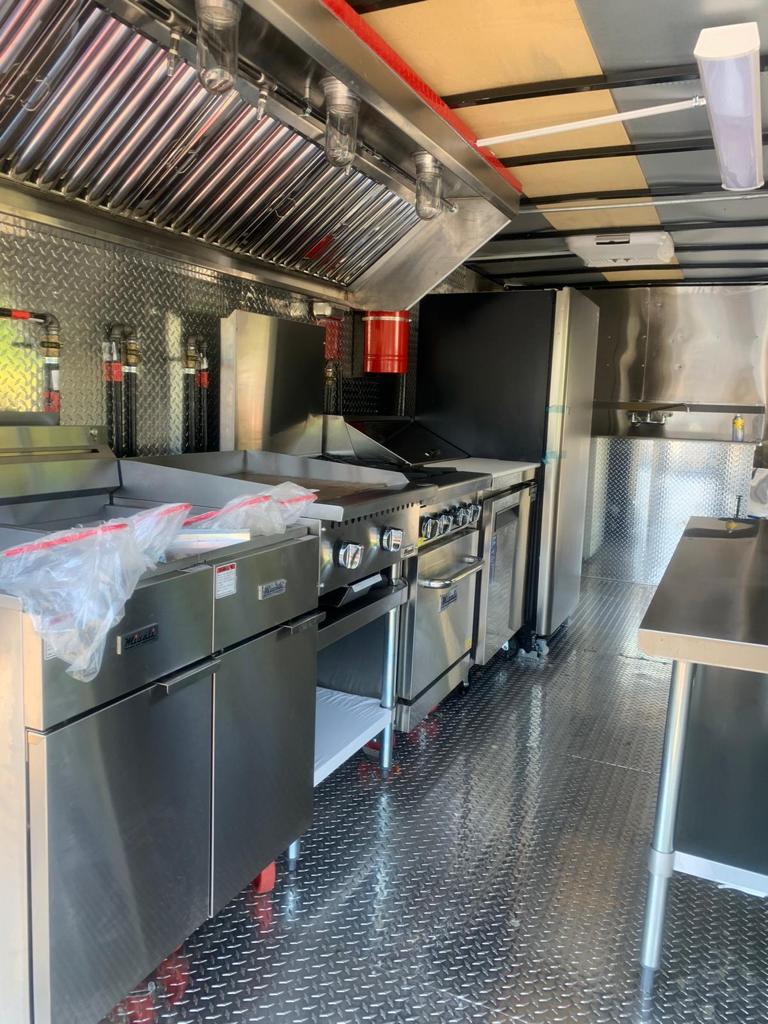
Equipment installation isn't just bolting things down. In Houston, the health department requires all cooking equipment to be on 6-inch legs with a 4-inch clearance from walls. That means your custom shelving needs to account for airflow. Your hood system needs to overlap your cooking surface by at least 6 inches on all sides. These aren't suggestions—they're code.
We wrote a full guide on
commercial kitchen equipment installation in Houston because 1 in 3 trucks fails the health inspection on their first try. Don't be that truck.
Phase 4: The Paperwork Purgatory
You've got a beautiful truck. Now you can't park it anywhere. Welcome to the real custom food truck design process step by step.
In Houston, you need:
- A mobile food unit permit from the health department: $500-$1,200 depending on inspection complexity
- A fire marshal inspection: $350
- A city business license: $150
- Commissary agreement: $400-$800/month
- Parking permits for specific locations: $100-$500 each
And that's assuming your truck passes inspection on the first try. 40% of new trucks fail because of inadequate ventilation or improper grease trap installation. These are things your builder should have caught. If they didn't, you're paying for it twice.
Phase 5: The First 90 Days
Here's the truth nobody prints on their brochure: your first 90 days will determine whether you survive. 73% of food trucks in Houston close before their second year. Not because the food is bad—because they didn't design for efficiency.
A well-designed custom food truck should let one cook output 40 covers per hour. If you're doing less than that, your layout is wrong. If your cook is walking more than 10 steps per order, your layout is wrong. If you're running out of hot water mid-shift, your tank sizing was wrong.
The custom food truck design process step by step isn't complete until you've worked a full shift in your truck and timed every motion. That's when you'll know if your design works.
What You Should Do Next
If you're serious about building a custom food truck, stop reading articles and start talking to people who've done it. Not salespeople—operators. Go to a food truck park on a Tuesday. Buy lunch. Ask the owner what they'd change about their truck. You'll get more value from that 20-minute conversation than from any blog post.
When you're ready to start the actual design process,
get a custom quote from a builder who will walk you through every step, including the ugly parts. And if you're still in the research phase, our
mobile kitchen consultations are designed to answer the questions you don't even know to ask yet.
Your truck isn't a restaurant on wheels. It's a machine that needs to produce profit at 4 square feet per cook. Design it like one.