How much does it really cost to get your food truck approved in Virginia?
Let me give you the number nobody says out loud: a proper fire suppression system for a Virginia food truck runs between $2,500 and $4,500 installed. And that's if you're lucky.
I've seen owners show up to inspection with a $600 kitchen fire extinguisher from Amazon and a prayer. They fail. Every time. Then they're stuck paying rush installation fees that push the total past $5,000.
The Virginia food truck fire suppression system requirements aren't a suggestion. They're enforced by local fire marshals who have zero interest in your sob story about budget overruns. And they shouldn't. Grease fires kill people.
What Virginia actually requires (that most guides skip)
The state follows NFPA 96 and the Virginia Statewide Fire Prevention Code. But here's what the code books don't tell you:
You need a Class K wet chemical system. Not a dry chemical. Not a CO2 extinguisher. Wet chemical. It reacts with cooking oils to create a foam layer that prevents re-ignition. No other system type passes Virginia inspection for commercial cooking operations.
The system must include:
- Automatic activation when temperature hits a specific threshold
- Manual activation pull station within 10 feet of the cooking area
- Fusible links rated for your specific equipment
- A nozzle pattern covering every cooking surface and exhaust hood
And here's the part that catches most owners:
the system must be installed by a licensed contractor with Virginia certification. You can't DIY this. I don't care how handy you are with a wrench.
Why your hood matters more than you think
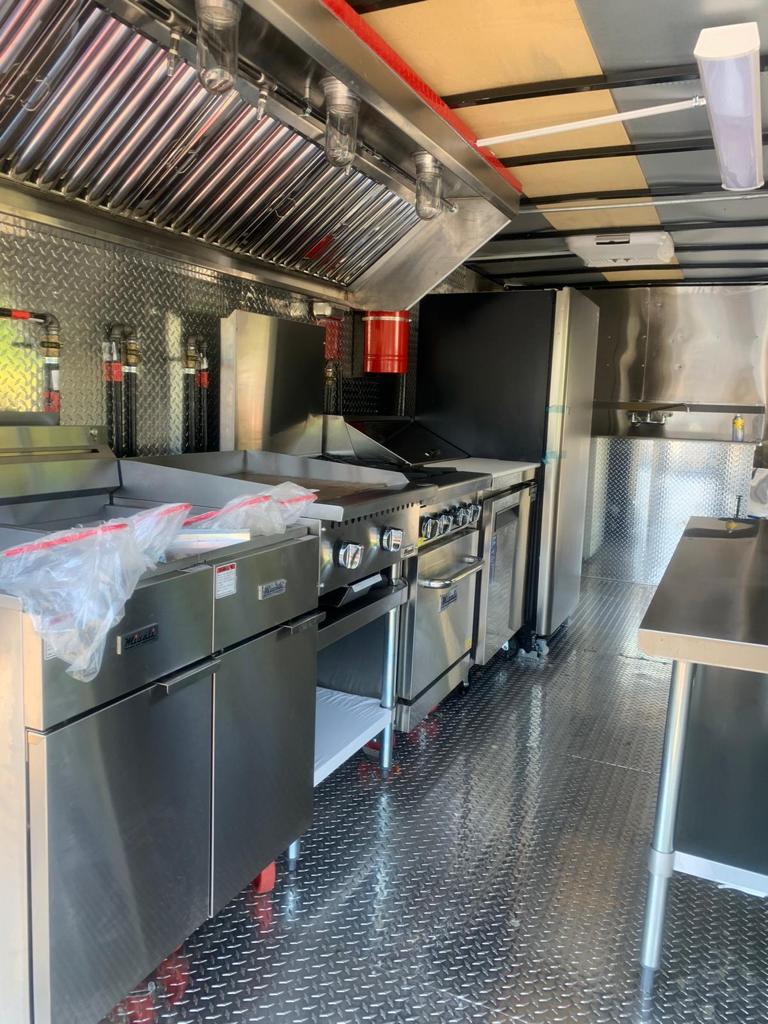
Every Virginia food truck with cooking equipment that produces grease-laden vapors needs a Type I hood. That means any deep fryer, flat top grill, charbroiler, or wok station. A Type II hood for steam or heat only? Won't cut it.
The hood must extend at least 6 inches beyond the cooking surface on all sides. Your fire suppression nozzles get mounted inside this hood. If your hood is too small or the wrong type, you're buying a new one before you even get to the suppression system.
The inspection process: what nobody prepares you for
You don't just buy a system and call it done. Virginia requires:
1.
Initial inspection by the local fire marshal before you can operate
2.
Semi-annual inspections by a licensed contractor after that
3.
Annual certification that must be kept on the truck and available on demand
The semi-annual inspections cost $150 to $300 each. Skip one, and you're operating without valid certification. If a fire marshal pulls you over and your sticker is expired, you're looking at fines that start around $500 and go up fast.
I talked to a truck owner in Richmond who failed inspection because his fusible links were rated for 450°F when his flat top hit 500°F during peak hours. The inspector caught it. Cost him $400 in parts and labor to fix, plus a week of lost revenue waiting for the re-inspection.
Where most Virginia food truck owners get this wrong
The biggest mistake I see? People assume that because they bought a used truck that passed inspection in another state, it'll pass in Virginia.
Wrong.
Virginia has reciprocity agreements with exactly zero states for fire suppression. If you're bringing a truck from Maryland, North Carolina, or anywhere else, you're getting a full Virginia inspection. And the system needs to meet Virginia's interpretation of NFPA 96, which is notoriously strict in Northern Virginia and Hampton Roads areas.
The second mistake:
not accounting for the suppression system in your build budget. If you're working with a custom builder, the system is usually included. But if you're doing a van-to-truck conversion yourself, that $2,500 to $4,500 cost hits you after you've already spent money on everything else. Check out our breakdown of
custom food truck costs in 2026 to see where this fits in the full picture.
What happens if you skip it
Operating without a compliant fire suppression system in Virginia isn't a "maybe they'll notice" situation. It's a Class 1 misdemeanor in some jurisdictions. That means potential jail time, not just fines.
Your insurance won't cover a grease fire if your system isn't certified. Your commissary agreement will get terminated. And if you're at an event and the fire marshal does a spot check—which happens regularly at festivals in Virginia Beach and Alexandria—you pack up and leave. No refunds to customers. No second chances that day.
The real timeline you should expect
If you're building a truck from scratch, here's what the fire suppression timeline looks like:
-
Week 1-2: Get quotes from licensed installers. Expect to wait.
-
Week 3: System installation (if your hood is already mounted and correct)
-
Week 4: Initial inspection. Plan for at least one correction.
-
Week 5-6: Correct and re-inspect
-
Ongoing: Semi-annual inspections every six months forever
That's 6 weeks minimum before you can legally cook in Virginia. If you're on a tight timeline to launch, this is where the delay happens. Read our guide on
how long custom food truck builds actually take for the full picture.
Who to trust with your installation
Don't hire the cheapest guy on Craigslist. Hire a company that specializes in commercial kitchen fire suppression and has Virginia-specific certification. Ask for references from other food truck owners. Call those references. Ask if they passed inspection on the first try.
The system itself is only as good as the installation. A bad install means failed inspection, lost revenue, and a fire risk you're carrying around in a metal box on wheels.
If you're still planning your build and want to get the numbers right before you commit,
mobile kitchen consultations can help you budget for every code requirement before you spend a dollar on fabrication.
One last thing
The Virginia food truck fire suppression system requirements exist because grease fires are the number one cause of food truck total losses in the United States. 73% of food trucks that catch fire never operate again. Not because the truck burned to the ground, but because the damage and code violations make re-certification more expensive than starting over.
Your suppression system isn't a cost. It's an insurance policy you can't afford to skip. Get it right the first time, and you'll never think about it again except when the inspection reminder comes every six months.
If you're still in the planning phase and want a system spec'd for your exact setup,
get a custom quote from someone who builds for Virginia code specifically. Don't trust a generalist with your fire safety.