Food Truck Health Inspection Checklist Houston: Pass
Food Truck Health Inspection Checklist Houston: What Inspectors Really Look For
Roughly one in four Houston food trucks gets dinged on its first health inspection — and it's almost never because of the food. It's the hand sink. The thermometer. The gap under the back door. Boring stuff that has nothing to do with how good your brisket is.
If you're searching for a food truck health inspection checklist Houston actually uses, you don't need a generic PDF from a website that's never set foot in a commissary. You need to know what a Harris County health inspector is going to look at when they walk up to your window at 11am on a Saturday in Midtown.
Let's cut the fluff. Here's what matters.
The Five Things That Fail Houston Trucks Most Often
I've talked to enough operators and builders to know the pattern. The same violations show up over and over, and they're all preventable during the build, not the week before inspection.
1. The hand sink isn't actually functional. Not "there's a sink." It has to have hot and cold running water, soap, and paper towels — accessible at all times, not buried under a cutting board. Inspectors check this first because it tells them everything about how you run the truck.
2. No visible thermometer in every cold unit. Every fridge and cooler needs a working thermometer inside. Not one you keep in a drawer. Inside the unit, readable, at all times. This is a $15 fix that costs people their inspection.
3. The three-compartment sink is the wrong size. Each compartment has to be large enough to fully submerge your largest piece of equipment. If your biggest pot doesn't fit, you fail — and retrofitting a sink after the build is expensive.
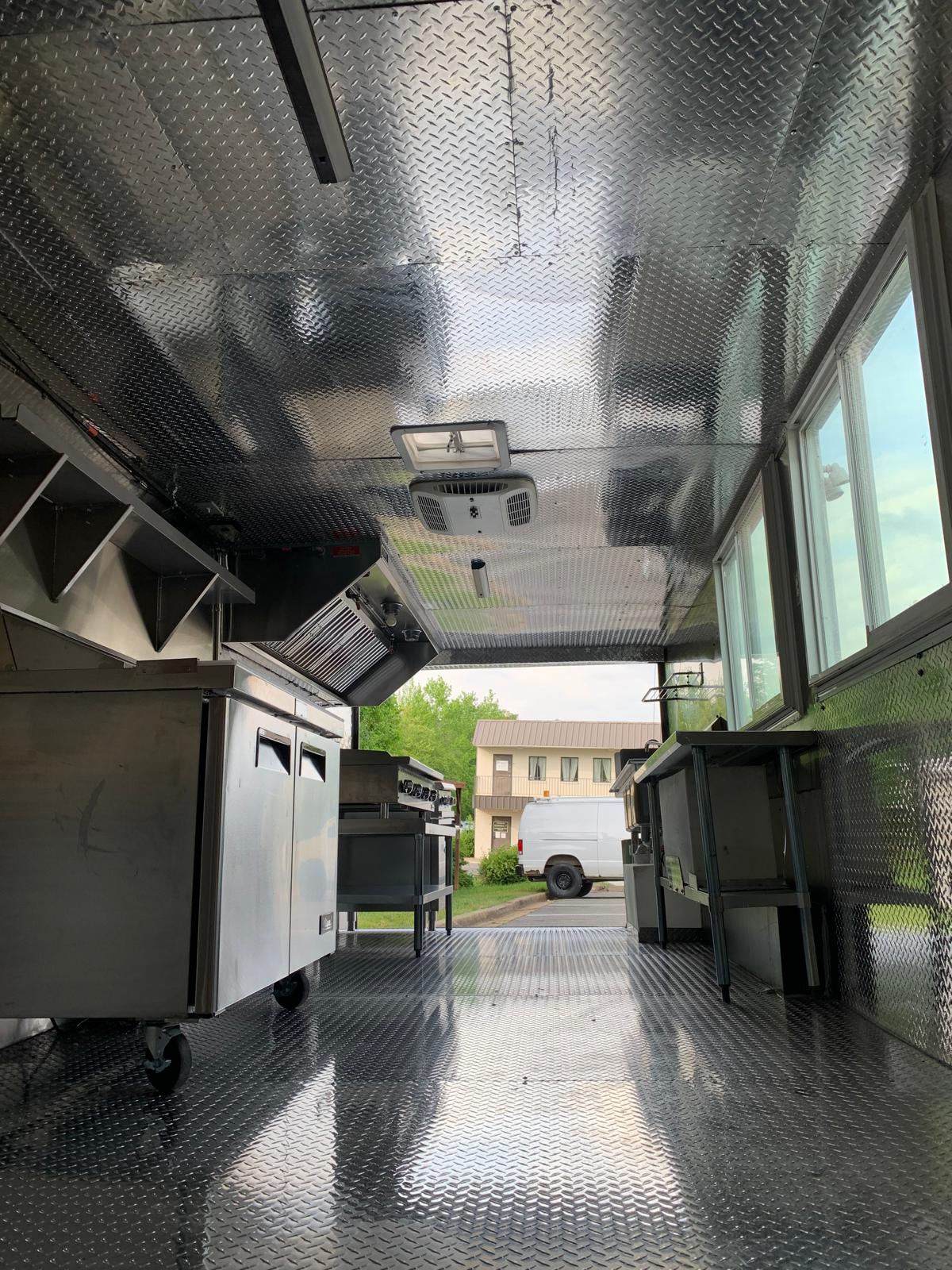
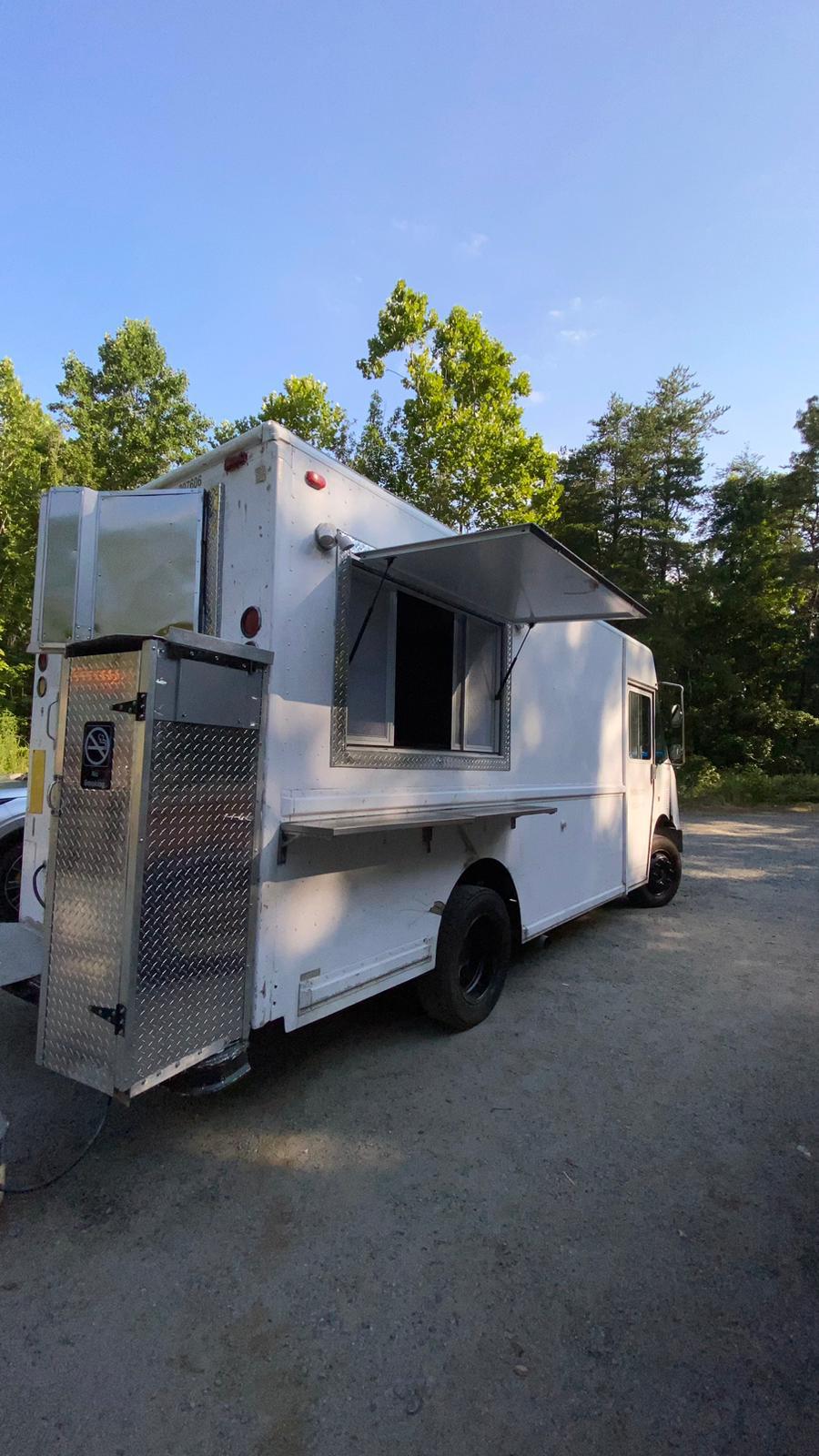
4. Gaps and holes in the shell. Any opening bigger than a pencil lead lets pests in. Inspectors look at door seals, vent covers, and where pipes pass through walls. A properly built shell from a step van conversion in Houston closes these by design.
5. No commissary agreement on file. Houston requires most mobile food units to have a written agreement with a licensed commissary for servicing, potable water, and waste disposal. No paper, no pass.
What the Houston Inspection Score Actually Means
Harris County Public Health uses a demerit system. You start at 100 and lose points for violations. The critical ones — improper food temperature, no handwashing, cross-contamination risks — can shut you down on the spot.
Here's the part most new operators don't realize: the score is public. It goes on your record and customers can look it up. A 78 doesn't just mean a re-inspection. It means someone standing in line at your truck is reading that number on their phone.
Aim for 90 or above. Not because it's the passing line, but because it's the number that doesn't scare people away.
Your Pre-Inspection Walkthrough, In Order
Start outside, work your way in
Walk up to your own truck like you've never seen it. Check the exterior for grease buildup, trash storage with lids, and a clean serving window with a functioning screen. Then step inside and run through this:
- Hot water at the hand sink — at least 100°F, tested with a thermometer, not your hand
- Soap and single-use towels stocked and reachable
- All cold units holding at 41°F or below
- Thermometers in every unit, plus a probe thermometer for cooking temps
- Food stored six inches off the floor, covered, labeled with dates
- Chemicals stored away from food, in original containers
- Floors, walls, and ceiling smooth and cleanable — no bare wood
- Fire extinguisher current, hood system tagged if you're cooking with grease
If any of that takes you more than twenty minutes to fix, you built the truck wrong. And that's the real lesson here.
Why the Build Decides Your Inspection Before You Ever Cook
A truck that passes easily isn't a truck that got lucky. It's a truck that was built to pass.
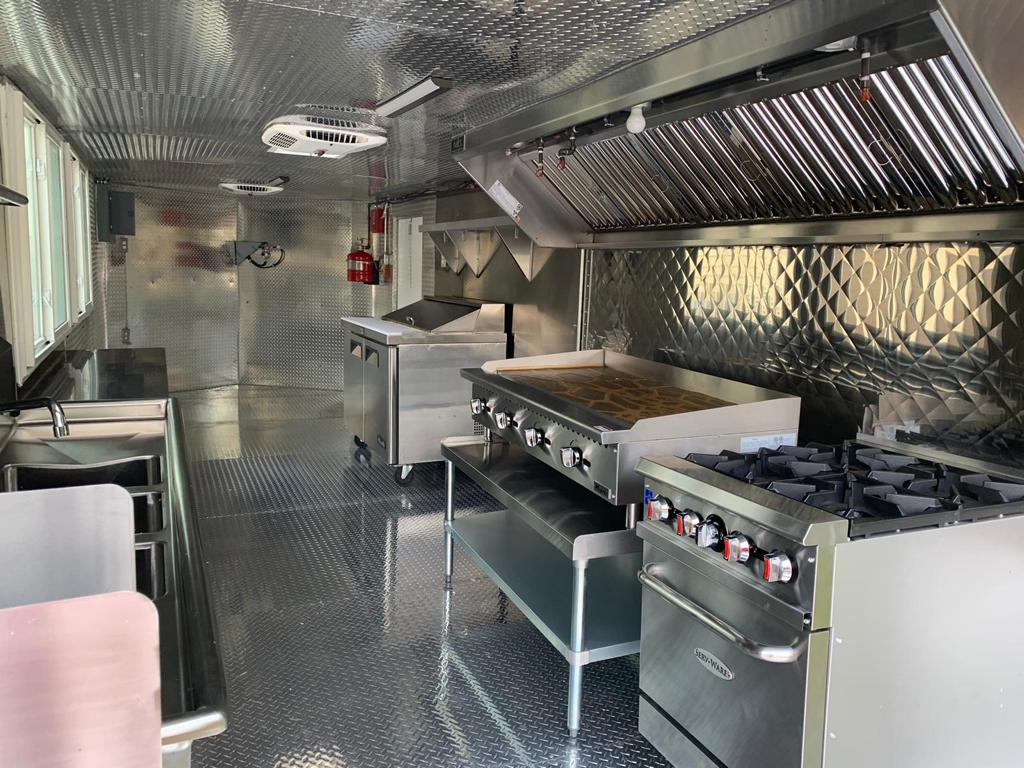
Commercial-grade equipment from a supplier who understands Houston code — the kind of setup you'd spec through commercial kitchen equipment for food trucks in Houston — makes the checklist almost automatic. The sinks are the right size. The surfaces are NSF-approved. The ventilation is sized for your menu.
What nobody tells you is that the cheapest truck on the lot is usually the most expensive one to pass. You save $8,000 up front and spend $12,000 retrofitting sinks, sealing gaps, and re-plumbing water lines to meet code. I've watched it happen more than once.
If you're still in the planning stage, this is where the money decisions actually get made. A mobile kitchen manufacturer in Houston who builds to pass inspection will cost you more today and less over the next three years. That's not a sales pitch — it's just arithmetic.
The Real Cost of Failing
A failed inspection isn't a slap on the wrist. You get shut down until you fix it and pass a re-inspection. In Houston, that re-inspection can take days to schedule. If you're running a lunch route in the Medical Center or a weekend spot at a brewery, that's your entire week's revenue gone.
For a truck doing $1,200 a day, a three-day closure is $3,600 out of pocket. Plus the re-inspection fee, plus whatever you lost in regulars who found a new spot while you were dark.
Compare that to spending a few hundred dollars on a pre-inspection consult or a couple of hours building your own checklist. The math isn't close.
What to Do This Week
Print the walkthrough above. Do it yourself, on your own truck, before anyone in an official capacity does it for you. Fix the cheap stuff immediately — thermometers, soap dispensers, door seals. Those are $50 problems that turn into $3,600 problems if you ignore them.
If your truck has structural issues that a checklist can't fix, that's a different conversation. It's worth having with people who build to code every day — you can get a custom quote or book one of their mobile kitchen consultations to see what a compliant build actually looks like before you spend money on the wrong one.
And while you're thinking about the truck as a business and not just a kitchen, it's worth reading up on food truck branding in Houston — because a passing inspection gets you open, but it's the branding that keeps the line moving.
Nobody opens a food truck because they love hand sinks and thermometers. But the operators still standing after five years are the ones who treated the boring stuff like it mattered. Because it does. The food is the easy part. Everything else is what decides whether you're still here next summer.