How Much Does It Really Cost to Open a Food Truck? Nobody Gives You the Real Number
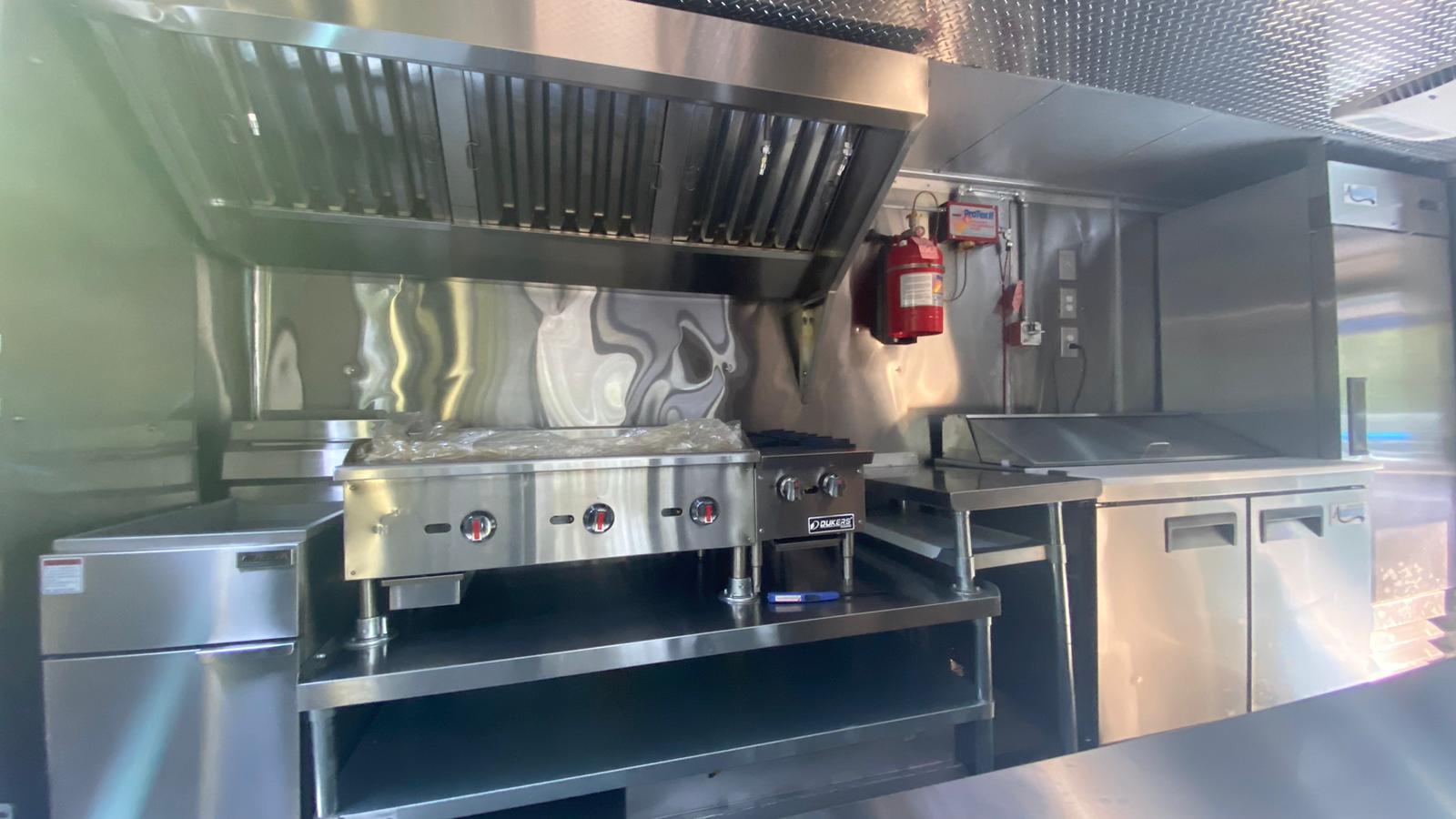
You’re searching for the best commercial griddle for high volume food truck because you already know the difference between a good Saturday and a bad one is measured in seconds per ticket. But here’s what nobody tells you until it’s too late: the griddle you pick determines whether you’re profitable by noon or scrambling to catch up by dinner.
I’ve walked through 40+ food truck builds in Houston, Richmond, and Seattle. I’ve watched operators spend $4,000 on a griddle that couldn’t hold temp during lunch rush, and I’ve seen $1,800 units outperform them because the person who bought them understood one thing: BTUs are not the whole story.
What You Actually Need to Know About BTUs
Every manufacturer will tell you “40,000 BTUs per burner!” like it’s the only number that matters. It’s not. The real question is: can the griddle recover temperature after you drop 20 patties on it at once?
For high volume—and I mean 80+ covers per hour—you need a griddle with at least 30,000 BTUs per square foot of cooking surface, but more importantly, you need one with thermal mass. A ¾-inch thick steel plate holds heat. A ½-inch plate doesn’t. That’s the difference between a consistent sear and a steamed burger.
Here’s the number that actually matters: a 48-inch griddle with 36-inch depth and ¾-inch plate will set you back between $2,800 and $4,500 new. The 36-inch version? $2,200 to $3,200. Don’t buy the 60-inch unless you have a generator that can handle it—more on that in a second.
Voltage, Amps, and the Generator Trap
What nobody mentions is that “best commercial griddle for high volume food truck” often means “griddle that requires a 208V three-phase connection.” And your food truck almost certainly runs on 120/240V single-phase.
I’ve seen operators buy a $3,800 griddle, get it installed, and then realize their generator can’t power it. Now they’re either replacing the generator (add $4,000–$7,000) or running extension cords to the venue’s building (bad idea, fire risk, code violation).
Before you buy anything, check the griddle’s voltage and amperage against your
food truck generator size calculator. This isn’t optional. A 48-inch gas griddle with electronic ignition pulls about 5 amps at 120V for the controls. That’s fine. A 48-inch electric griddle? You’re looking at 50–60 amps at 240V. That’s your entire generator budget gone on one appliance.
Grease Management: The Thing Nobody Talks About
The second most expensive mistake I see is buying a griddle without a proper grease management system. In high volume, you’re rendering fat all day. If your griddle doesn’t have a front grease trough with a removable drawer that’s at least 1.5 quarts, you’re going to spend 20 minutes every hour scraping and cleaning instead of cooking.
Look for:
- A grease drawer that slides out completely (not a half-assed drip tray)
- A drain that doesn’t clog (wider is better—¾-inch minimum)
- A front-mounted trough (rear troughs are for stationary kitchens, not trucks)
One operator in Richmond told me he switched from a rear-drain griddle to a front-drawer model and cut his cleaning time by 18 minutes per shift. Over a 10-hour day, that’s three extra hours of cooking time per week. That’s real money.
Real-World Cleanup: The 2 AM Test
You don’t think about cleanup when you’re buying the griddle. You think about sear marks and speed. But at 2 AM, after a 14-hour shift, you will hate every griddle that doesn’t have:
- Removable grease drawer (already mentioned—worth repeating)
- A flat, seamless cooking surface (no rivets, no seams where food gets trapped)
- A backsplash that’s at least 6 inches tall (to catch splatter)
- Legs that are adjustable (your truck floor isn’t level—trust me)
If you’re looking at a griddle and the salesperson can’t tell you the exact cleanup procedure in under 30 seconds, walk away. They don’t know what they’re selling.
The Budget Trap: Cheap Griddles Cost More
I see operators buy a $1,200 griddle, run it for six months, and then replace it with a $3,000 model. That’s $4,200 total—more than if they’d bought the right one the first time.
The sweet spot for high volume is $2,500 to $3,800 for a 48-inch gas model with ¾-inch plate. Anything under $2,000 is either too thin, too small, or missing features you’ll pay for later in lost time.
And here’s something else: if you’re building a turnkey truck, the griddle cost is part of a larger package. You don’t want to piecemeal this. You want someone who can spec the whole kitchen so the voltage, gas lines, hood system, and generator all work together. That’s where
a real breakdown of what’s included in a turnkey package becomes your best friend.
What About Local Regulations?
You might be thinking, “I’m just buying a griddle, not applying for permits.” Wrong. Some cities—like Seattle and parts of Virginia—require specific hood clearance and fire suppression ratings for your cooking equipment. If your griddle doesn’t meet local code, you’re not cooking until you fix it.
Before you buy, check your local zoning and health department requirements. If you’re operating in Virginia, for example, you need to understand
the zoning laws and parking restrictions that affect where you can even park your truck to use that griddle. Same goes for
Washington State’s licensing process—don’t buy equipment until you know you can legally operate it.
So What’s the Actual Best Commercial Griddle for High Volume Food Truck?
There isn’t one single answer. But there is a checklist:
1. 48 inches wide, 36 inches deep, ¾-inch steel plate
2. Gas-powered (unless you have a massive generator budget)
3. Front-mounted grease trough with removable 1.5+ quart drawer
4. Adjustable legs, seamless surface, 6-inch backsplash
5. Voltage and amperage compatible with your generator (check before buying)
6. Local code compliant (check before buying)
If you find a griddle that hits all six, you’re in the right range. If you need someone to walk you through the numbers for your specific truck layout and volume,
get a custom quote from a builder who’s done this before. Not a salesperson who’s read a spec sheet. Someone who’s been inside a truck at 2 AM scraping grease off a griddle they recommended.
That’s the difference between advice that works and advice that costs you money.
If you’re still early in the process and want to talk through your menu, volume, and kitchen layout without the sales pitch,
mobile kitchen consultations exist exactly for this reason. Bring your numbers. We’ll tell you what fits.