How to Start a Food Truck Business in Washington State in 2026
You Have a Killer Recipe. Now, Can You Survive the Paperwork?
Let's cut to the chase. You're not here for another article that gushes about "following your passion" and "being your own boss." You're here because you have a concept—maybe it's Filipino-Mexican fusion, or the best damn smash burger in Spokane—and you need to know how to get it on the road in Washington without going bankrupt or getting shut down on day one.
The real problem isn't your cooking. It's navigating a patchwork of city, county, and state regulations while managing cash flow so tight it could snap. Everyone knows you need a truck and a permit. What they don't know is that 65% of new food truck concepts in Washington fail to make it to their second anniversary, and it's rarely because the food is bad. It's because they underestimated the system.
So, if a friend asked me how to start a food truck business in Washington state, I'd tell them this: It's a logistics company that serves food. Master the logistics first.
The Permit Labyrinth: Your First (and Biggest) Hurdle
Forget the truck for a moment. Your first investment is time, navigating what I call the "Trifecta of Authority." Miss one, and you're not moving.
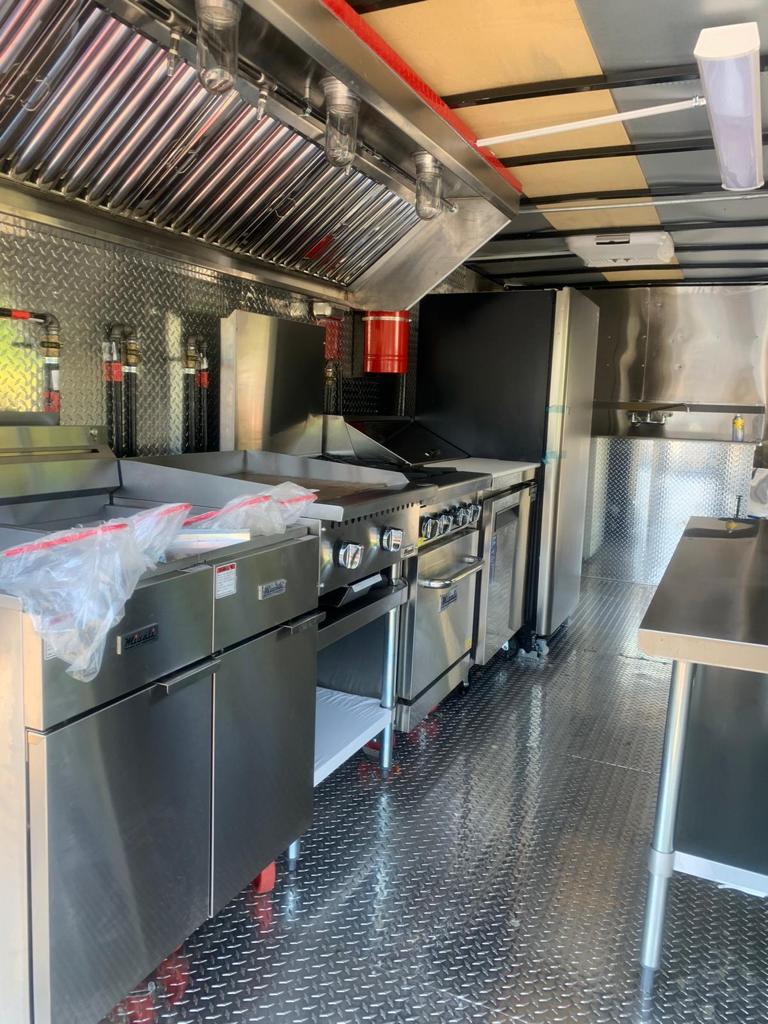
The State (WSDA): You need a Mobile Food Unit (MFU) Permit from the Washington State Department of Agriculture. This involves a plan review of your kitchen layout and equipment. A common, costly mistake? Submitting plans for a custom-built kitchen that doesn't meet code, causing weeks of delays and revision fees. Using a WSDA-compliant base vehicle from a professional converter is the smart money move.
The County (Health District): This is your operational license. In King County, it's the Public Health Food Permit. They will inspect your finished truck. The pass rate on first inspection for DIY builds is abysmal. Be ready.
The City (Where You Park): This is the wild card. Seattle's Street Use Permit and vending location rules are a universe apart from Tacoma's or Bellevue's. Some cities, like Olympia, have designated "food pod" zones. Others require negotiations with private property owners. You must solve the "where will I park and sell" puzzle for each city you operate in before you apply for permits. This is the step that breaks most beginners.
And here’s where it gets interesting. Your business structure (LLC, sole proprietorship) and your Washington State Business License and Seller's Permit (for collecting sales tax) are the easy parts. The municipal logistics are the real battle.
The Real Budget: $150k is the New $80k
Every blog from 2020 will tell you can start a food truck for $50,000-$80,000. Throw that number out the window. For a reliable, fully-equipped, and compliant operation in 2026, you need to think in terms of $120,000 to $180,000.
Let me give you a concrete example. A used, reliable step van in decent mechanical shape will run you $25,000-$40,000. A professional, turn-key conversion that meets all WSDA and health codes starts at $80,000 and goes up fast. That's $105,000-$120,000 before you've bought a single onion or paid for a single permit.
Now, add the soft costs:
- WSDA & Health Permits: $1,500 - $3,000 (initial)
- City Permits & Fees: $500 - $2,000+ annually (per city!)
- Commissary Kitchen Rental (a mandatory requirement): $800 - $2,500/month
- Initial Food Inventory & Supplies: $3,000 - $5,000
- Insurance (Auto, Liability, Health): $6,000 - $10,000/year
- Point-of-Sale System & Tech: $2,000+
See how quickly we're brushing against $150,000? This is the number nobody wants to say out loud. Under-capitalization is the silent killer. You need a war chest for your first 6 slow months.
Why a Custom Build is Your Biggest Risk
The siren song of a cheap used truck and a handy friend is strong. I get it. But the hidden cost is time and rejection. The WSDA plan review process for a one-off design can take 8-12 weeks. Each failed inspection is a week lost. Each revision is money. A pre-approved, professionally built mobile kitchen from a reputable converter gets you through the state and health inspections predictably. It's not the cheapest path, but it's the fastest route to revenue. In this game, time is more expensive than money.
Location Strategy: It's Not About Finding Spots, It's About Building Relationships
You can have the perfect truck and the perfect permit. If you're circling downtown Seattle at 10:45 AM looking for an empty curb, you've already lost the day.
Successful Washington food trucks don't "find" locations. They secure them. This means two things:
1. The Private Property Play: Partnering with breweries, wineries, and office parks is the lifeblood of the industry. A truck at a popular Everett brewery on a Friday night can do $3,000+ in sales. But these spots are booked months in advance. Your pitch to a business owner isn't "I sell tacos." It's "I will increase your dwell time and beverage sales by 30%." Bring data, a professional contract, and proof of insurance.
2. The Food Pod Phenomenon: Places like The Bite of Seattle in SoDo or Gravity Coffee in Maple Valley have created dedicated hubs. They handle the city permitting headache. Your cost is typically a percentage of sales or a flat site fee. It's a lower-risk way to start, but competition for a stall is fierce.
Your location strategy must be mapped out and contracted before your truck is ready. This is your sales pipeline. No locations, no business.
The Opening Day Myth and What to Do Instead
The fantasy is a ribbon-cutting with a line around the block. The reality is a soft launch that feels anything but soft.
Do not, under any circumstances, announce a grand opening at a new, unproven location. Your first week is a shakedown cruise. Something will go wrong. The fryer will take 45 minutes to heat up. Your POS will freeze. You'll run out of napkins.
Here's what you do instead: Run 2-3 "friends and family" service days at your commissary. Practice the entire flow. Then, book your first real event at a trusted, low-pressure private location. A corporate lunch, a small brewery on a Tuesday. Limit your menu to 3-4 items you can execute perfectly in your sleep. This is about stress-testing systems, not making a viral splash. Virality comes later, after you're flawless.
But there's something more important than all of this.
The One Thing That Matters More Than Your Menu
It's not your secret sauce. It's your mindset. You are now a mechanic, a bookkeeper, a marketer, a logistics coordinator, and a public health expert. At 3 AM, you'll be fixing a generator. At 3 PM, you'll be arguing with a produce supplier.
This business rewards operational excellence, not just culinary creativity. The most successful truck owners I know are systems thinkers. They have checklists for opening, closing, restocking, and maintenance. They track food cost percentages daily. They treat their social media not as a photo gallery, but as a real-time logistics update channel ("Line is 10 people deep!" or "Sold out of pulled pork, see you tomorrow!").
Your food gets people in line once. Your reliability gets them to come back.
So, is it worth it? If you approach it as a scalable small business with brutal upfront costs and complex rules, absolutely. If you think it's an escape from a desk job into a simpler life, you will be part of that 65%.
The path is clear, but it's narrow. You need the right vehicle, mapped-out locations, and enough capital to survive the ramp. If that sounds like a challenge you're built for, then your first step isn't to buy a truck. It's to talk to someone who's built hundreds of them and can show you the compliant path of least resistance. Start that conversation here. Then, go get your permits.