Food Truck vs Concession Trailer Washington State: The Real 2026 Choice
What's the Real Question Behind "Food Truck vs Concession Trailer Washington State"?
You're not just asking about wheels and a kitchen. You're asking, "Which one will let me survive my first Washington winter and still turn a profit?" That's the real "food truck vs concession trailer Washington state" debate. Everyone knows trucks are mobile and trailers need a tow vehicle. What nobody tells you is how those basic facts translate into daily operational hell—or heaven—under the gray skies of Seattle or the windy plains of Spokane.
Let's get straight to the point.
The Upfront Cost Myth (And Where Your Money Actually Goes)
Conventional wisdom says a trailer is cheaper. Sometimes that's true. A basic, new 14-foot concession trailer with a minimal equipment package can start around $45,000. A comparable new food truck build? You're likely looking at $75,000 and up. That's a big gap.
But here's where the math gets messy, and where most hopeful owners get blindsided.
That $45k trailer doesn't include a $30,000+ truck to pull it. Suddenly, your "cheaper" trailer setup is pushing $80k. And you now have two engines to maintain, two registrations with the Washington State Department of Licensing, and double the insurance liability. The food truck is one integrated unit. One engine, one registration, one insurance policy. The initial price tag is a lie if you don't look at the total drive-away cost.
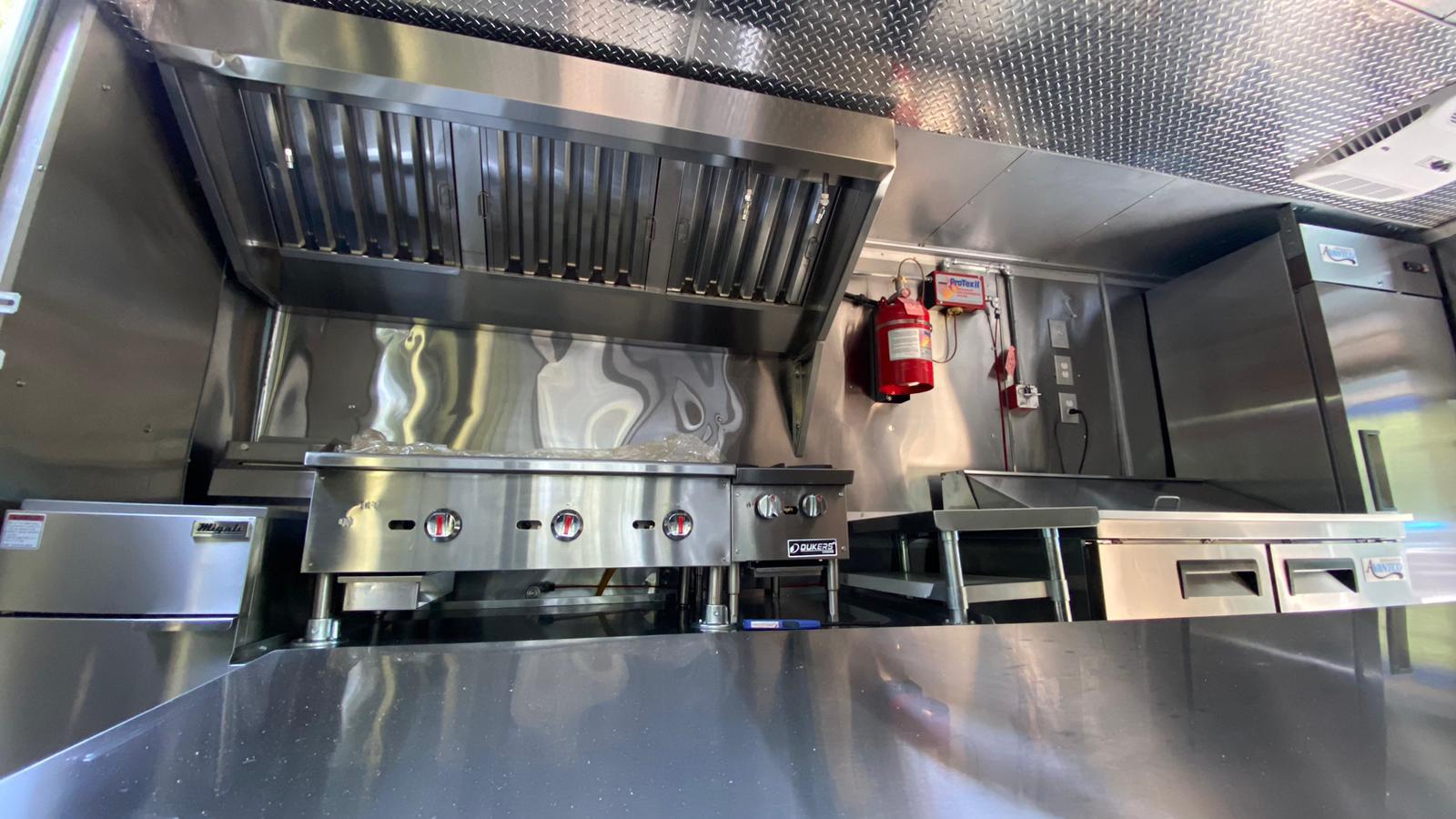
What's more important is the build quality for our climate. I've seen owners in Tacoma try to save $8,000 on insulation and ventilation, only to lose $15,000 in product spoilage and downtime during a cold, damp week. Whether it's a truck or trailer, your kitchen's guts—the refrigeration, the heating, the ventilation system—are where you cannot cut corners. Period.
Mobility vs. Stability: The Washington Weather Test
This is the core of your operational life. A food truck is, in theory, more mobile. You see a festival in Bellingham, a farmers market in Olympia, and a weekend spot in Bellevue. You can, in theory, hit them all. But "mobile" doesn't mean "agile." A 26-foot food truck is a beast to park in downtown Seattle. You'll spend 30 minutes circling for a spot, burning fuel and sanity.
A trailer requires planning. You need a dedicated tow vehicle (which sits idle, costing you money, when you're not moving). Setting up and breaking down takes longer. But once you're parked at the Washington State Fair in Puyallup or a summer-long spot at Lake Chelan, that stability is a benefit. You're not fighting for daily parking.
Now, add rain. And wind. A high-profile trailer on I-5 during a Puget Sound windstorm is a white-knuckle experience. A food truck, with a lower center of gravity, handles it better. Which risk can you stomach?
The Hidden Killer: Washington's Commissary Rule
This is the regulatory hurdle that makes or breaks your model choice. Washington State requires all mobile food units to operate out of a permitted commissary or commercial kitchen for cleaning, waste disposal, and supply storage. This isn't a suggestion; it's enforced by county health departments like King County Public Health.
For a trailer, this is often easier. You unhitch at the commissary. Your tow vehicle is free. For a food truck, you're parking your entire business—your engine, your generator, your kitchen—at the commissary every night. This limits your commissary choices to those with large, secure parking. In a crowded city like Seattle, that access costs more. It's a critical line item in your budget that most generic "how to start" guides completely miss. For a deeper look at how these rules work elsewhere, our guide on Virginia's commissary requirements shows how state-by-state variations can change your calculus.
Where the Money Is: Event Access and Daily Grind
Your business model decides the vehicle. Want to chase high-profile events like Bite of Seattle or Timber! Outdoor Music Festival? Many event organizers have a strong bias. They often prefer food trucks for their self-contained "neat" look and slightly faster setup. Trailers can be viewed as more "carnival" style. Call event coordinators right now and ask their policy. Don't guess.
If your plan is a semi-permanent location—a brewery partnership in Vancouver, WA, or a fixed spot at a food truck pod—the trailer's limitations fade. Your costs become predictable. But can that location sustain you through the slow, rainy months from November to March? A food truck gives you the *option* to pivot, to try a new neighborhood, to test a lunch crowd versus a dinner crowd. That optionality has immense value when you're figuring out what works.
The Final Verdict Isn't About the Vehicle
After a decade of seeing what works and what fails on Washington's roads, I'll give it to you straight. The shiny vehicle is the last thing you should decide.
First, lock down your commissary. Without that, you have no business. Second, have a crystal-clear, weather-aware business model for at least 18 months. Third, talk to your local health department until they know your name. Then, and only then, does the "food truck vs concession trailer Washington state" question have a clear answer.
For the agile, urban-focused operator willing to pay a premium for flexibility, the integrated food truck is usually worth the headache. For the rural or event-focused operator with a solid tow vehicle and a seasonal, location-based plan, the trailer's lower upfront chassis cost can make sense.
Your choice dictates your daily life for the next five years. So, stop looking at Pinterest builds and start running real numbers for your specific menu and location. If you need help translating your concept into a functional budget, our mobile kitchen consultations are built for this exact moment. Because the right choice isn't the cheapest one—it's the one that's still open for business two winters from now.
Ready to move from idea to plan? A great next step is our detailed guide on how to start a food truck business in Washington State in 2026, which walks you through permits, costs, and the first-year timeline.