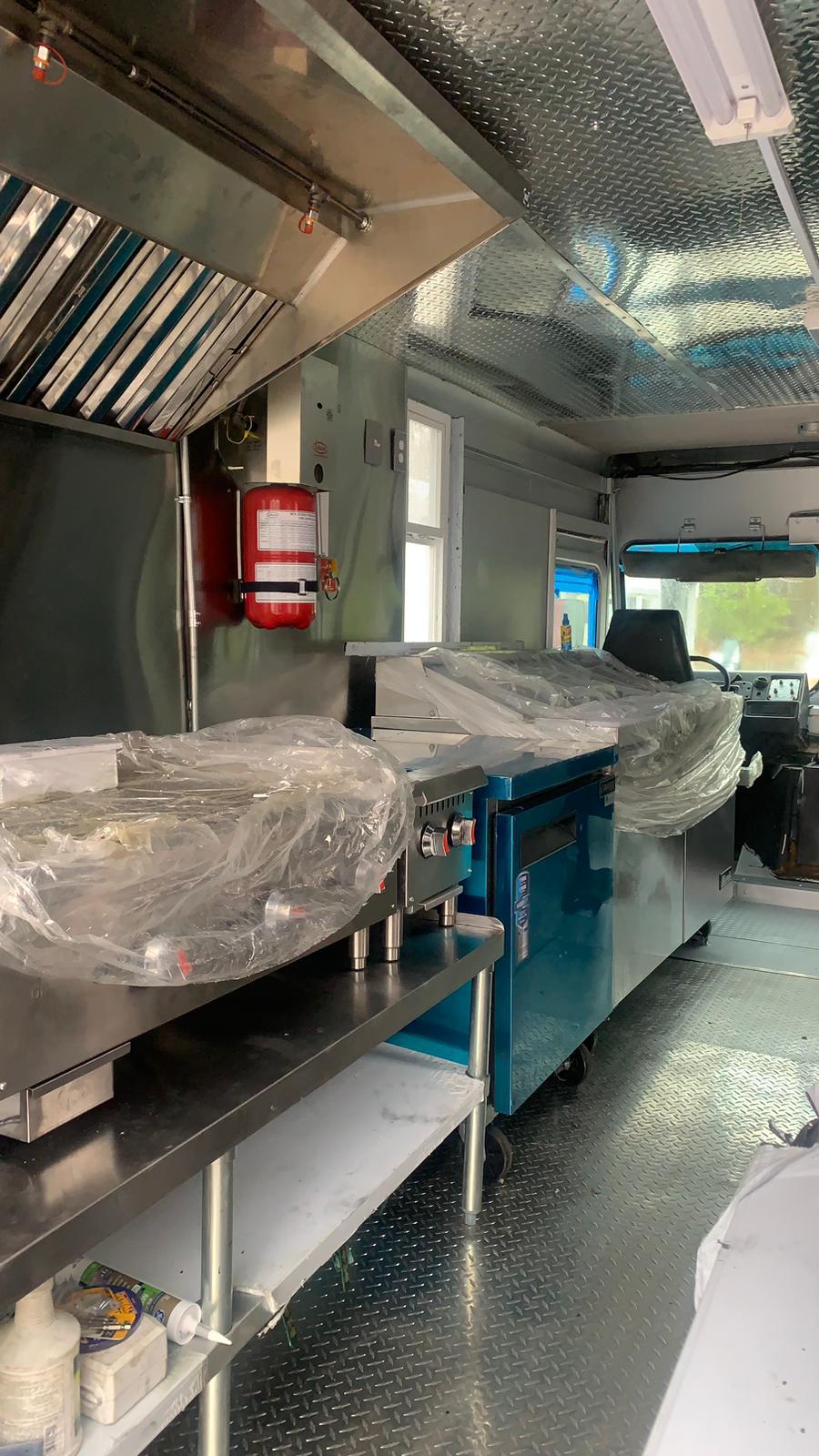
Food Truck Kitchen Ventilation System Requirements Decoded
Most Food Truck Ventilation Advice Is Dangerously Generic
You’ll read a hundred articles telling you that your food truck kitchen ventilation system requirements are important for health and safety. No kidding. The problem is, they all stop there. They don’t tell you that a poorly designed system is the single most common reason for a failed health inspection in cities like Houston or Seattle. They don’t mention that the difference between passing and failing can be a $2,500 mistake you can’t easily fix after the fact. And they certainly won’t admit that the “standard” advice often leads to a system that’s either wildly underpowered for your wok station or comically overkill for your coffee truck.
Let’s cut through the noise.
The One Requirement That Actually Matters (It's Not CFM)
Everyone obsesses over CFM—Cubic Feet per Minute. It’s the horsepower of ventilation. But here’s the secret: health departments don’t mandate a specific CFM number. They mandate a result. The air in your kitchen must be clear of smoke, grease, and steam. Odors must be effectively captured. There can be no condensation buildup on walls or ceilings. Your proof is the inspection.
So how do you get there? You work backwards from your equipment. A single 60,000 BTU fryer needs a completely different capture system than a flat-top griddle. A wood-fired pizza oven? That’s a whole other beast. A generic “800 CFM hood” is a recipe for failure if it’s paired with the wrong cooking load.
The real calculation involves the heat output (BTUs) of your appliances, the size and type of your hood, and the ductwork run. Get this wrong, and you’ll either suffocate your cook in smoke or create a wind tunnel that blows your pilot lights out.
Where Builders Get It Wrong: The Three Costly Oversights
This is where I see even experienced converters stumble. It’s not about buying a fan; it’s about engineering a system.
First, the grease trap you can’t see. Your ductwork must be designed with fire suppression in mind. That means listed grease ducts, typically stainless steel, with welded seams. The bends and turns matter—too many sharp angles kill airflow and trap grease. I’ve seen a truck in Austin fail because the duct had three 90-degree elbows, creating a grease-laden fire hazard.
Second, the make-up air mystery. Your hood sucks out 1000 CFM of hot air. Where does 1000 CFM of new air come from? If you don’t design for make-up air, it comes from your service window, pulling in dust, flies, and exhaust fumes. Proper systems include a dedicated, filtered make-up air source. Ignoring this is like trying to drink a milkshake with a sealed straw.
Third, the termination point. Where does all that greasy air go? It must exhaust at least 3 feet from any opening (windows, doors, your own AC intake) and usually needs a roof cap designed to prevent backdraft. Point it at your future customer line, and you’ve just created a different kind of problem.
The Real Price Tag of "Compliant" Ventilation
Let’s talk numbers, because vague estimates are useless. For a standard truck with a fryer, griddle, and charbroiler, a complete, code-compliant ventilation system—including hood, fire suppression, ductwork, fan, and make-up air—will start around $8,500 to $12,000. In 2026, with material costs still volatile, I’ve seen quotes hit $15,000 for complex setups.
That $3,500 “economy” hood kit you found online? It likely doesn’t include fire suppression ANSI/UL 300 listing, proper duct, or the labor to engineer it correctly. That’s the budget trap. You’ll pay for it twice: once for the parts, and again when a specialist has to rebuild it to pass commissary or health department scrutiny.
Your Local Code Is the Only Code That Counts
This is the non-negotiable. The International Fire Code (IFC) and NFPA 96 are the national standards, but your county or city health and fire marshals have the final say. Their interpretation is law.
A system that passes in unincorporated Harris County, Texas, might be rejected by the Houston Fire Department. Requirements in Washington State differ from Virginia. I worked with an operator whose truck was built in Florida. It had all the “right” parts. It failed its first inspection in Denver because the fire suppression nozzle placement was 2 inches off the local amendment’s specification.
You don’t guess. You get the specs from your specific permitting office before you build. A professional mobile kitchen consultation starts here, with the local code, not a generic parts list.
Beyond the Inspection: The System You Actually Want to Live With
Passing inspection is the bare minimum. The system you want does three more things: it’s quiet enough to hear orders, it doesn’t turn the kitchen into a sauna, and it’s easy to clean.
Fan location is critical. A roof-mounted centrifugal fan is quieter and more efficient than a cheap axial blower. A well-designed hood with proper baffle filters will catch 95% of grease before it even enters the duct, making your nightly clean-down a 15-minute task instead of an hour-long nightmare.
This is an investment in your crew’s sanity and your truck’s longevity. A greasy, loud, inefficient kitchen burns out employees and equipment.
Think of your ventilation like the wrap on your truck. It’s not just a mandatory cost; it’s a core part of your operational brand. One keeps you legal and looking professional on the outside; the other keeps you legal, safe, and functional on the inside.
So, forget searching for a one-size-fits-all CFM number. Start with your menu, your equipment list, and a call to your local fire marshal. Then, and only then, can you get a custom quote that’s worth the paper it’s printed on. Because the real requirement isn’t a piece of hardware—it’s a passing grade on inspection day.