Best Vehicles for Food Truck Conversions in 2026: Vans, Trucks, Trailers
The Truth About Your "Perfect" Food Truck Chassis
Most of the advice you'll find on the best vehicles for food truck conversions in 2026 is written by people who've never had to park one in a crowded downtown Austin lot at lunch rush. They talk about payload and square footage but ignore the real questions: Can you get it serviced? Will a city inspector fail you for a technicality? Does it fit in your commissary's parking spot? The choice between a van, a truck chassis, or a trailer isn't about specs—it's about your survival in the first 18 months.
Let's cut through the noise. Your vehicle is not just a kitchen; it's your entire business model on wheels. Choose wrong, and you're fighting an expensive, mechanical battle every single day.
Step Vans: The 2026 Workhorse (And Its Hidden Costs)
The classic Grumman Olson or Utilimaster step van is the iconic food truck shape for a reason. You get maximum vertical space for hoods and shelving, easy walk-in access, and a body that's designed for commercial use. In 2026, a used, serviceable step van chassis (think Ford E-450 or Chevy P30) will set you back $15,000 to $25,000 before you even think about a build-out.
But here's what the fanboys don't tell you. These are aging fleets. Finding a mechanic who knows a 2008 P30's electrical system can mean a 3-day downtime in Houston. Parts aren't at AutoZone. And that "easy to permit" body? Health departments in places like Virginia are now scrutinizing every nook for cleanability, and the complex seams in an old step van can be a red flag. It's a solid choice, but it's not the easy button it's made out to be.
Why Your Conversion Budget is Already Wrong
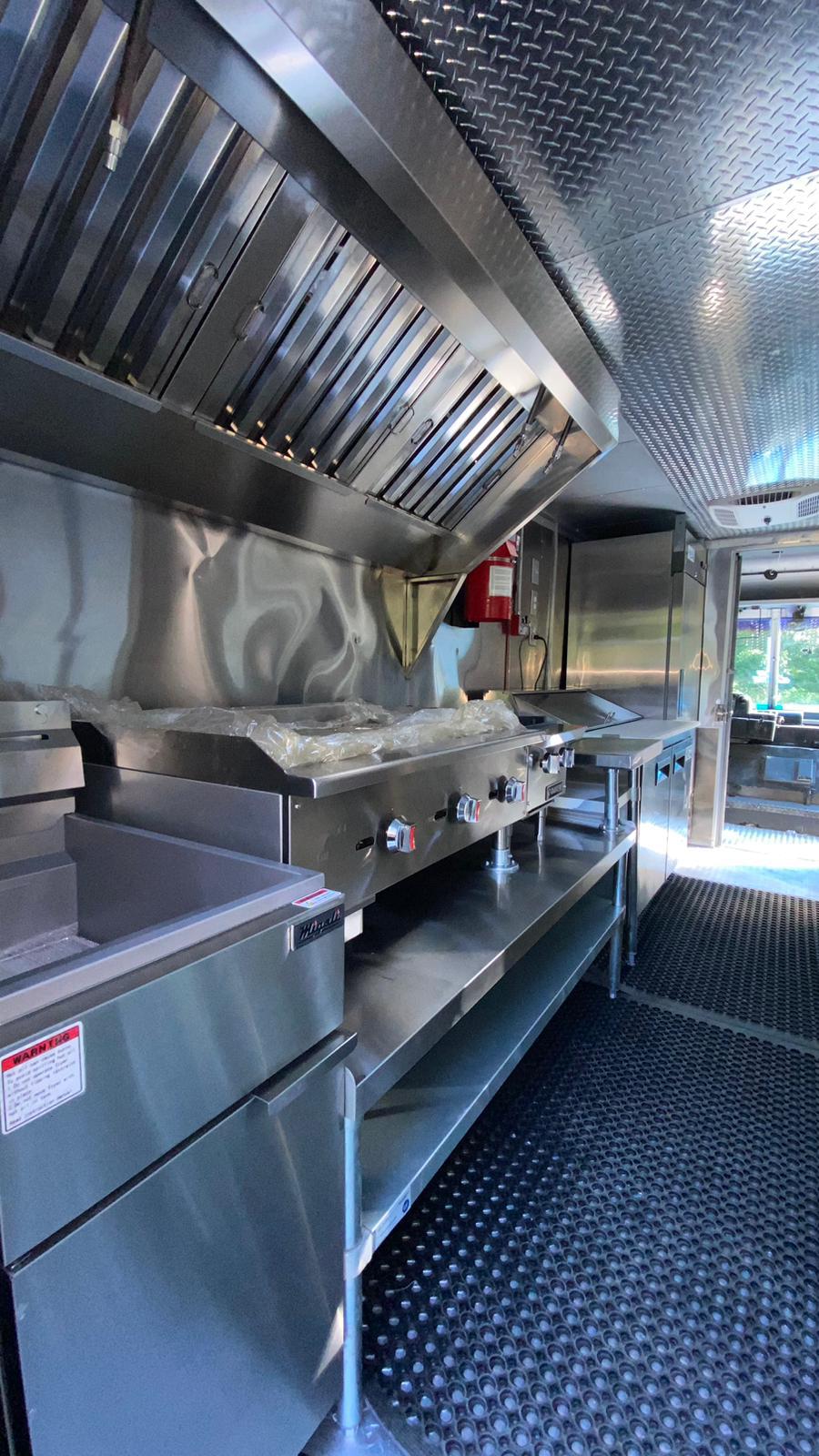
I don't care what spreadsheet you have. The single biggest mistake first-timers make is budgeting for the vehicle and the kitchen equipment separately. They find a $20k van and budget $30k for a grill, fryer, and fridge. The integration—the plumbing, electrical runs, structural reinforcements, and ventilation—is where budgets explode. A proper food truck kitchen ventilation system alone can be a $7,000-$12,000 line item you never saw coming. The vehicle and build are one financial decision.
Box Trucks & Cargo Vans: The Agile Illusion
The appeal is obvious: newer platforms, better fuel economy, easier to drive. A Sprinter or Transit seems like the modern solution. You can park it anywhere. The problem? Cubic space. You are fighting for every inch. A standard 16ft box truck gives you about 140 sq ft of floor space, but once you account for a hood, a 36-inch griddle, a three-compartment sink, and refrigeration, you have zero room to move. This forces a minimalist menu, which is great in theory until you realize your three-item concept isn't drawing crowds in a saturated market.
And "newer" doesn't mean trouble-free. Modern diesel engines in these platforms have complex emissions systems (DPF filters) that hate idle time. Food trucks idle. A lot. Repair costs are dealership-steep. You're trading mechanical headaches for spatial and financial ones.
Concession Trailers: Not the Cheap Alternative Anymore
Everyone thinks a trailer is the budget path. It was. In 2026, a new 16ft concession trailer, empty shell, starts around $18,000. A quality used one isn't much cheaper. Then you need a heavy-duty truck to pull it ($25k+ used), a commercial driver's license in some states, and you've just doubled your moving parts. The operational friction is immense. Finding parking for a truck+trailer combo in a city like Seattle is a nightmare. Setting up and breaking down takes 30-45 minutes of unpaid labor, twice a day.
However, the trailer has one unbeatable advantage: you can detach. Your kitchen can be at a festival while your tow vehicle gets an oil change. For part-time caterers or those with a fixed location for the season, this is huge. It's a fundamentally different business model, which we break down in our comparison of a food truck vs concession trailer in Washington State.
The Real Decision Matrix for 2026
Forget "best." Think "best for you." Ask these questions in this order:
1. What is your local health department's literal footprint? Some jurisdictions measure from the bumper, some from the body. An inch over can disqualify you. Call them. Today.
2. Where will you park it every night? Not just "my driveway." Does your commissary agreement in Virginia allow for a 24ft trailer? Is there a height restriction?
3. What is your repair tolerance? Can you afford a $2,000 transmission surprise and be down for a week? If not, the newer, more expensive platform might be your cheaper option.
The "perfect" vehicle is the one that lets you focus on cooking and customers, not on constant repairs and permit appeals. For most, that's a mid-life step van or a purpose-built small box truck. For others, the trailer's flexibility wins.
Stop Planning, Start Pricing Reality
You are now armed with the real constraints. The next step isn't more research; it's translating your specific menu and service style into a physical layout. This is where dreams meet welders and health code inspectors. A line drawing on a napkin means nothing. You need a professional kitchen design that maximizes workflow and passes plan review.
This is the moment most people get stuck, because the numbers get real. The only way forward is to get a real, detailed quote for the entire project—vehicle, build-out, equipment, and all the integration. Stop guessing. The best investment you can make before buying a single vehicle is a professional mobile kitchen consultation to model the true cost. It will save you tens of thousands in wrong turns.
Once you have a chassis, remember, your wrap is your storefront. Don't cheap out. Understand what you're really paying for with food truck wrap costs in Houston for 2026. Then, get the full picture of launching by reading our guide on how to start a food truck business in Washington State in 2026. The principles apply everywhere. Your vehicle is your first and biggest strategic decision. Make it with your eyes wide open.